76 posts tagged “MAS 9”
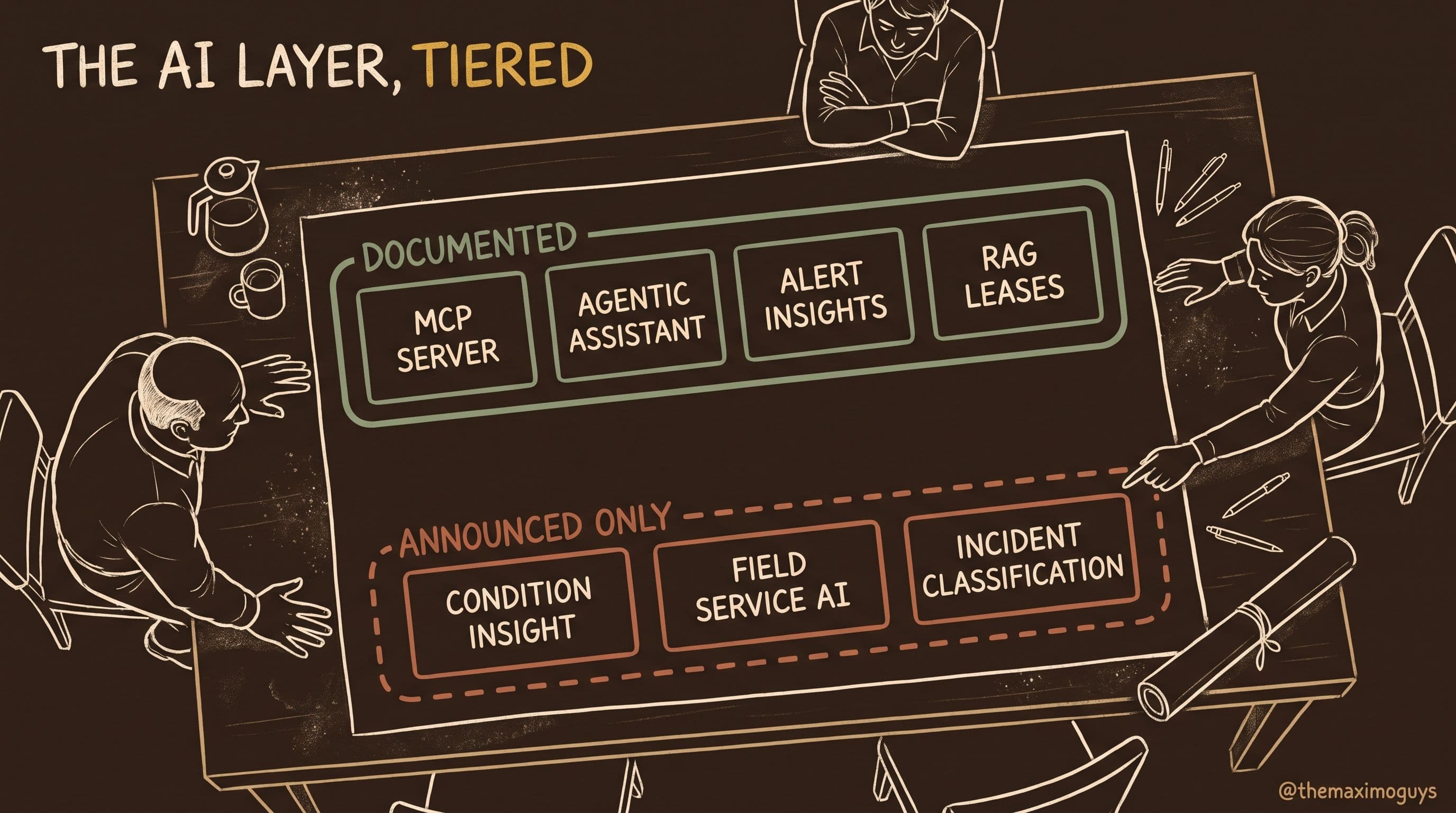
IBM framed MAS 9.2 around asset-first AI and agentic workflows. This is an evidence-tiered assessment of what that actually means — the agentic Maximo Assistant, the Maximo MCP server, AI-generated insights with confidence scores, RAG lease extraction, watsonx Orchestrate in Maximo IT, and AI Service AppPoint tracking — separating what product documentation confirms from what only the announcement claims.
 Venkat AchantaAug 12, 2026Part 5 of 7
A structured reality check on IBM Maximo Application Suite 9.2. Eight gates that decide whether you can and should move, five verdicts mapped to real customer profiles, and an honest accounting of what the release does and doesn't give you.
Venkat AchantaAug 12, 2026Part 7 of 7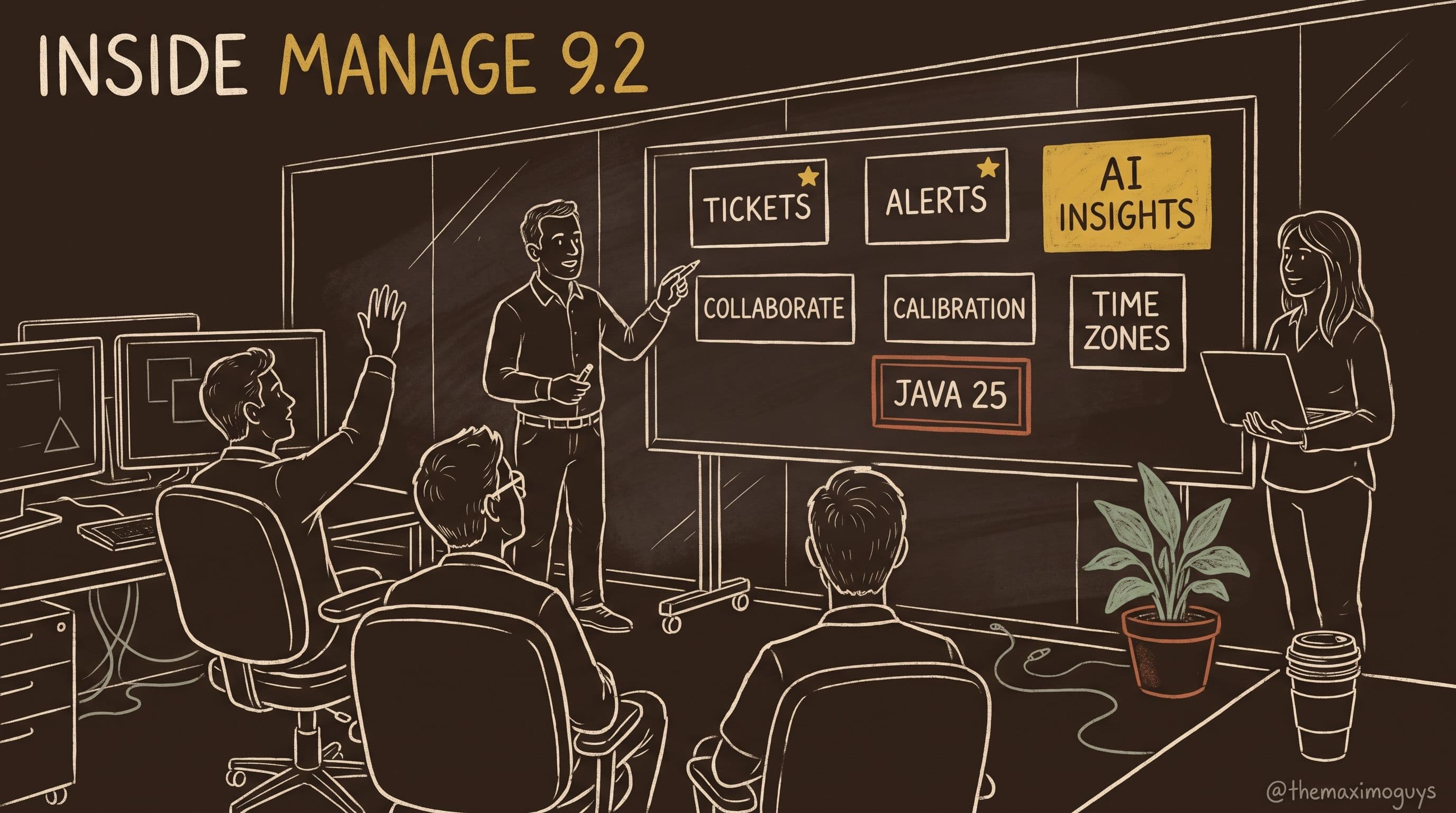
A complete, sourced walkthrough of Maximo Manage 9.2 — the new Tickets and Alerts applications, AI-generated alert insights, Collaborate moving inside Manage, automated calibration accuracy validation for ISO/IEC 17025 and ISO 15189, six new time zone processing rules, Java 25, and everything new in Maximo Optimizer 9.2.
Venkat AchantaAug 12, 2026Part 3 of 7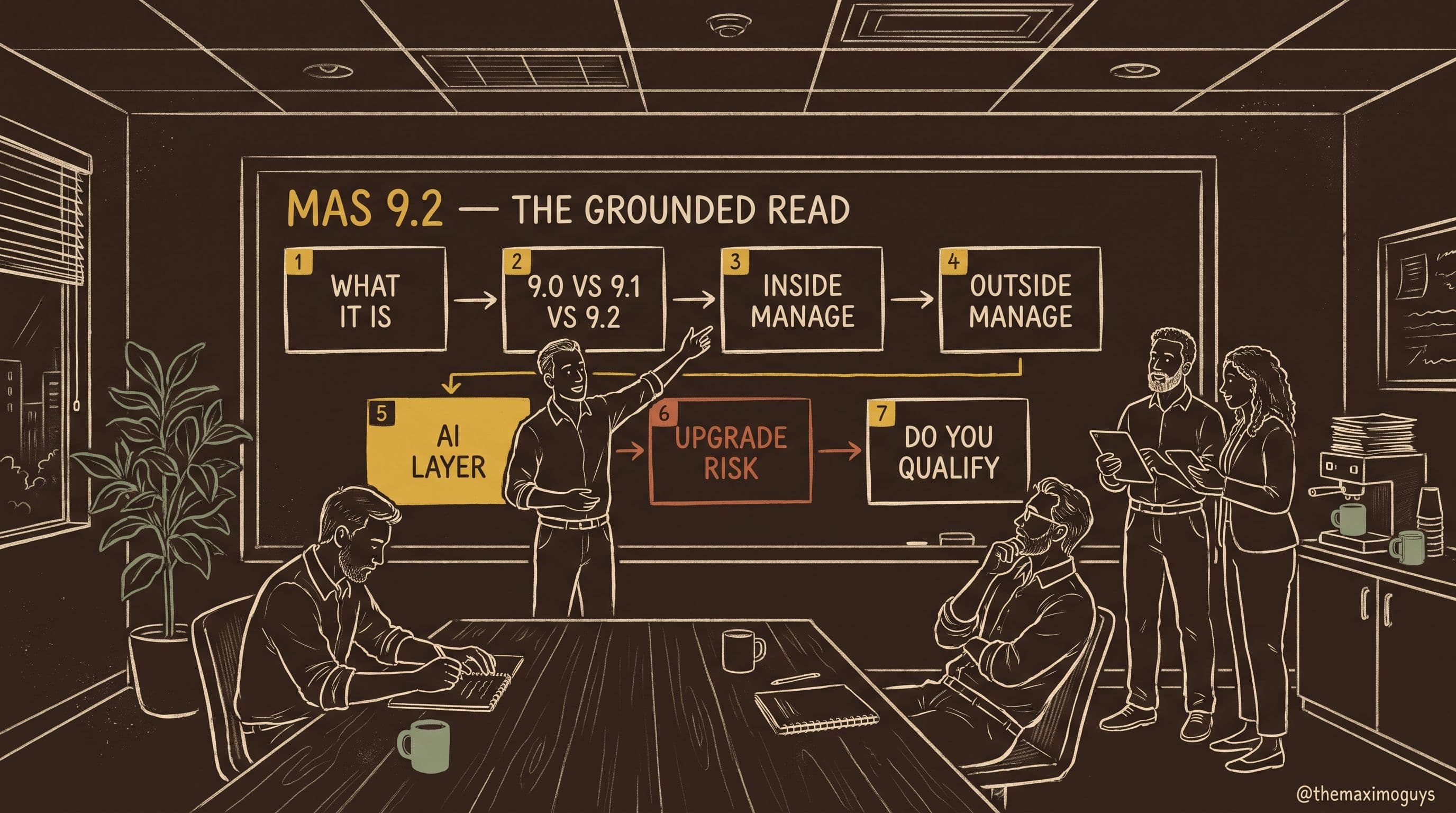
A seven-part, primary-source series on IBM Maximo Application Suite 9.2. What actually shipped on 25 June 2026, how it compares to 9.1 and 9.0, what changed inside Manage and across the suite, what the AI layer really contains, the upgrade items that bite hardest, and an honest verdict on who qualifies.
Venkat AchantaAug 12, 2026Part 0 of 7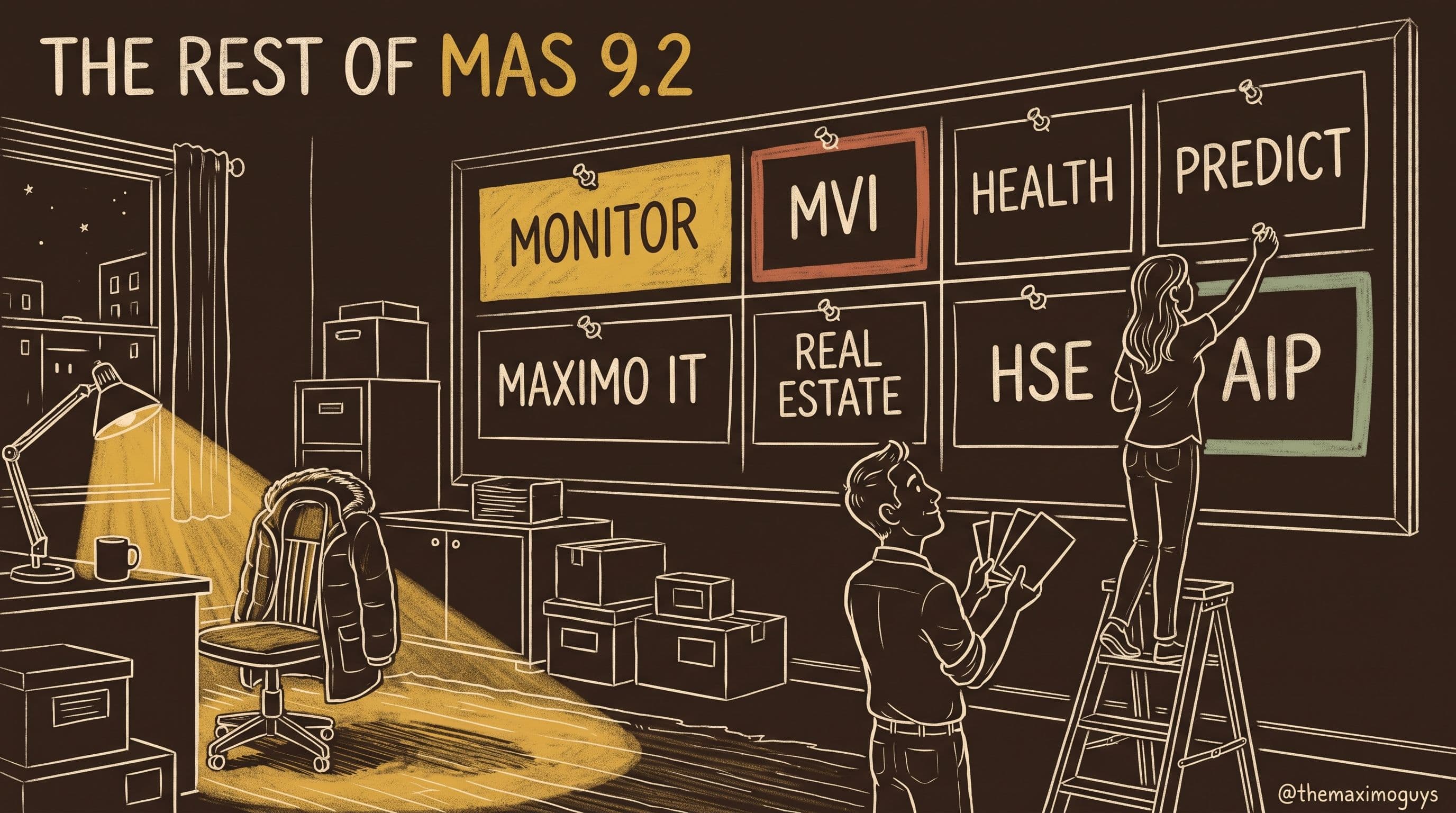
Monitor 9.2 drops its IoT Platform dependency and becomes stand-alone. MVI removes Caffe and Darknet and retroactively drops NVIDIA Pascal GPUs. Health, Predict, Maximo IT, Real Estate and Facilities, HSE, Oil & Gas and AIP all shipped real changes. Here's the product-by-product breakdown, and which ones force work on upgrade.
Venkat AchantaAug 12, 2026Part 4 of 7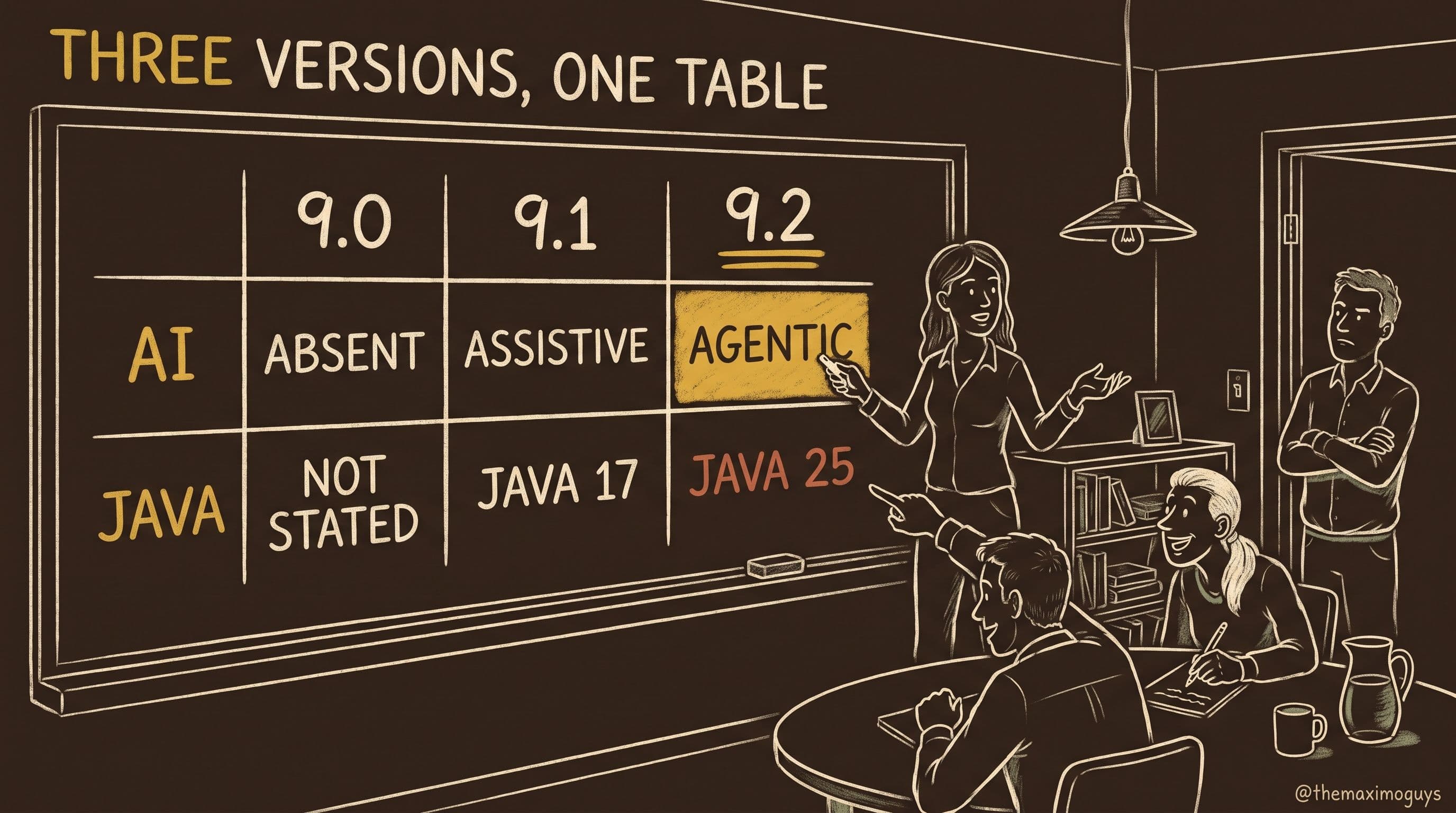
A dimension-by-dimension comparison of Maximo Application Suite 9.0, 9.1 and 9.2 — platform and navigation, AI, applications, Java and database prerequisites, and support lifecycle — built only from IBM's own pages, with every claim we could not verify flagged as such.
Venkat AchantaAug 12, 2026Part 2 of 7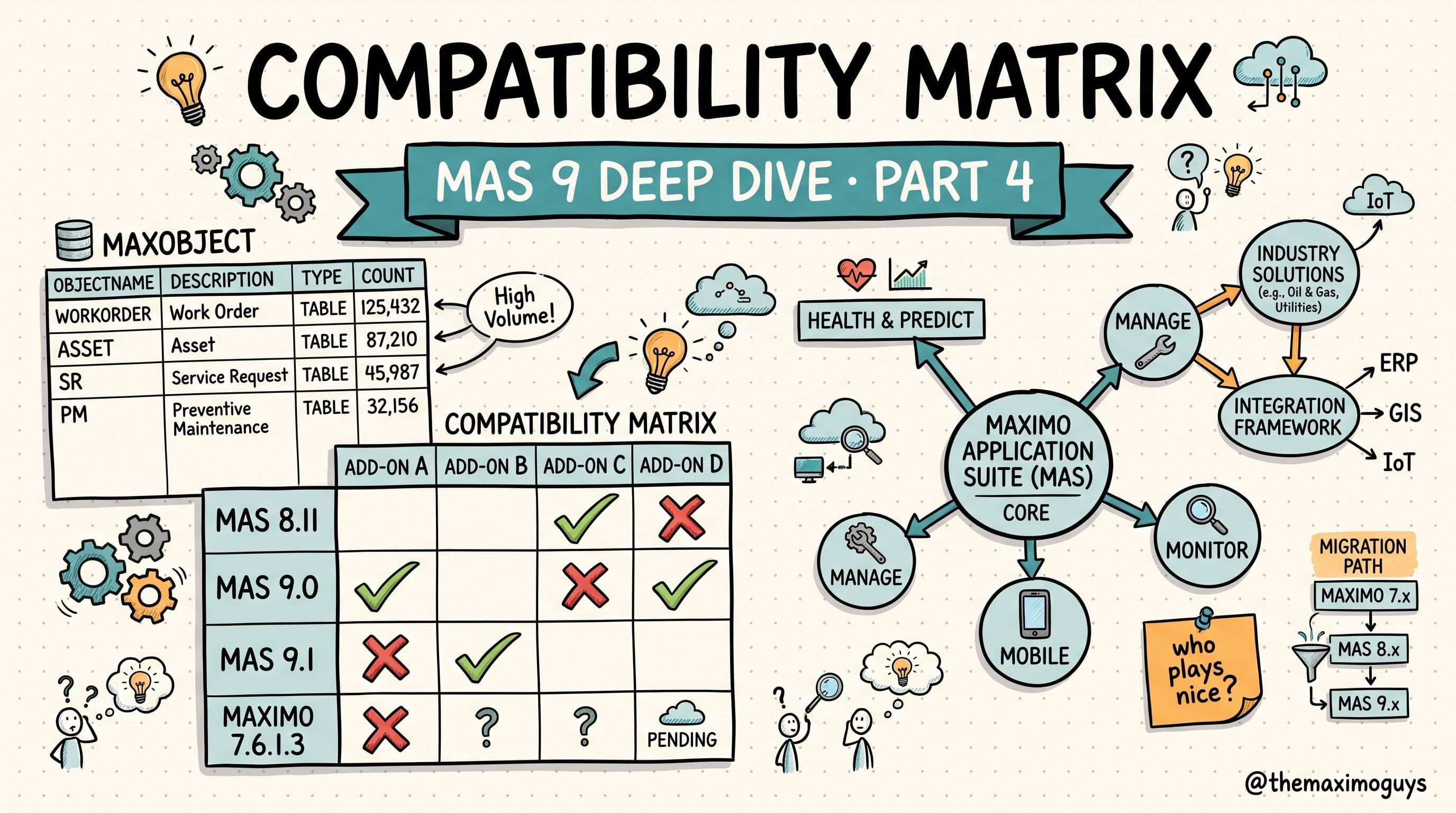
How to read MAXOBJECT counts as an add-on's real database footprint, why HSE ships inside Oil & Gas under one shared PLUSG prefix, why Aviation conflicts with almost everything, and the exact MAS 9 compatibility matrix that tells you which extensions can coexist.
Venkat Achanta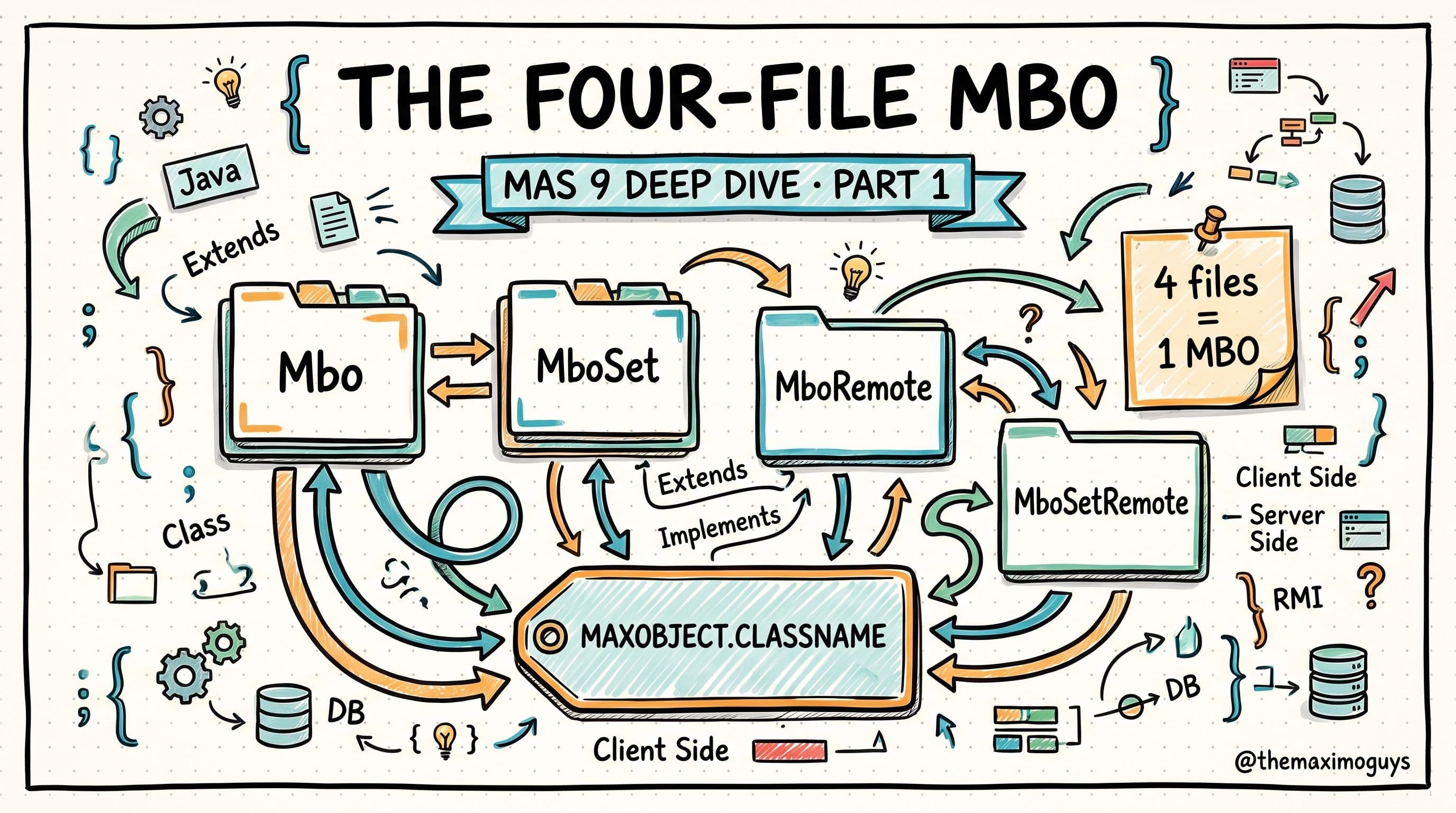
A developer's deep dive into the four-file MBO pattern behind every Maximo object, how MAXOBJECT.CLASSNAME links an object to its MBO Set class, and how a PLUS add-on layers on top through plain Java inheritance.
Venkat Achanta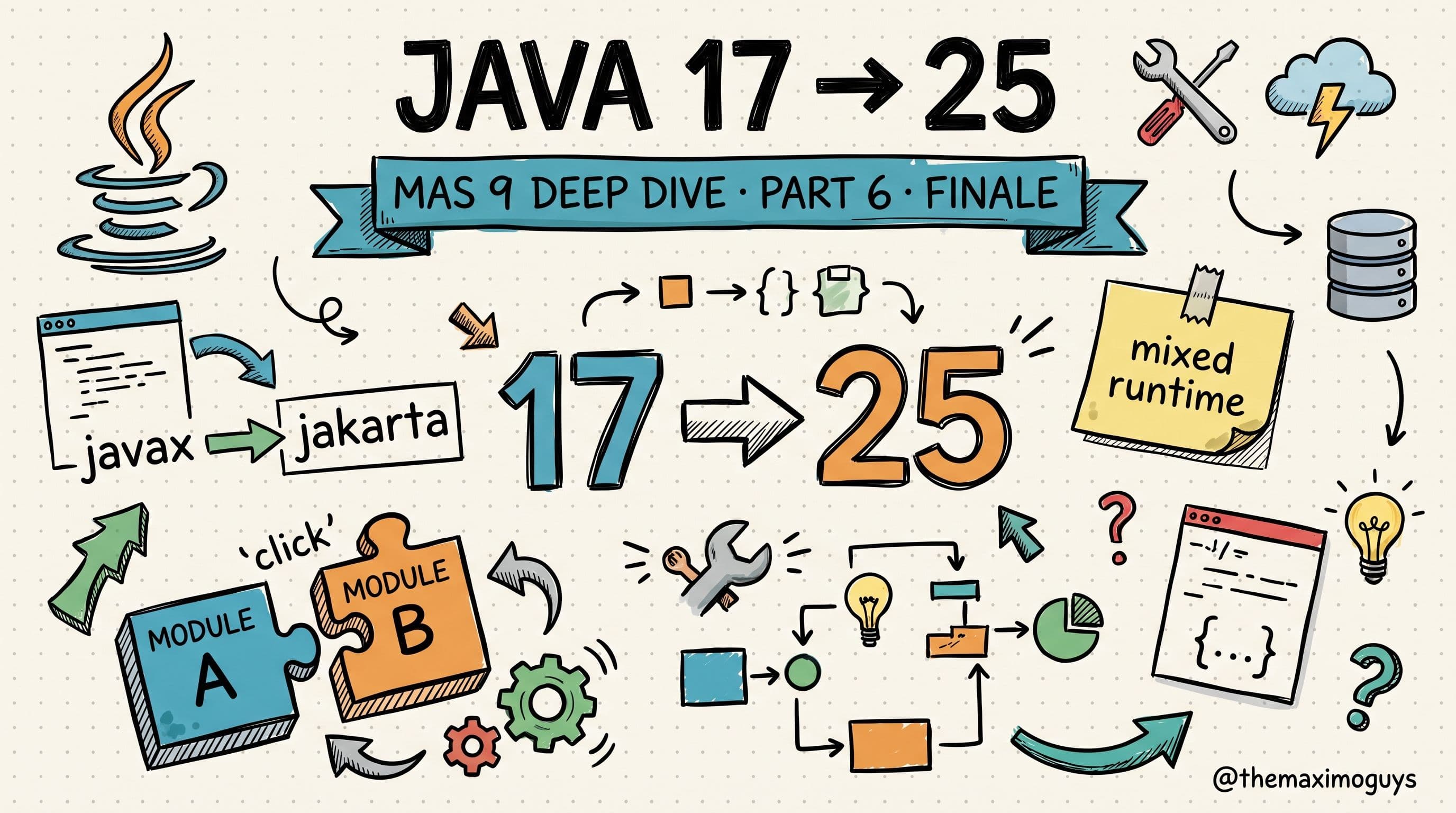
MAS 9.1 moved the JVM under every Maximo customization from Java 11 to Java 17. MAS 9.2 (June 2026) adds Java 25 at the platform and AI-Service level while Java 17 stays the baseline for Manage and your custom code. Here is what changes for existing extensions, why 9.2 is a mixed Java-17/Java-25 environment, how to test and remediate, and why the extension model endured while everything around it modernized.
Venkat Achanta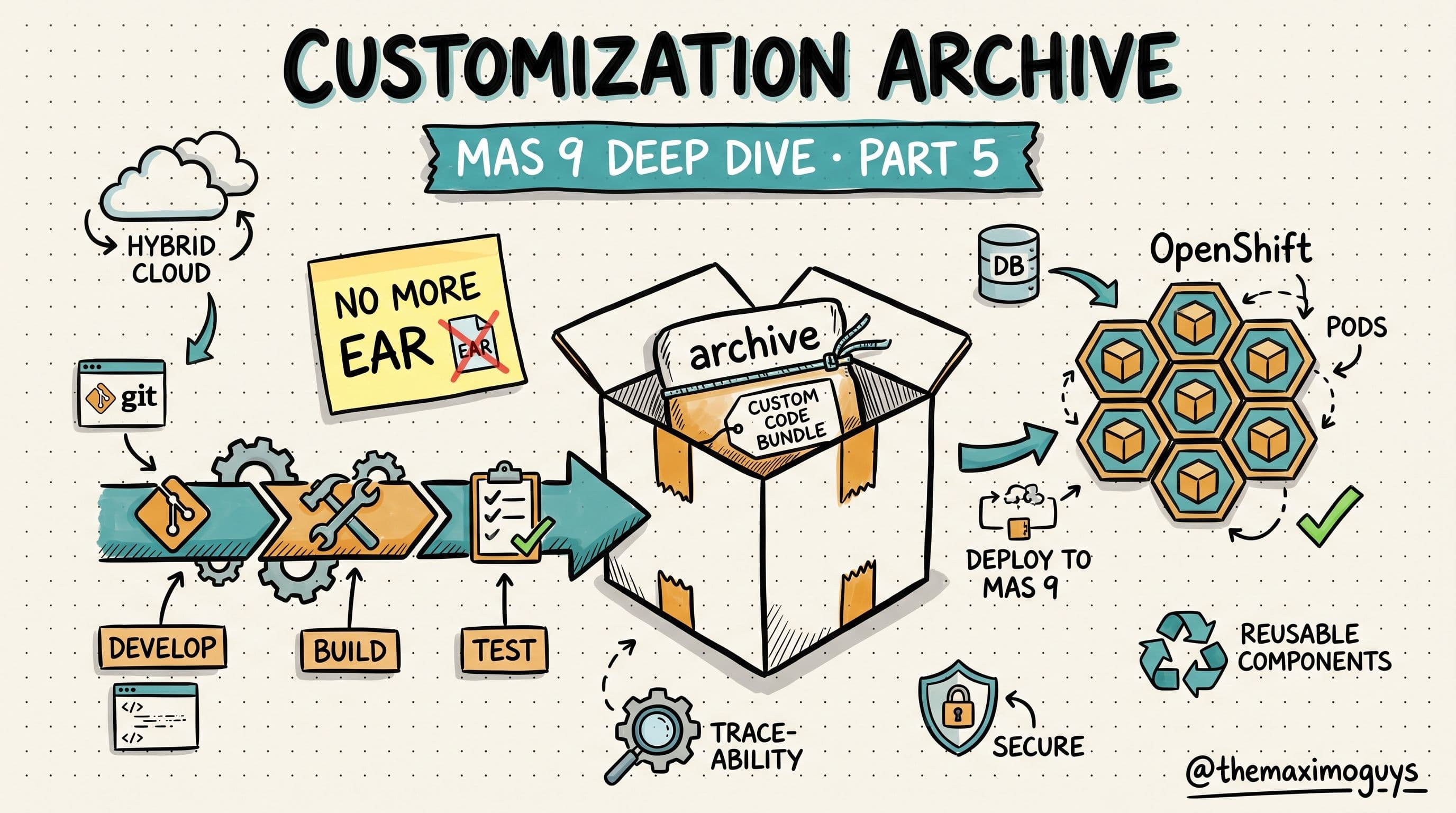
How Maximo add-ons are activated in the MAS Manage component model, and how custom Java is now delivered as a Customization Archive baked into a container image on OpenShift instead of dropped into WebSphere — the old-world/MAS-world post for developers and upgrade teams.
Venkat Achanta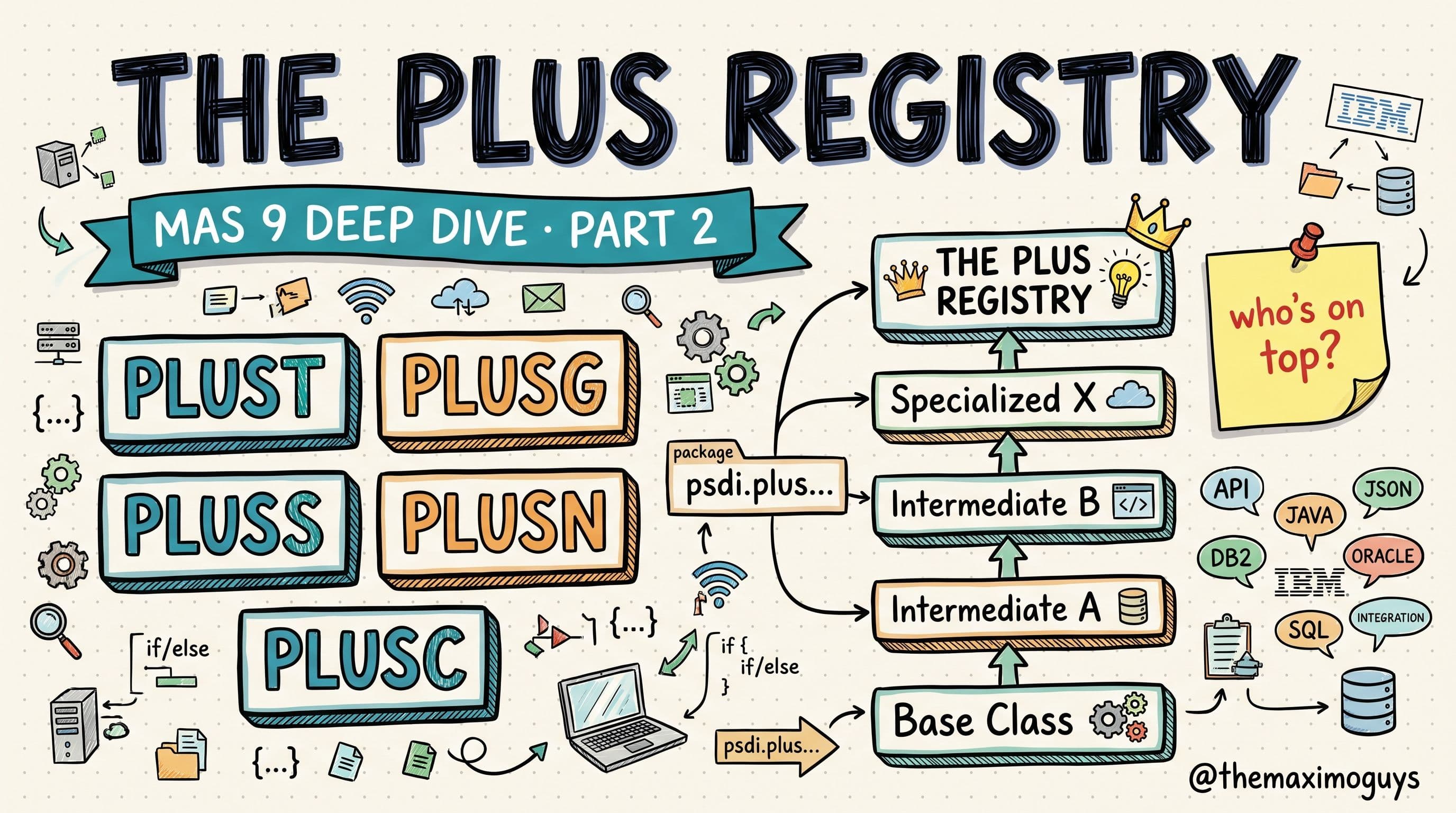
The reference every Maximo developer bookmarks: the complete PLUS prefix directory (PLUSA through PLUSV, TLOAM, custom), which prefixes are included capabilities versus paid add-ons versus legacy, the five-layer extension hierarchy, and exactly how Maximo stitches multiple add-ons into one MBO inheritance chain — with the WorkOrder and Asset chains resolved step by step.
Venkat Achanta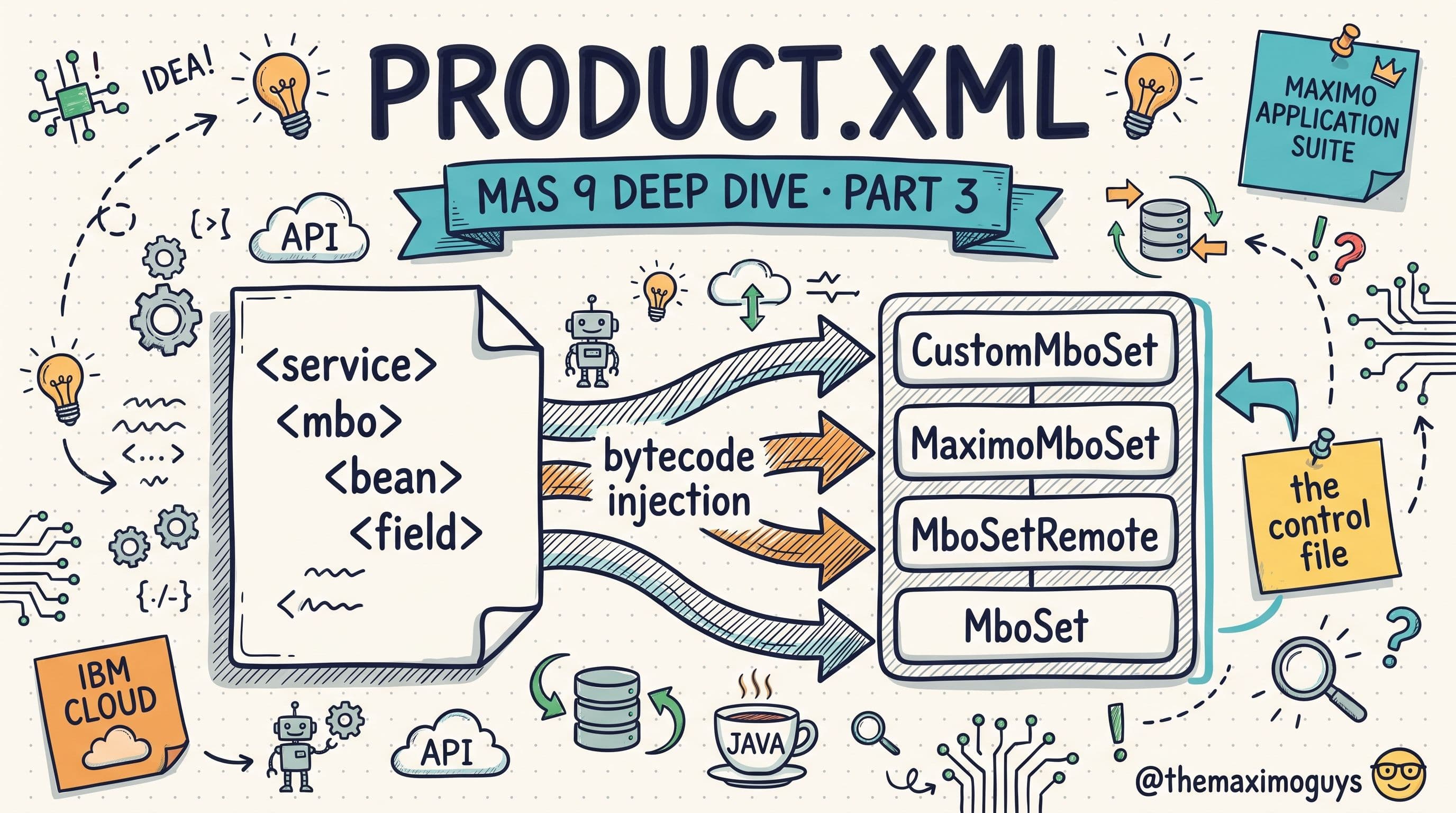
A developer's deep dive into product.xml — the extension control file behind every Maximo add-on. Learn the anatomy of mboset, mbo, class, field, and bean declarations, why alphabetical prefix order matters, what bytecode injection does at build time, and how the resolved top-of-chain class lands in MAXOBJECT.CLASSNAME so you can predict super() behavior.
Venkat Achanta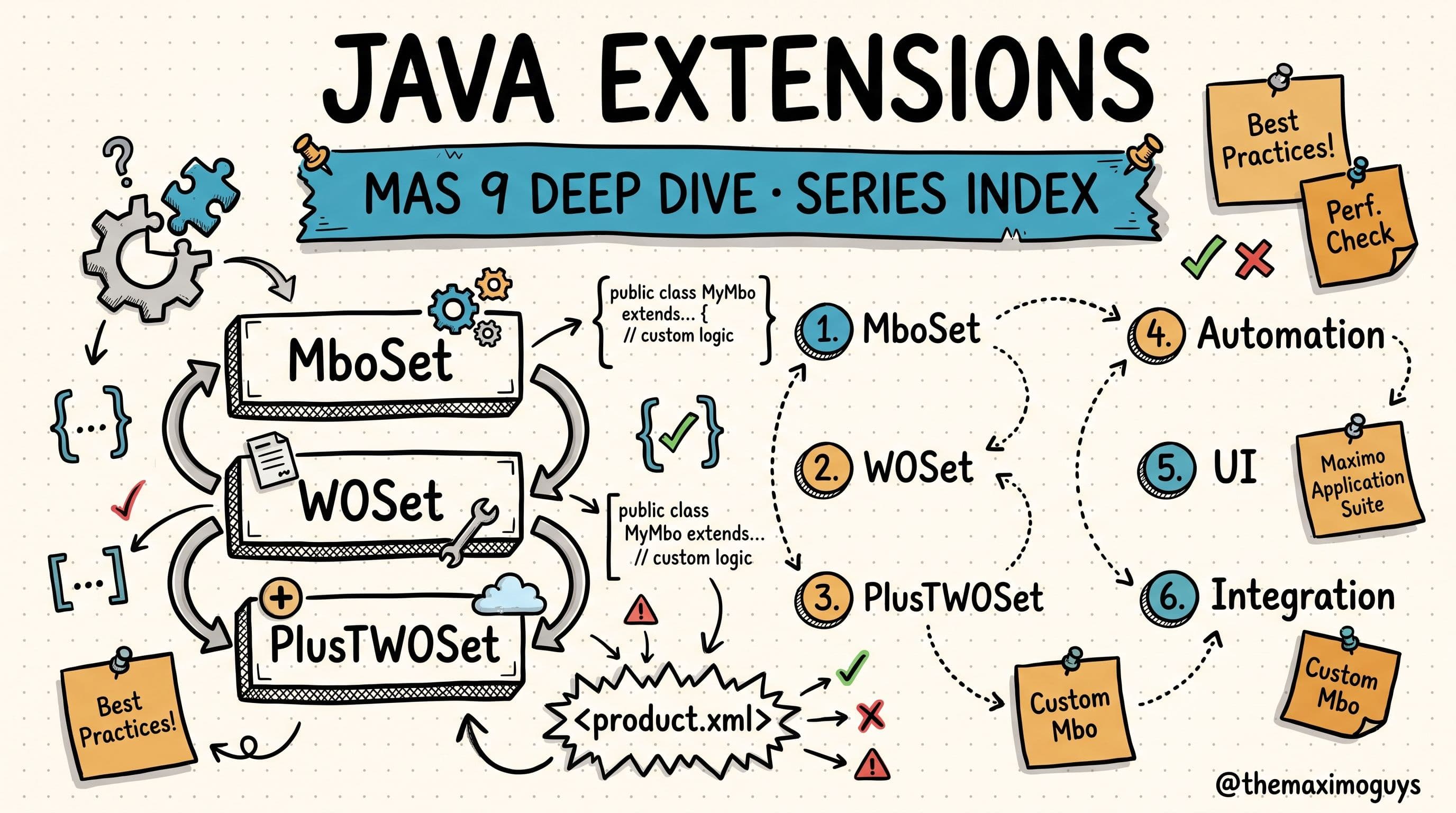
A developer's deep dive into how IBM Maximo add-ons and industry solutions extend the core through Java — PLUS prefixes, the four-file MBO pattern, MBO inheritance chains, product.xml, bytecode injection, the compatibility matrix, the MAS 9 Customization Archive, and the Java 17 shift.
Venkat Achanta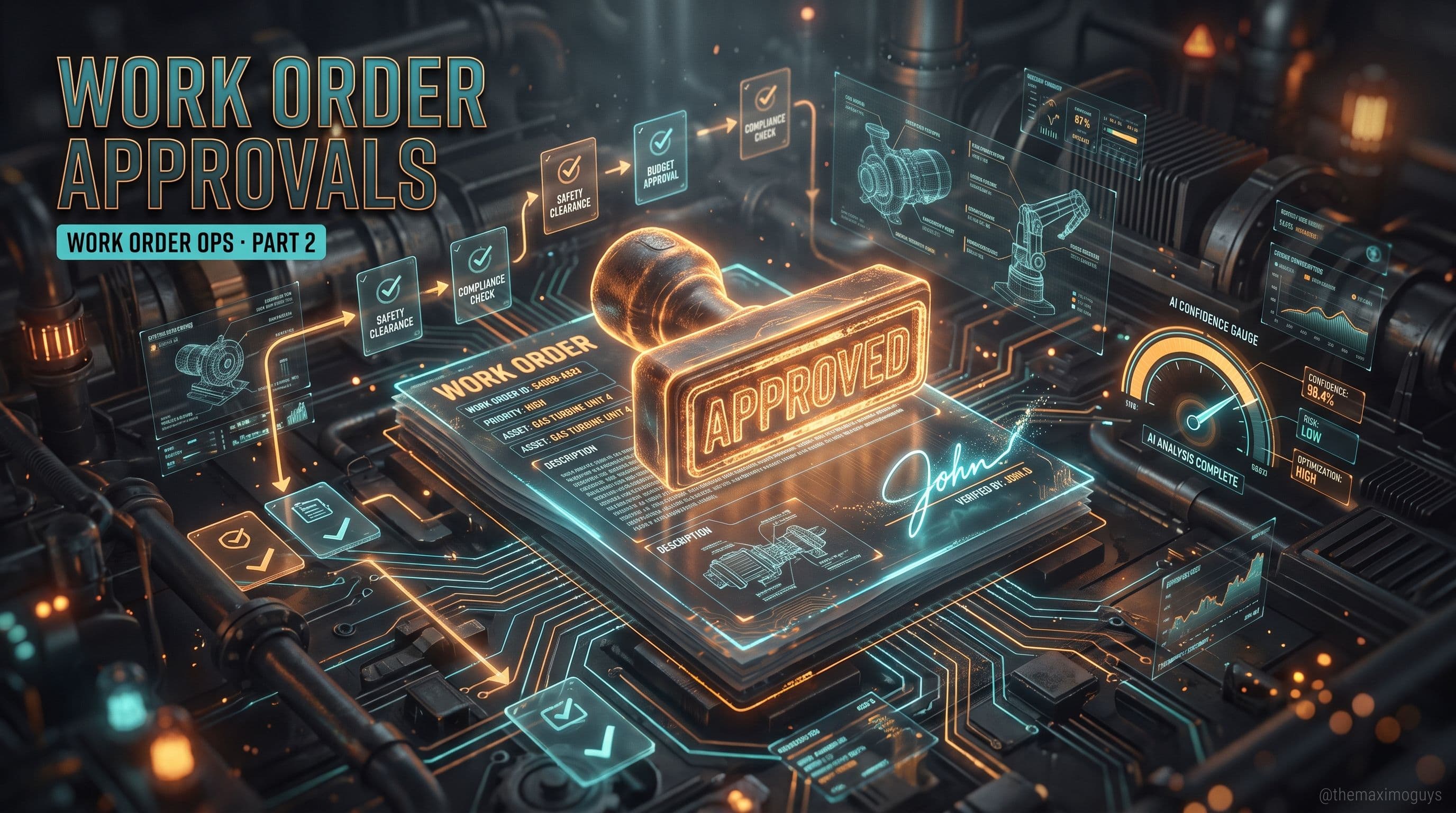
Approving a work order looks different in MAS 9. Here's the honest picture — the Workflow Designer is unchanged and your 7.6 workflows carry forward, the new Approvals Role-Based Application replaces the Work Supervisor approval flow (with one gap), watsonx-powered Work Order Intelligence recommends a failure code with a confidence score at approval, and electronic signatures can be enforced on specific status changes for regulated work.
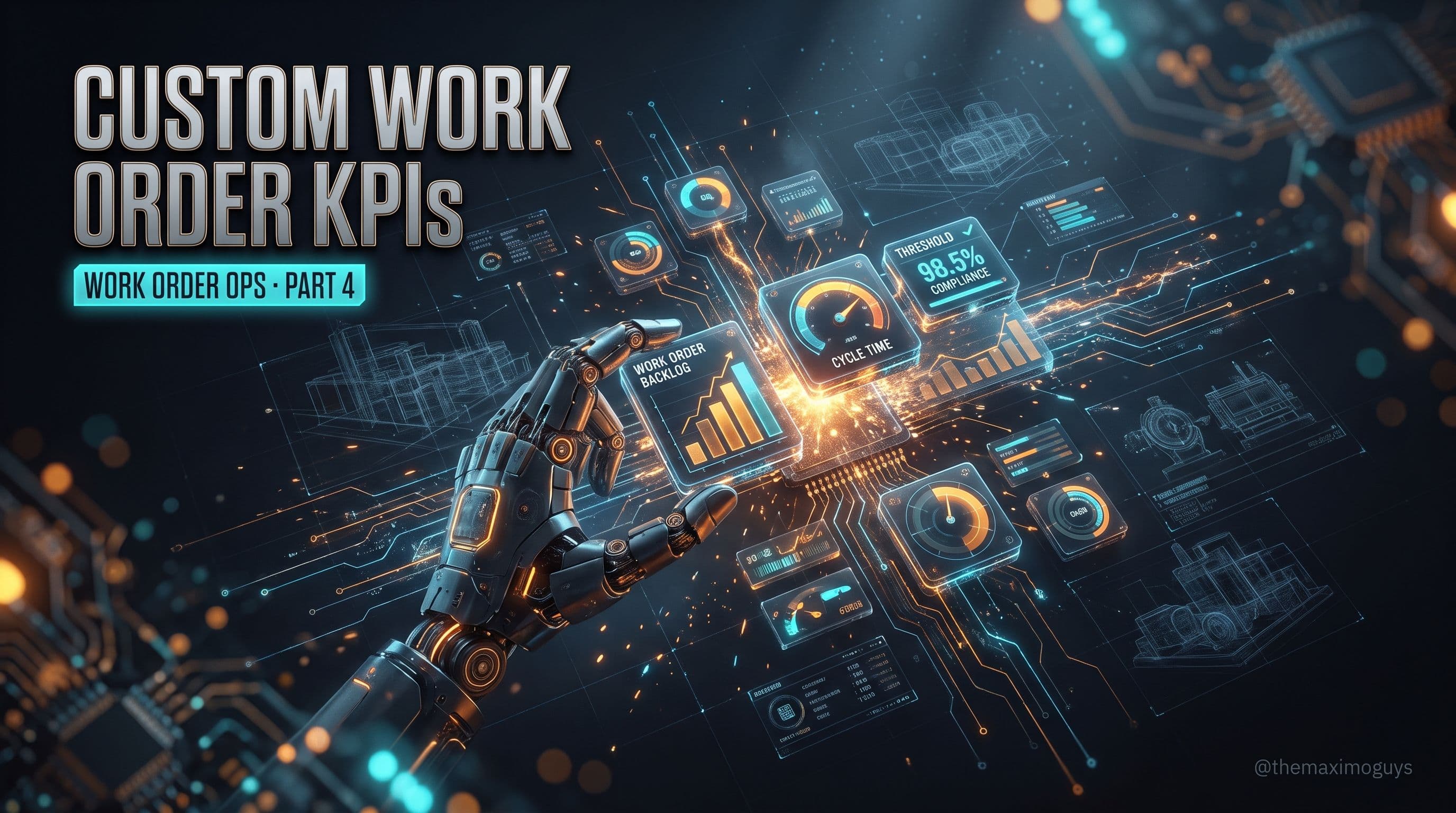
Part 3 showed you how to consume the operational dashboard. This is the other half: how to build your own work order KPIs in MAS 9. The KPI Manager application, custom queries against any Maximo object, refresh intervals, green/yellow/red thresholds, trend calculations, matching a KPI to the right card type, and the MAS 9.1 ability for KPI services to return JSON from an external API.
Venkat Achanta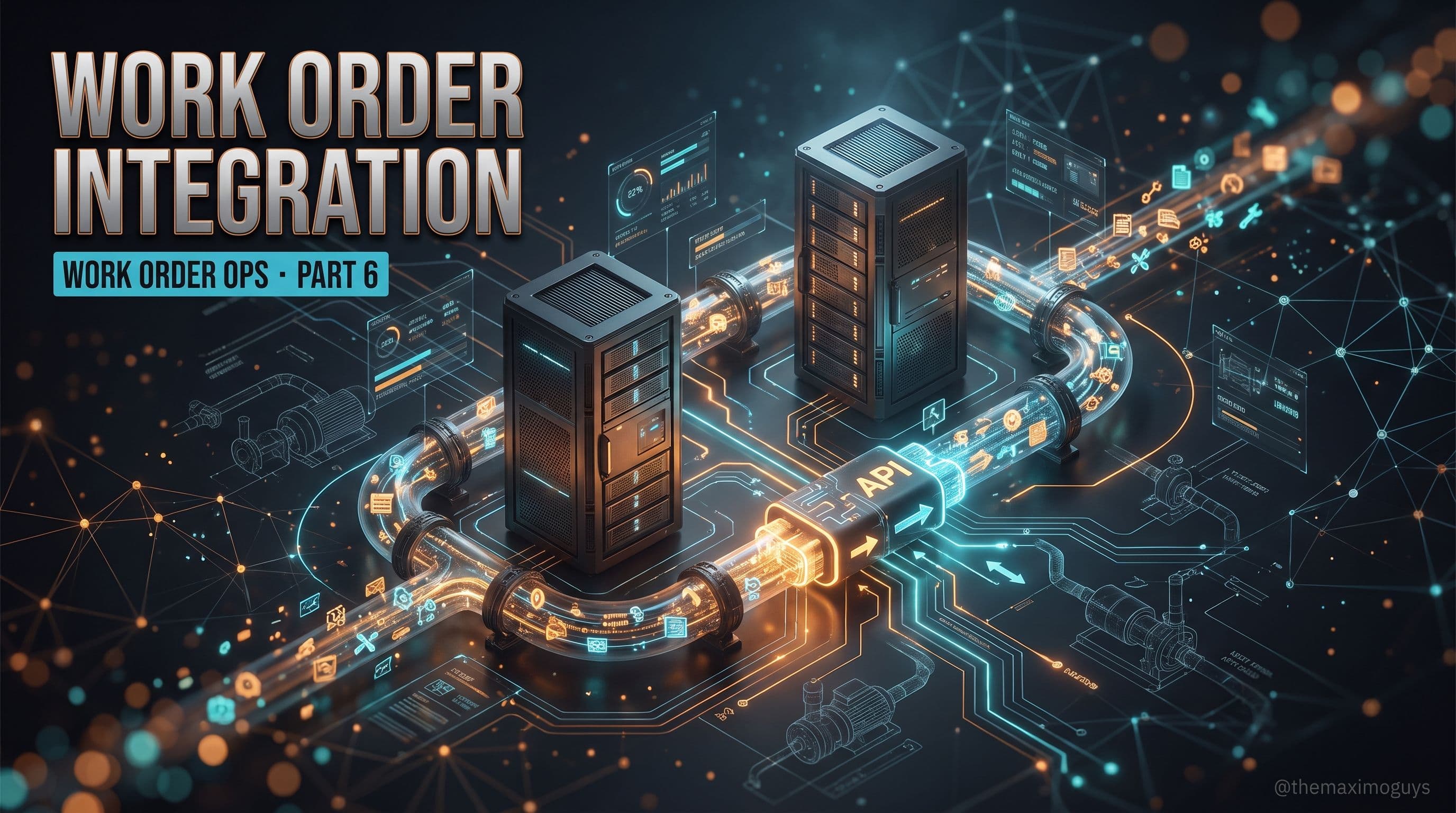
The work order integration surface moved in MAS 9. Here's the JSON API for work orders — /api/os/mxwodetail with lean=1 — with real query and create examples, Kafka events for near-real-time WO changes, and the honest posture on MIF: it still works, but new integrations belong on REST and Kafka.
Venkat Achanta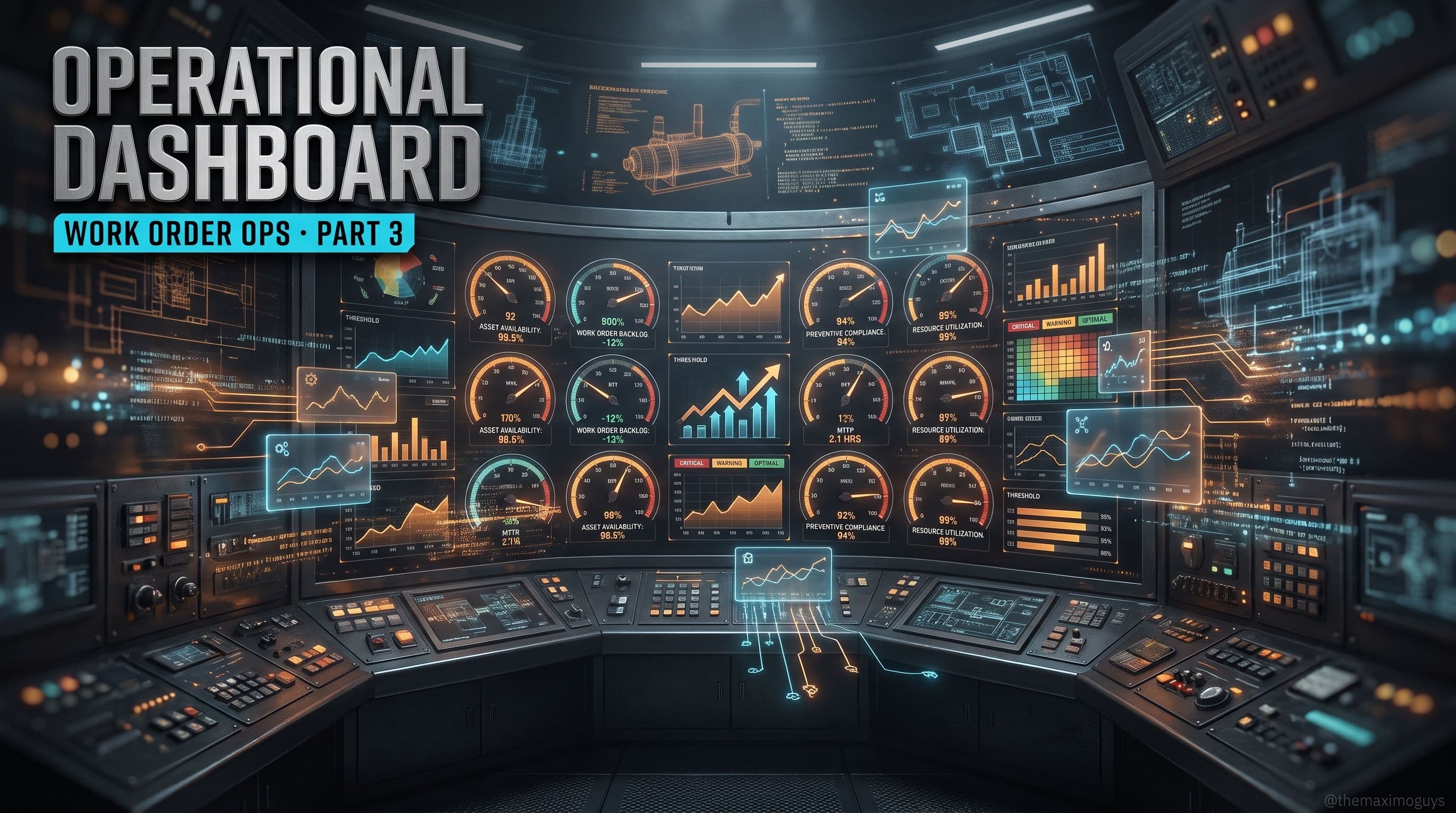
IBM's Operational Dashboard is the strategic replacement for Start Centers as the maintenance manager's command center. Here's what ships out of the box in MAS 9 Manage — the WO KPIs, the pre-built Maintenance Manager dashboard, the card types worth knowing — and the honest 9.1 limitation that keeps many teams running Start Centers side by side.
Venkat Achanta
BIRT is not formally deprecated in MAS 9 and your existing work order reports still run. The upgrade mistake is treating the report catalog as a rebuild backlog. Here's how to rationalize WO reporting into KPI Manager cards, keep the reports that must stay reports, and know exactly when Cognos Analytics earns the job.
Venkat Achanta
A six-part edge-filler series on the Work Order changes that the standard MAS 9 Manage guides skip: the Service Request RBA, the Approvals application and electronic signatures, the Operational Dashboard and out-of-the-box WO KPIs, custom KPI creation, rationalizing BIRT into KPI Manager, and the new WO REST and Kafka integration surface.
Venkat Achanta
The Service Request Work Center is gone. Here's what replaced it in MAS 9 Manage — the classic SR app in Carbon, the Service Request Role-Based Application on MAF, the dedicated SR mobile app in 9.0 and 9.1 — and the honest truth about the single-screen SR-to-WO conversion that no longer exists.
Venkat Achanta
A practitioner's deep dive into the generative AI built directly into Maximo Manage — Work Order Intelligence (9.0), the Maximo Assistant (9.1, expanded in 9.2), and the AI Configuration application — and how it differs from the standalone Health, Monitor, Predict, and Visual Inspection suites.
Swetansh Kumar
A practitioner's deep dive into asset and location management in Maximo Manage 9 — asset and location hierarchies, rotating items, Asset Configuration Manager for complex serialized assets, linear assets with GIS, and meters with condition monitoring.
Swetansh Kumar
The practitioner's guide to configuring and administering Maximo Manage 9 — Automation Scripts, Workflow Designer, Application Designer, Database Configuration, domains, security, Operational Dashboard, new tools like Formulas and in-MAS Application Configuration, and the admin split between MAS Suite and Manage.
Swetansh Kumar
A practitioner's deep dive into the Maximo Manage 9 scheduling stack — Gantt-based Graphical Scheduling for outages and projects, Graphical Assignment for short-horizon dispatch, the crafts/crews/calendars foundation, and the AI-driven Field Service Management solution introduced in 9.0 with its Scheduling and Dispatching dashboards, extended in 9.1.
Swetansh Kumar
A practitioner's deep dive into Inspections in Maximo Manage 9 — how the Inspection Forms Work Center became a Maximo Application Framework app, the refreshed Form Builder, question types and conditional logic, scoring and pass/fail, follow-up work orders and meter updates, form versioning, and offline mobile execution.
Swetansh Kumar
A practitioner's deep dive into inventory and procurement in Maximo Manage 9 — the ITEM and INVENTORY objects, storerooms, costing, reorder processing, the PR-to-PO-to-receipt-to-invoice flow, contracts and vendors, and the role-based Issues and Transfers app that carries forward key Inventory Work Center workflows.
Swetansh Kumar
A practitioner's deep dive into Maximo Mobile for Manage 9 — why it replaced Maximo Anywhere, how its offline-first REST and sync architecture works, the Technician, Inspections, and Inventory apps, low-code app definitions in Mobile Studio, RBAC and offline security, and how to migrate off MobileFirst.
Swetansh Kumar
A practitioner's deep dive into Maximo Reliability Strategies — how FMEA and RCM connect failure modes to job plans and PMs, the built-in library spanning 800 asset types and 58,000 failure modes, RPN-driven actions, custom strategies, and the AI assists added in Manage 9.1.
Swetansh Kumar
A practitioner's deep dive into IBM Maximo Manage on MAS 9 — eleven parts covering the new MAF role-based applications, Operational Dashboard, Reliability Strategies, Inspections, Work Management, Graphical Scheduling, Maximo Mobile, embedded AI, and how to configure and administer it all.
Swetansh Kumar
A practitioner's map of how Maximo 7.6 EAM became Maximo Manage in MAS 9 — the move to containers on OpenShift, the Maximo Application Framework, AppPoints licensing, and why your MBOs, scripts, and database survive the journey intact.
Swetansh Kumar
Work Centers are removed in Maximo Manage 9.0. Key experiences moved into Maximo Application Framework role-based applications, Maximo Mobile, and Operational Dashboard surfaces. Here's what changed, where the new apps live, and how to move your users across without disruption.
Swetansh Kumar
The heart of Maximo Manage — a practitioner's deep dive into the work order lifecycle, job plans with the new Qualifications field and milestone tasks, preventive maintenance and routes, plus the Work Order Planning and Work Queue Manager applications added in Manage 9.
Swetansh KumarHow Maximo AI Assist uses watsonx.ai for natural language queries, WO creation, and field recommendations — plus Optimizer's constraint-based scheduling with route optimization. Also covers Civil Infrastructure and Parts Identifier.
 Posam LakshminarayanaMar 17, 2026Part 14 of 25
A complete technical breakdown of every MAS 9 suite add-on that impacts supply chain operations — AI Assist (intelligent search, WO material recommendations, failure-to-parts mapping, document summarization), Parts Identifier (photo-based identification, catalog cross-reference, stock level checks), Health (scores driving demand predictability, replacement procurement, criticality stocking), Predict (failure timing to pre-position parts, RUL-based reservations), Monitor (condition-based orders, IoT consumption tracking, usage pattern analytics), and Optimizer (material-aware scheduling, multi-constraint coordination). The complete AI-to-parts pipeline.
Posam LakshminarayanaMar 17, 2026
The complete AppPoints licensing strategy and 13-month implementation roadmap for MAS 9 suite applications. Role-based allocation examples, optimization tips, phased deployment with success criteria, and why Phase 0 (data quality) determines everything.
Posam LakshminarayanaMar 17, 2026Part 15 of 25
The complete UI transformation in MAS 9 — IBM Carbon Design System replaces all Maximo skins, field labels move above fields, CSS class names changed between releases, and custom CSS is unsupported. What your users need to know before they log in.
Posam LakshminarayanaMar 17, 2026Part 2 of 25How MAS 9 replaces Start Centers with Operational Dashboards, Result Set Portlets with Work Queues, and unlocks Graphical Scheduling for free. Complete coverage of card types, KPI Manager, Work Queue configuration, and the 8 scheduling applications now included in base Manage.
Posam LakshminarayanaMar 17, 2026Part 4 of 25
A comprehensive deep dive into the six MAS 9 Industry Solutions — Aviation (MSG-3, Airworthiness Directives), Transportation (fleet lifecycle, linear assets), Utilities (grid management, smart meters), Oil & Gas (process safety, turnarounds), Nuclear (tech specs, surveillance testing), and Civil Infrastructure (NBI bridge inspection, Large Vision Models). Regulatory frameworks, AppPoints licensing, and what changed from 7.6.
Posam LakshminarayanaMar 17, 2026Part 20 of 25How MAS 9 transforms integration with JSON API as primary, Kafka for event streaming, and RMI deprecated. Plus the painful BIRT-to-Cognos reporting migration — no automatic conversion, every report recreated from scratch.
The Maximo GuysMar 17, 2026Part 7 of 25
A complete breakdown of the MAS 9 licensing restructure — five previously paid modules now included free, what still requires separate licensing, AppPoints optimization strategies, and why your organization may be overpaying for licenses it already owns.
Posam LakshminarayanaMar 17, 2026Part 16 of 25
Everything you need to know about Maximo Health — asset health scoring from 0 to 100, degradation curves, Asset Investment Optimization (AIO), risk matrix, criticality scoring, data requirements, and industry use cases. The first suite application every organization should deploy.
Posam LakshminarayanaMar 17, 2026Part 10 of 25Maximo Anywhere is gone — replaced by Maximo Mobile built on React.js with PWA deployment, server-side updates, and full offline sync. Complete coverage of all 7 mobile apps, Technician features, GPS sharing, barcode enforcement, and the Anywhere-to-Mobile migration path.
The Maximo GuysMar 17, 2026Part 5 of 25
Complete guide to Maximo Monitor — the IoT platform for real-time asset monitoring with MQTT/REST ingestion, custom dashboards, anomaly detection, Python streaming analytics, edge data collection, and automated work order generation. Your assets have been trying to tell you something.
The Maximo GuysMar 17, 2026Part 11 of 25
How Maximo Predict uses machine learning to predict failure dates, estimate remaining useful life, and detect anomalies — with Cox Proportional Hazards, Weibull survival analysis, and watsonx.ai integration. Data requirements, model pipeline, and why data science skills are mandatory.
Posam LakshminarayanaMar 17, 2026Part 12 of 25
A complete deep dive into every MAS 9 Maximo Mobile supply chain application — Issues & Transfers (staging, barcode, storeroom transfers), Inventory Count (cycle counts, blind mode, photo attachment), Receiving (PO-based, rotating assets, MAS 9.1 enhancements), Technician App material features, full offline capabilities, and the migration path from Maximo Anywhere.
Posam LakshminarayanaMar 17, 2026Part 23 of 25The final installment of the MAS FEATURES series. A numbers-first deep dive into IBM MRO Inventory Optimization — 23 AI-powered capabilities, Essentials vs Standard comparison, 7 competitor profiles (Syncron, Baxter, Servigistics, IFS, Infor, Verusen, Kinaxis), a feature comparison matrix, decision framework, and the complete 12-month, 5-phase implementation roadmap with 425 hours of team exploration across 14 topic areas.
Posam LakshminarayanaMar 17, 2026Part 25 of 25A complete technical breakdown of IBM Maximo MRO Inventory Optimization (AI-calculated ROP/MAX, demand forecasting, what-if analysis, Essentials vs Standard tiers) and Health Safety & Environment Manager (50+ applications across 6 modules — Incident Management, Permit to Work, Emissions, Operations Management, MOC, and Workforce Competency). Everything you need to evaluate, budget, and implement.
Posam LakshminarayanaMar 17, 2026Part 17 of 25Everything that changed under the hood in MAS 9 — the architecture shift from WebSphere to OpenShift, Java 17 migration impact, sealed databases, containerized deployment, and what your infrastructure team needs to learn. The technical foundation every upgrade team must understand.
Posam LakshminarayanaMar 17, 2026Part 1 of 25
Every detail of MAS 9 procurement (Desktop Requisitions, PRs, POs, RFQs), all 10 contract types, receiving and inspection workflows, specialized inventory (rotating assets, condition-enabled, consignment, service items), cost accounting methods, lead time calculation, item status lifecycle, reorder processing, and the RBA gap that still forces classic apps.
Posam LakshminarayanaMar 17, 2026Part 22 of 25
A complete breakdown of Maximo Renewables (Prescinto), TRIRIGA Real Estate & Facilities Management, and the connector ecosystem for SAP, Oracle, Workday, watsonx.ai, and more. Three modules, three integration layers, zero 7.6 equivalents — and why they represent where IBM is betting the future of MAS.
Posam LakshminarayanaMar 17, 2026Part 19 of 25How automation scripts survive Java 17, the free Reliability Strategies Library with 800+ equipment types, AI-powered natural language queries in Manage 9.1, and enhanced qualifications management. The tools that make MAS 9 yours.
Posam LakshminarayanaMar 17, 2026Part 8 of 25
How MAS 9 transforms security with mandatory SAML/OIDC/LDAP authentication, Suite-level SSO, API Key management, and Cert-Manager auto-rotation. Plus the deprecation of Google and Bing Maps in favor of OpenMap and ArcGIS integration.
Posam LakshminarayanaMar 17, 2026Part 6 of 25
A 4-part series breaking down every major feature change in MAS 9 — from Manage core platform transformation, to suite AI applications, paid add-ons and industry solutions, and the supply chain revolution. Your team's complete upgrade reference.
Posam LakshminarayanaMar 17, 2026Part 0 of 25A deep dive into four MAS 9 paid add-ons — Maximo Spatial for GIS-driven asset management, Service Provider for multi-tenant outsourced maintenance, Asset Configuration Manager for complex regulated assets, and Maximo IT for unified OT/IT service management. Prerequisites, use cases, and what changed from 7.6.
Posam LakshminarayanaMar 17, 2026Part 18 of 25Why MAS 9 is an entire Application Suite, not a Maximo upgrade. The integrated data pipeline from sensors to scheduling, how Manage is the hub, and why integrated value is multiplicative — not additive. The most important concept for your upgrade team to understand.
Posam LakshminarayanaMar 17, 2026Part 9 of 25Complete coverage of MAS 9 supply chain architecture -- the three-tier licensing model, 7.6 vs MAS 9 comparison, inventory module with eight transaction types, six item master types, storeroom hierarchies, reservation system, count books with six selection methods, ABC analysis, and the full issues and transfers lifecycle. Every detail your supply team needs.
Posam LakshminarayanaMar 17, 2026Part 21 of 25
How Maximo Visual Inspection automates defect detection with image classification, object detection, anomaly detection, and OCR — all without data science skills. Edge deployment on NVIDIA Jetson, Large Vision Models in 9.1, and real-world use cases from manufacturing to utilities.
Posam LakshminarayanaMar 17, 2026Part 13 of 25Work Centers were removed entirely in MAS 9 — replaced by Role-Based Applications built on React/MAF with no automatic migration. This is the most impactful change for daily users. Complete WC-to-RBA mapping, gap analysis, migration strategy, and timeline estimates.
Posam LakshminarayanaMar 17, 2026Part 3 of 25
Five practical AI use cases for Maximo with ROI frameworks: work order intelligence, predictive maintenance, visual inspection, conversational AI, and data quality improvement.
The Maximo GuysFeb 6, 2026Part 10 of 12
A strategic guide to MAS 9 data migration covering quality assessment, 4-phase cleansing, phased loading, and validation for one of the most underestimated parts of migration.
The Maximo GuysFeb 6, 2026Part 6 of 12
How to architect MAS as a strategic platform, not just an application. Multi-cloud deployment, integration patterns, security, HA/DR, and governance for enterprise asset management.
The Maximo Guys
The final installment of the MAS ADMIN series -- exploring how AI-assisted troubleshooting, self-healing operators, AIOps, and autonomous monitoring are redefining the Maximo admin role from button-clicking operator to cloud-native reliability leader.
Posam LakshminarayanaFeb 6, 2026Part 8 of 9
A forward-looking view of where Maximo may head through 2040: AI agents, digital twins, more autonomous workflows, and the five-stage EAM evolution from reactive to increasingly autonomous operations.
The Maximo GuysFeb 6, 2026Part 12 of 12
Learn how to modernize Maximo integrations for MAS 9 with API-first REST, GraphQL, Kafka event-driven patterns, and phased migration from legacy database access.
The Maximo GuysFeb 6, 2026Part 5 of 12
A comprehensive 6-phase migration playbook for moving from Maximo 7.6.x to MAS 9, covering assessment, rationalization, data prep, build, test, and go-live.
The Maximo GuysFeb 6, 2026Part 3 of 12
A complete guide to troubleshooting IBM MAS SaaS without backend access -- the three-layer control model, evidence collection, IBM Support escalation, and proactive monitoring.
The Maximo GuysFeb 6, 2026Part 8 of 12
A technical deep dive into MAS 9 architecture covering OpenShift, containers, Kubernetes operators, and microservices decomposition for Maximo architects and admins.
The Maximo GuysFeb 6, 2026
Learn why some legacy Maximo 7.6.x assumptions become constraints in MAS 9, and what mindset changes help teams adapt to API-first, event-driven, configuration-over-code EAM.
The Maximo GuysFeb 6, 2026Part 1 of 12
Deep dive into IBM Maximo Mobile architecture, shell-based Graphite apps, offline-first strategy, and why many organizations see stronger adoption than with custom native apps.
The Maximo GuysFeb 6, 2026Part 7 of 12
A detailed case study of a 22-month, $4.2M Maximo 7.6 to MAS 9 migration. Data archival, customization conversion, OpenShift learning, integration rewrites, and change management.
The Maximo GuysFeb 6, 2026Part 11 of 12
Learn why legacy Maximo customization patterns like custom Java MBOs, database triggers, and direct SQL create supportability issues in MAS 9, and discover the modern replacements.
The Maximo Guys
A side-by-side troubleshooting guide comparing Maximo 7.6 and MAS workflows across integration failures, performance degradation, SSO issues, and cron task failures -- with actual log examples, oc commands, and decision trees for the modern MAS admin.
Posam LakshminarayanaFeb 6, 2026Part 7 of 9
A practical guide for Maximo integration developers transitioning from MIF-centric patterns to event-driven architecture in MAS 9. Mapping MIF concepts to modern equivalents.
The Maximo GuysFeb 5, 2026Part 3 of 4
A guide for Maximo technical professionals navigating the transition from legacy 7.6 to MAS 9. For developers, integration specialists, and admins adapting to a cloud-native operating model.
The Maximo GuysFeb 5, 2026
A practical guide for Maximo application developers transitioning from 7.6 customization patterns to MAS 9 extensibility. Automation scripts, MBOs, UI development, and what changes.
The Maximo GuysFeb 5, 2026Part 2 of 4
A guide for legacy Maximo administrators transitioning to MAS 9. Understanding the shared responsibility model, new operational patterns, and the path to platform engineering.
The Maximo GuysFeb 5, 2026Venkat Achanta