21 posts tagged “EAM”
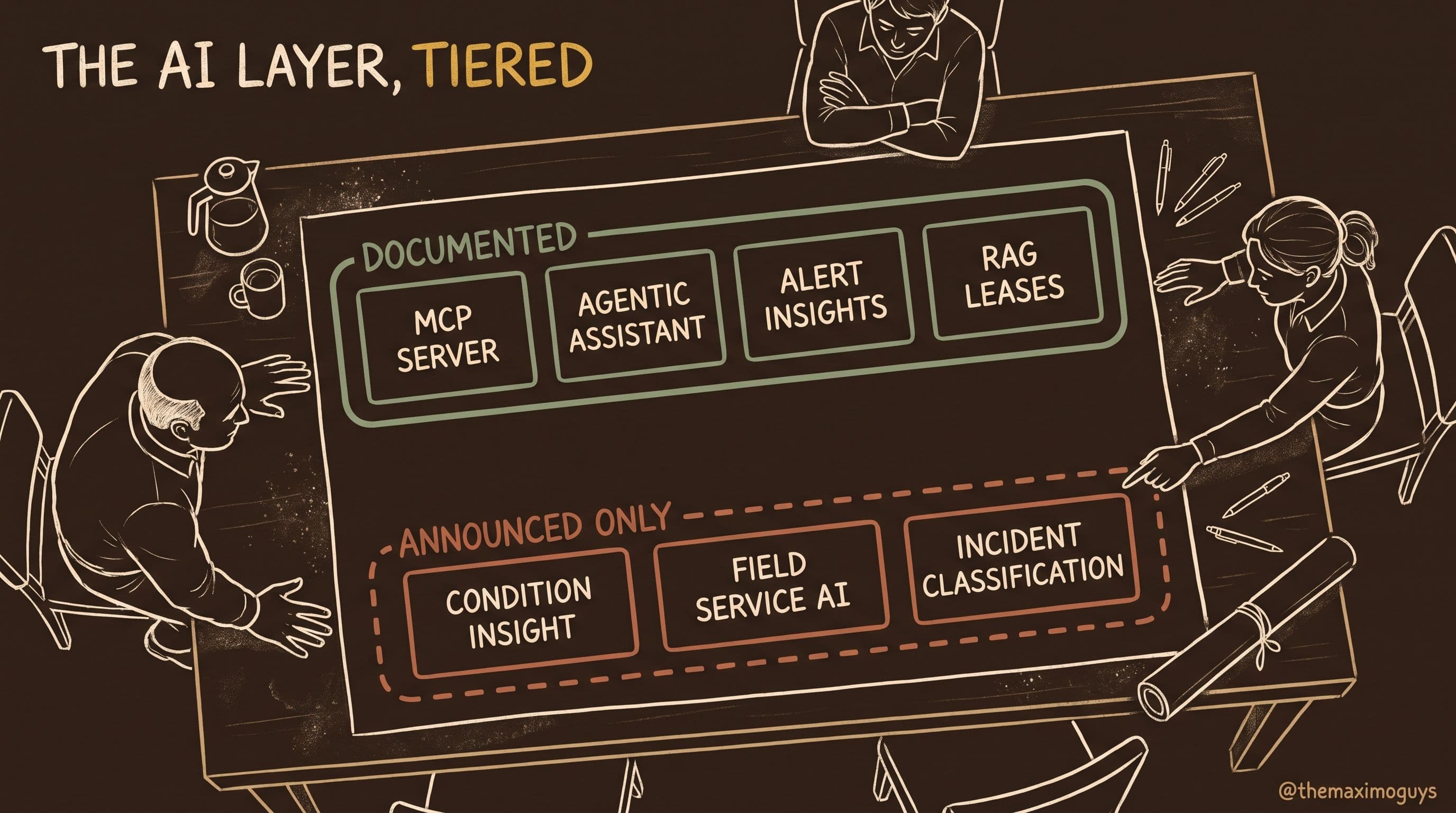
IBM framed MAS 9.2 around asset-first AI and agentic workflows. This is an evidence-tiered assessment of what that actually means — the agentic Maximo Assistant, the Maximo MCP server, AI-generated insights with confidence scores, RAG lease extraction, watsonx Orchestrate in Maximo IT, and AI Service AppPoint tracking — separating what product documentation confirms from what only the announcement claims.
 Venkat AchantaAug 12, 2026Part 5 of 7
A structured reality check on IBM Maximo Application Suite 9.2. Eight gates that decide whether you can and should move, five verdicts mapped to real customer profiles, and an honest accounting of what the release does and doesn't give you.
Venkat AchantaAug 12, 2026Part 7 of 7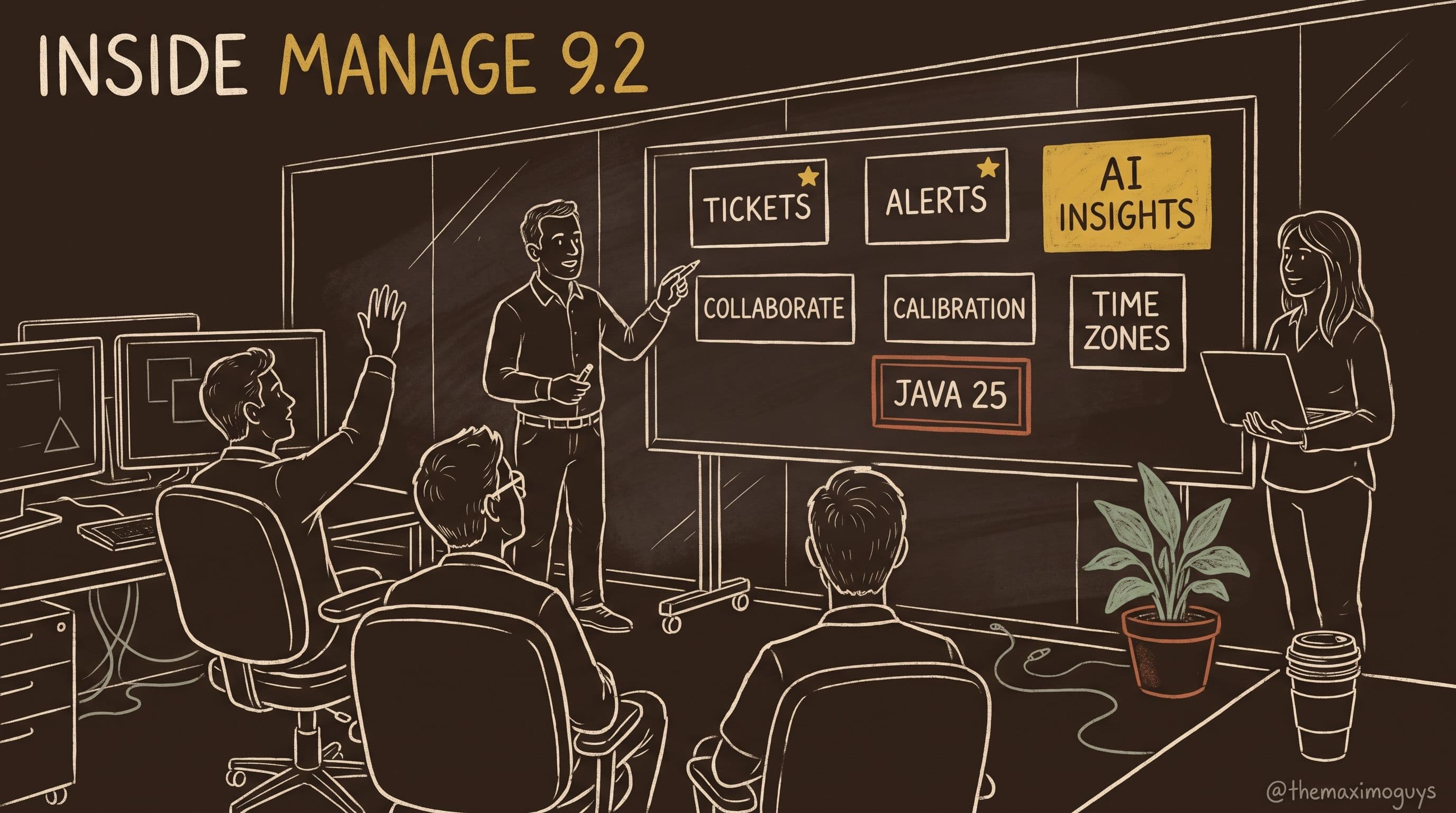
A complete, sourced walkthrough of Maximo Manage 9.2 — the new Tickets and Alerts applications, AI-generated alert insights, Collaborate moving inside Manage, automated calibration accuracy validation for ISO/IEC 17025 and ISO 15189, six new time zone processing rules, Java 25, and everything new in Maximo Optimizer 9.2.
Venkat AchantaAug 12, 2026Part 3 of 7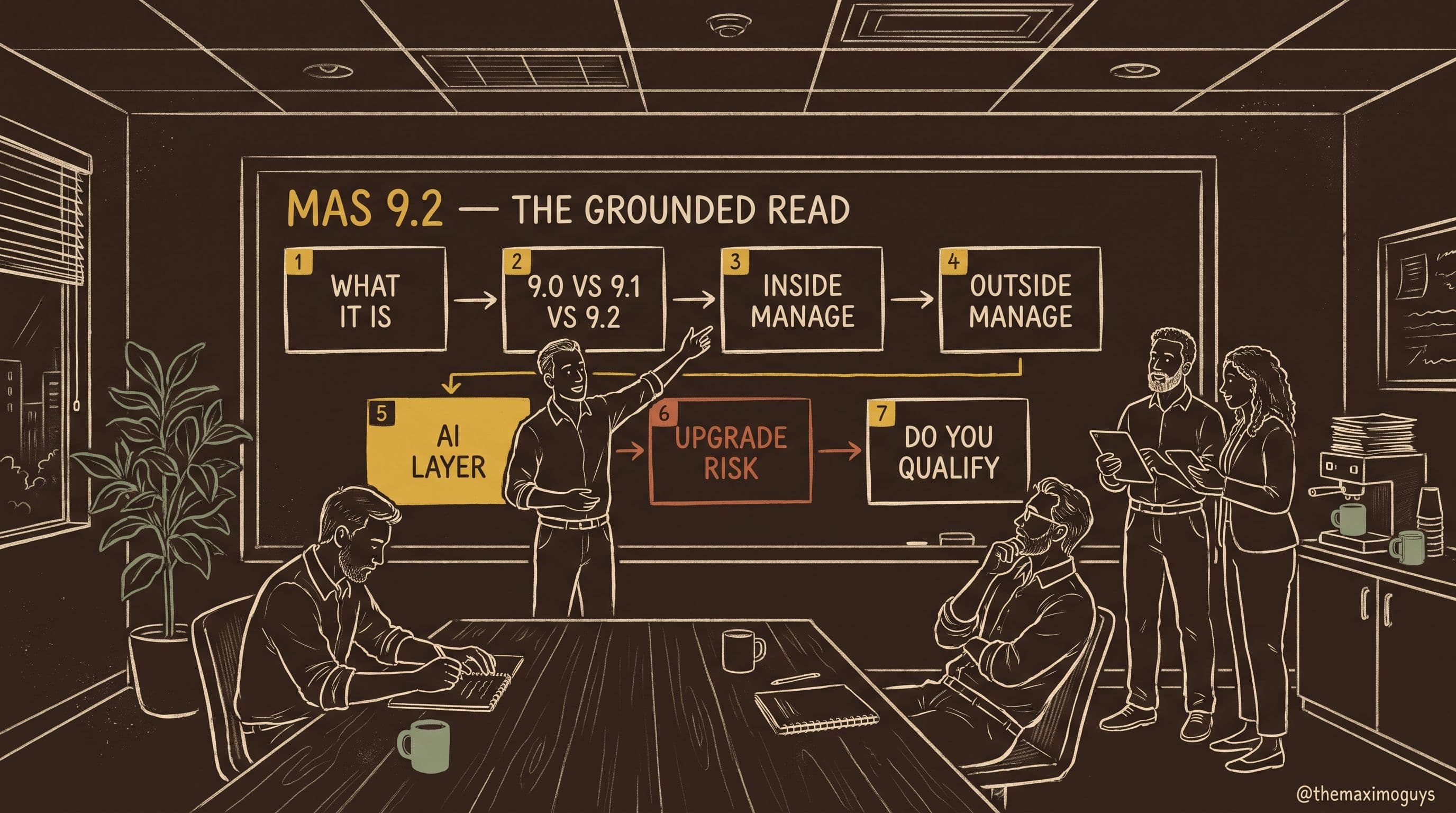
A seven-part, primary-source series on IBM Maximo Application Suite 9.2. What actually shipped on 25 June 2026, how it compares to 9.1 and 9.0, what changed inside Manage and across the suite, what the AI layer really contains, the upgrade items that bite hardest, and an honest verdict on who qualifies.
Venkat AchantaAug 12, 2026Part 0 of 7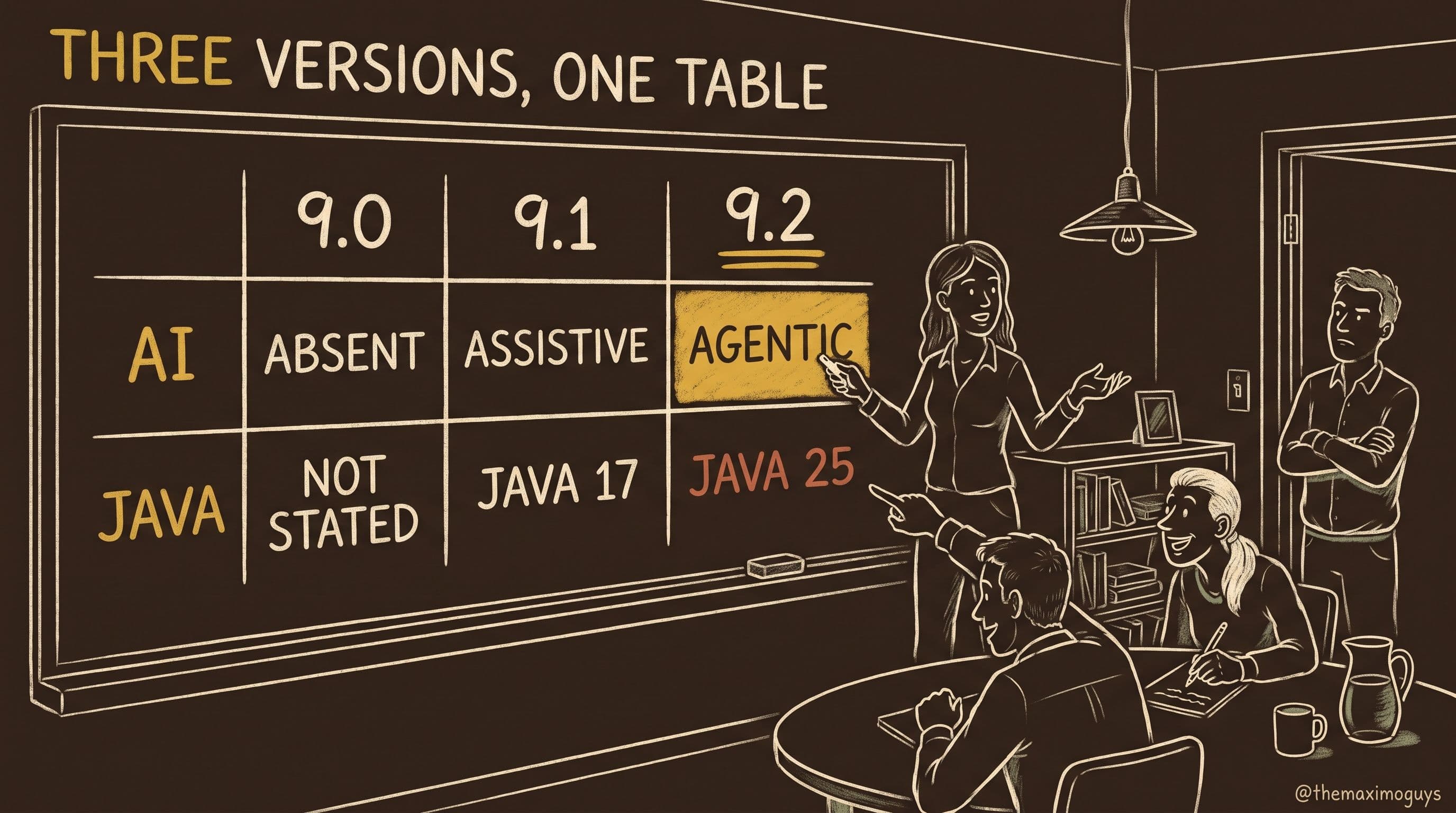
A dimension-by-dimension comparison of Maximo Application Suite 9.0, 9.1 and 9.2 — platform and navigation, AI, applications, Java and database prerequisites, and support lifecycle — built only from IBM's own pages, with every claim we could not verify flagged as such.
Venkat AchantaAug 12, 2026Part 2 of 7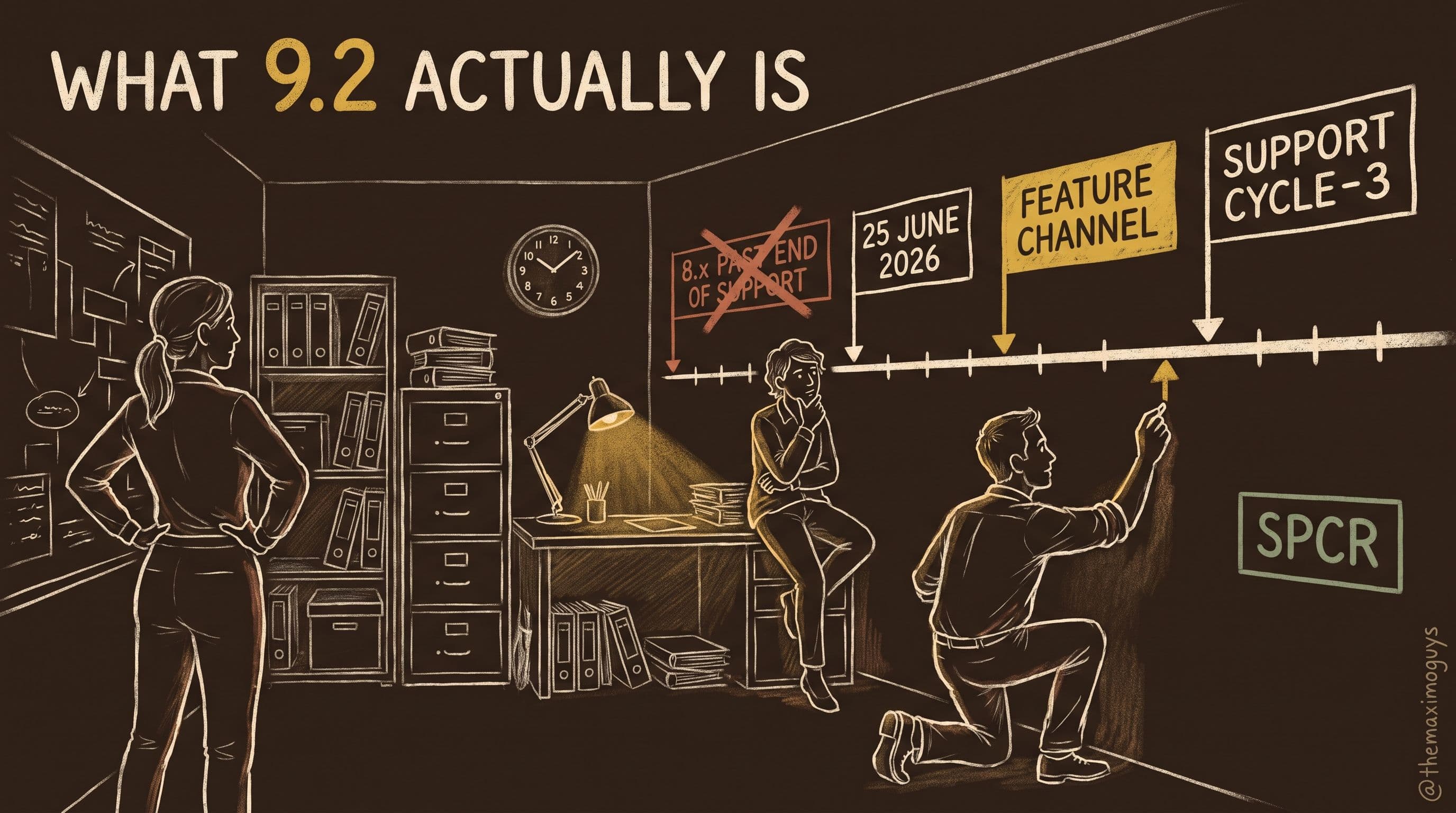
A plain-language guide to MAS 9.2 for business and functional leaders: what was released, what the Feature Channel means, how support works, what 8.x customers must check, and how to confirm platform requirements.
Venkat AchantaAug 12, 2026Part 1 of 7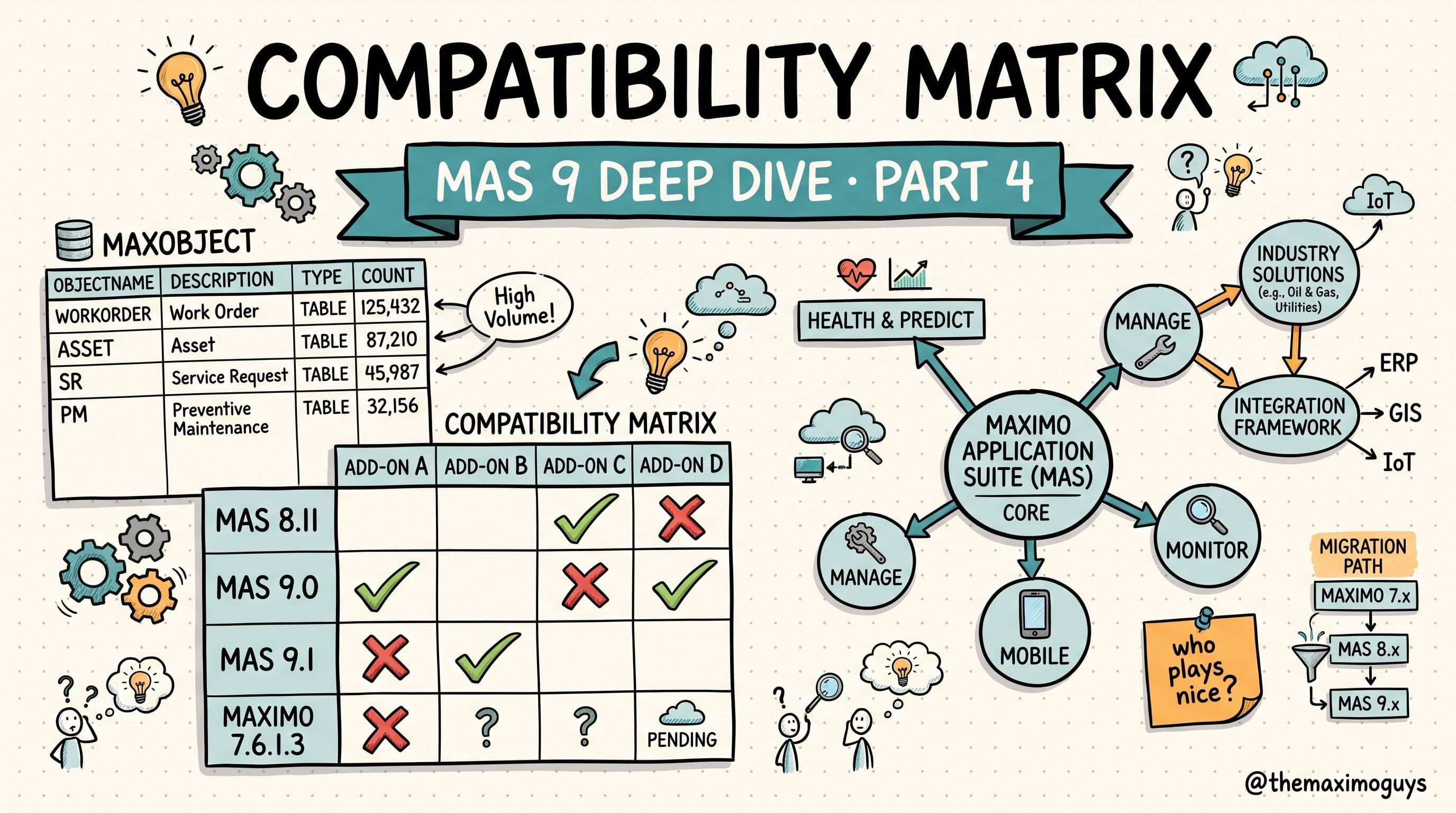
How to read MAXOBJECT counts as an add-on's real database footprint, why HSE ships inside Oil & Gas under one shared PLUSG prefix, why Aviation conflicts with almost everything, and the exact MAS 9 compatibility matrix that tells you which extensions can coexist.
Venkat Achanta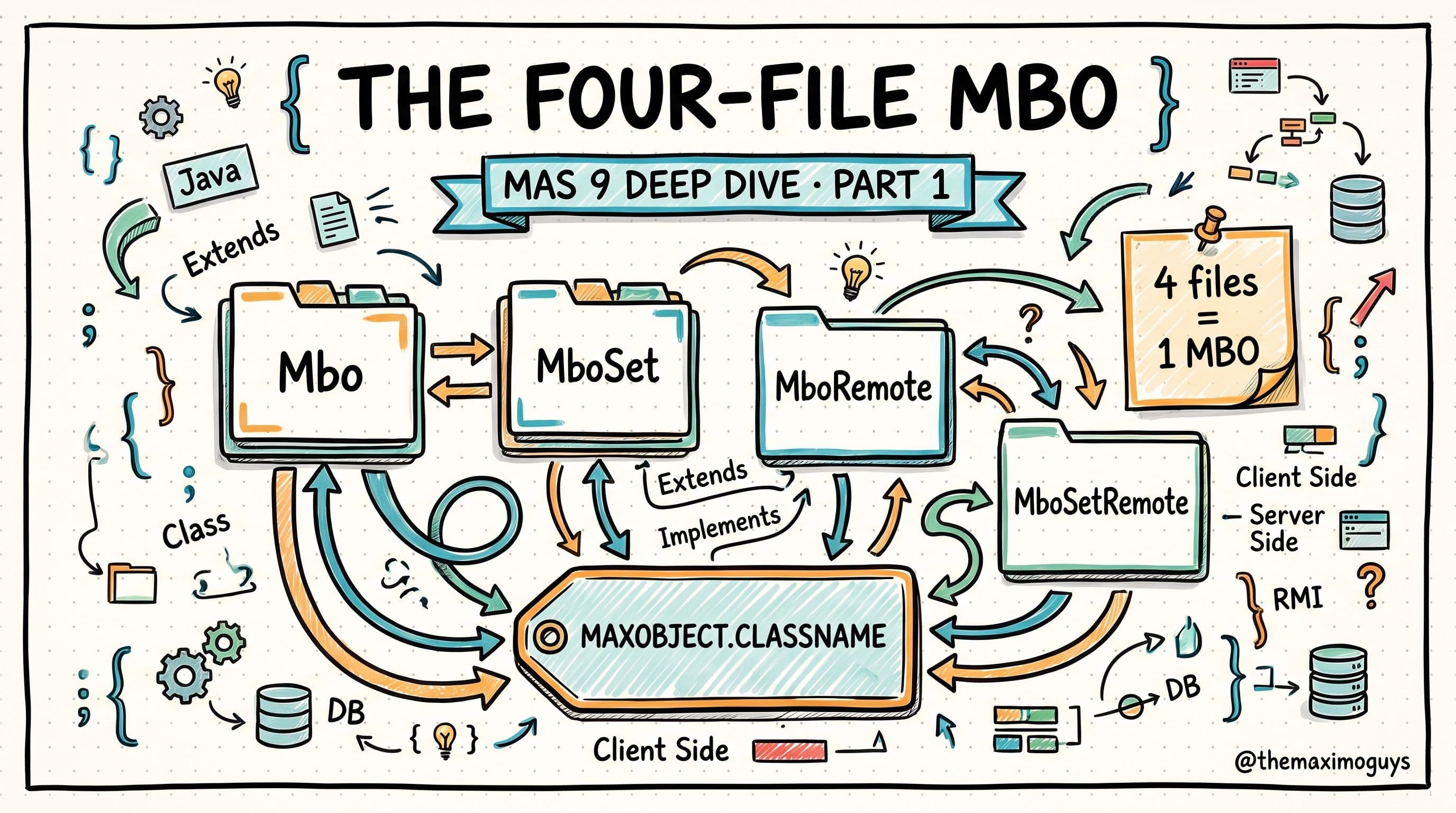
A developer's deep dive into the four-file MBO pattern behind every Maximo object, how MAXOBJECT.CLASSNAME links an object to its MBO Set class, and how a PLUS add-on layers on top through plain Java inheritance.
Venkat Achanta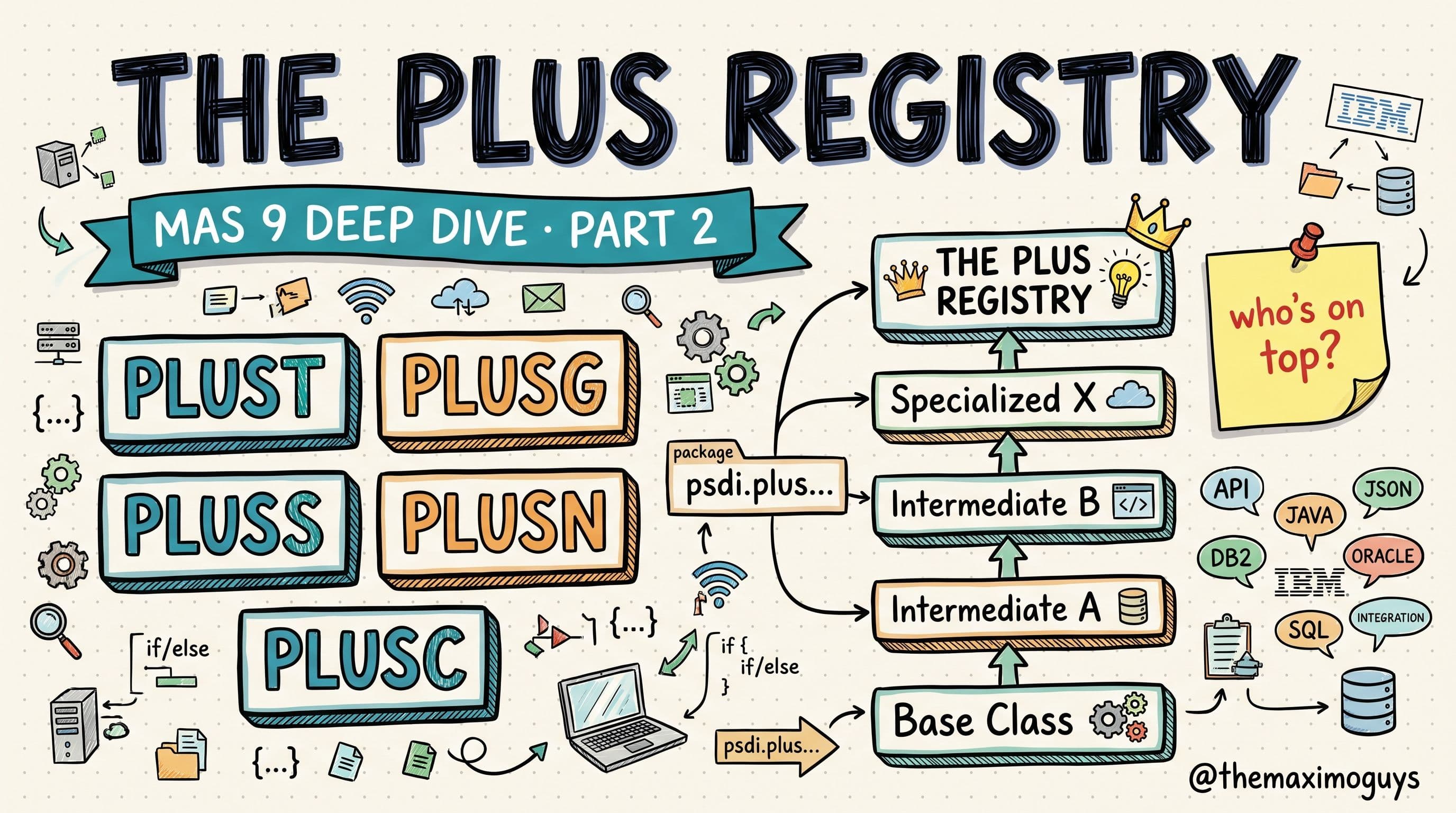
The reference every Maximo developer bookmarks: the complete PLUS prefix directory (PLUSA through PLUSV, TLOAM, custom), which prefixes are included capabilities versus paid add-ons versus legacy, the five-layer extension hierarchy, and exactly how Maximo stitches multiple add-ons into one MBO inheritance chain — with the WorkOrder and Asset chains resolved step by step.
Venkat Achanta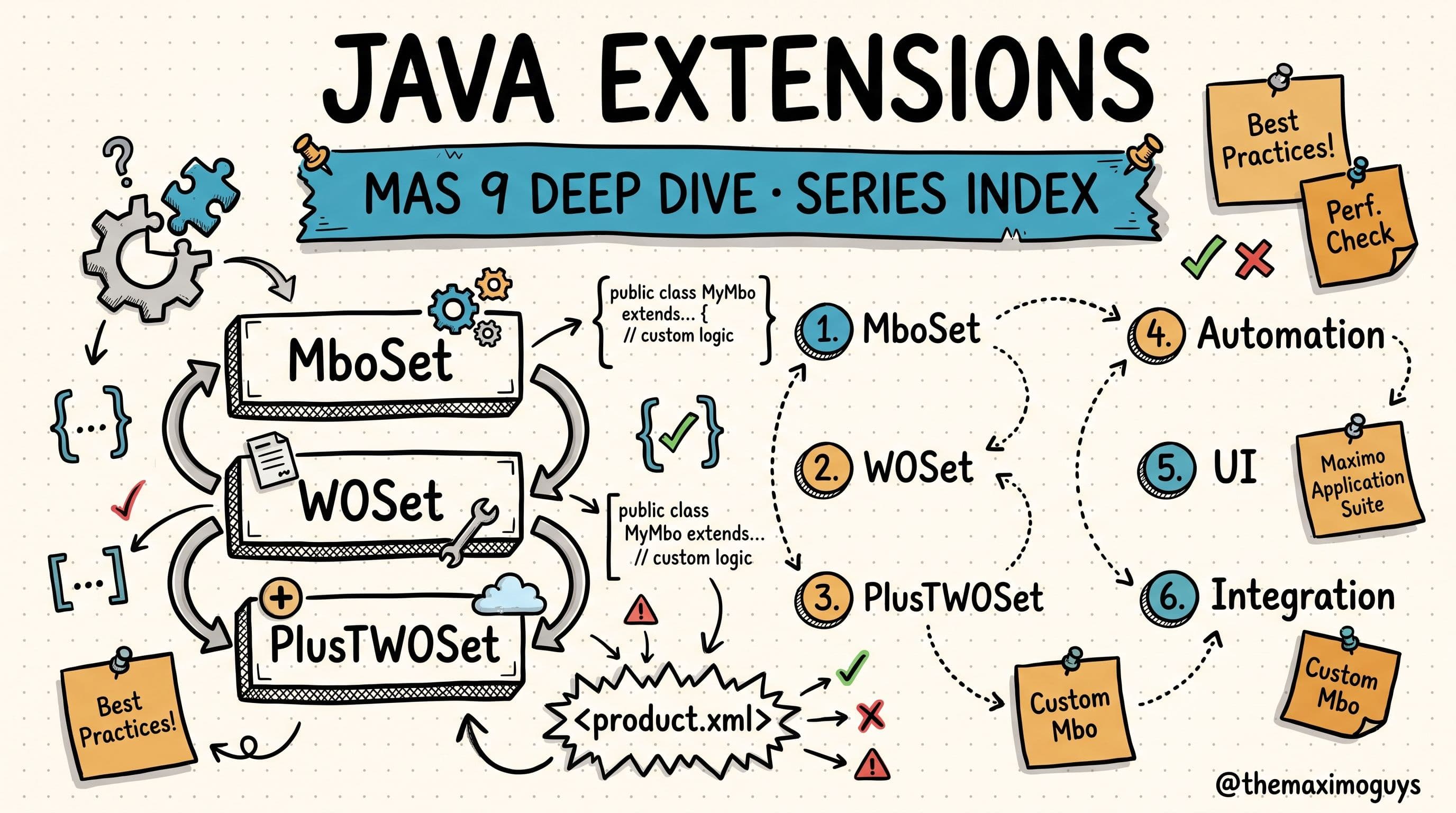
A developer's deep dive into how IBM Maximo add-ons and industry solutions extend the core through Java — PLUS prefixes, the four-file MBO pattern, MBO inheritance chains, product.xml, bytecode injection, the compatibility matrix, the MAS 9 Customization Archive, and the Java 17 shift.
Venkat Achanta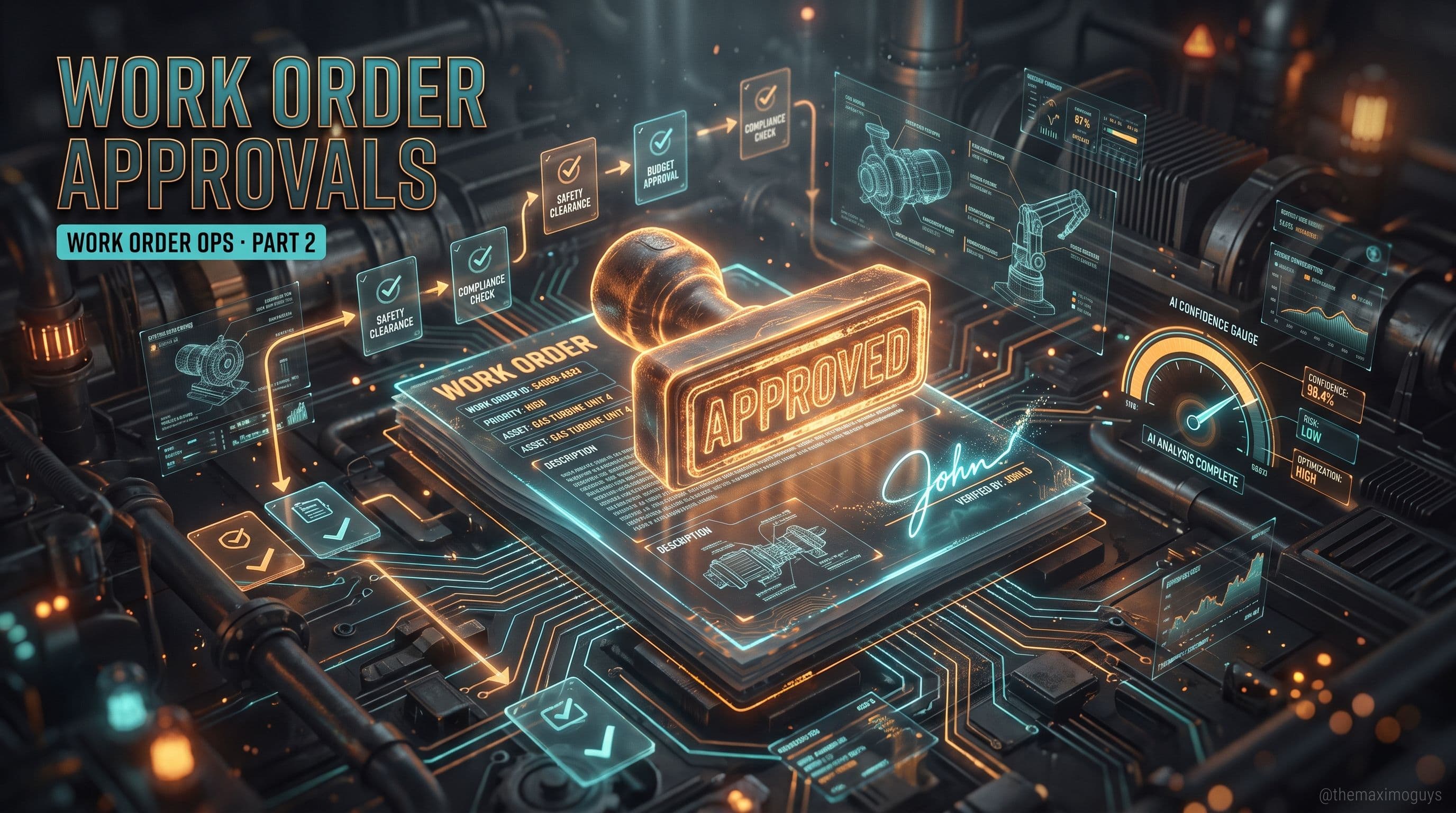
Approving a work order looks different in MAS 9. Here's the honest picture — the Workflow Designer is unchanged and your 7.6 workflows carry forward, the new Approvals Role-Based Application replaces the Work Supervisor approval flow (with one gap), watsonx-powered Work Order Intelligence recommends a failure code with a confidence score at approval, and electronic signatures can be enforced on specific status changes for regulated work.
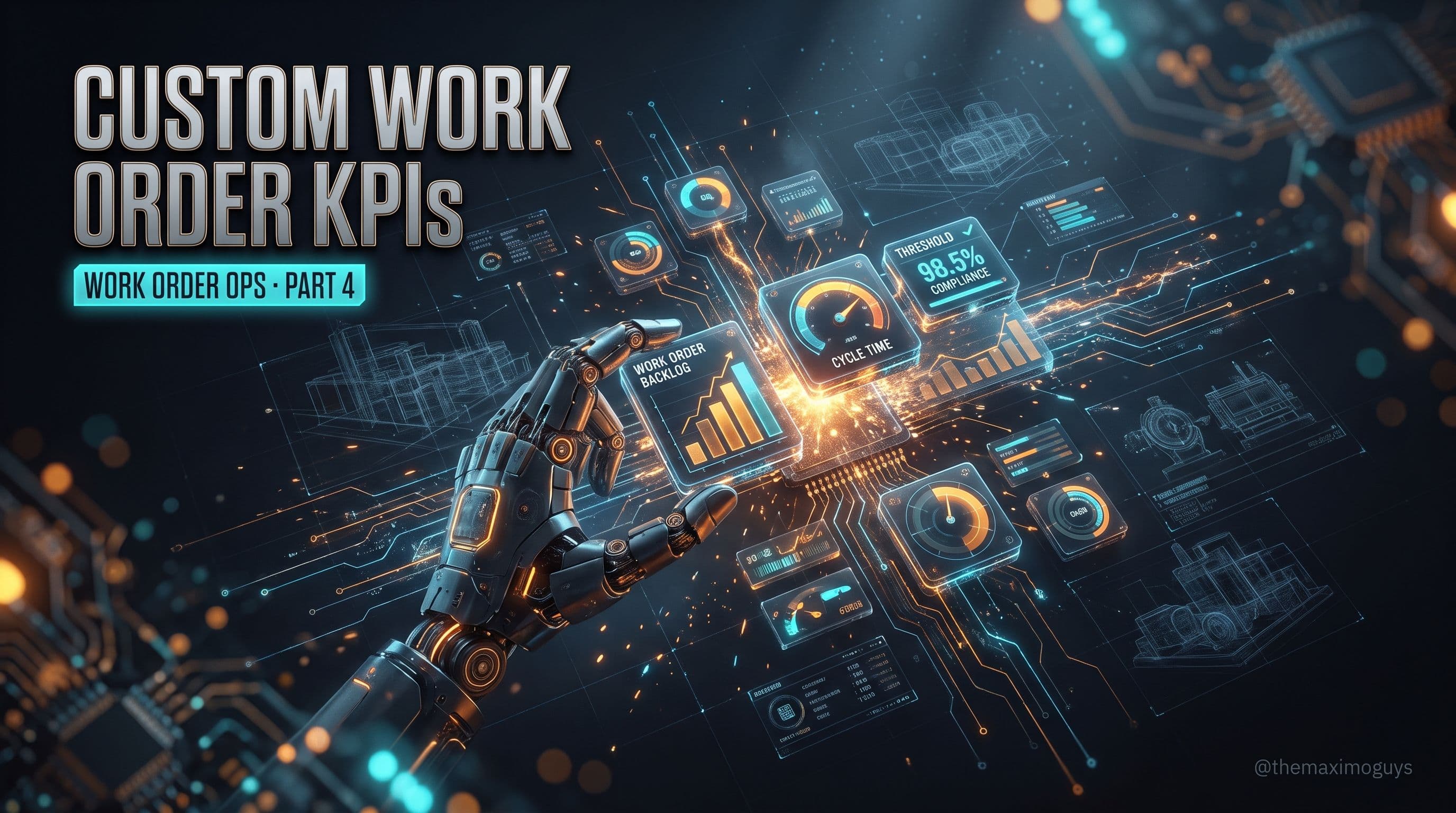
Part 3 showed you how to consume the operational dashboard. This is the other half: how to build your own work order KPIs in MAS 9. The KPI Manager application, custom queries against any Maximo object, refresh intervals, green/yellow/red thresholds, trend calculations, matching a KPI to the right card type, and the MAS 9.1 ability for KPI services to return JSON from an external API.
Venkat Achanta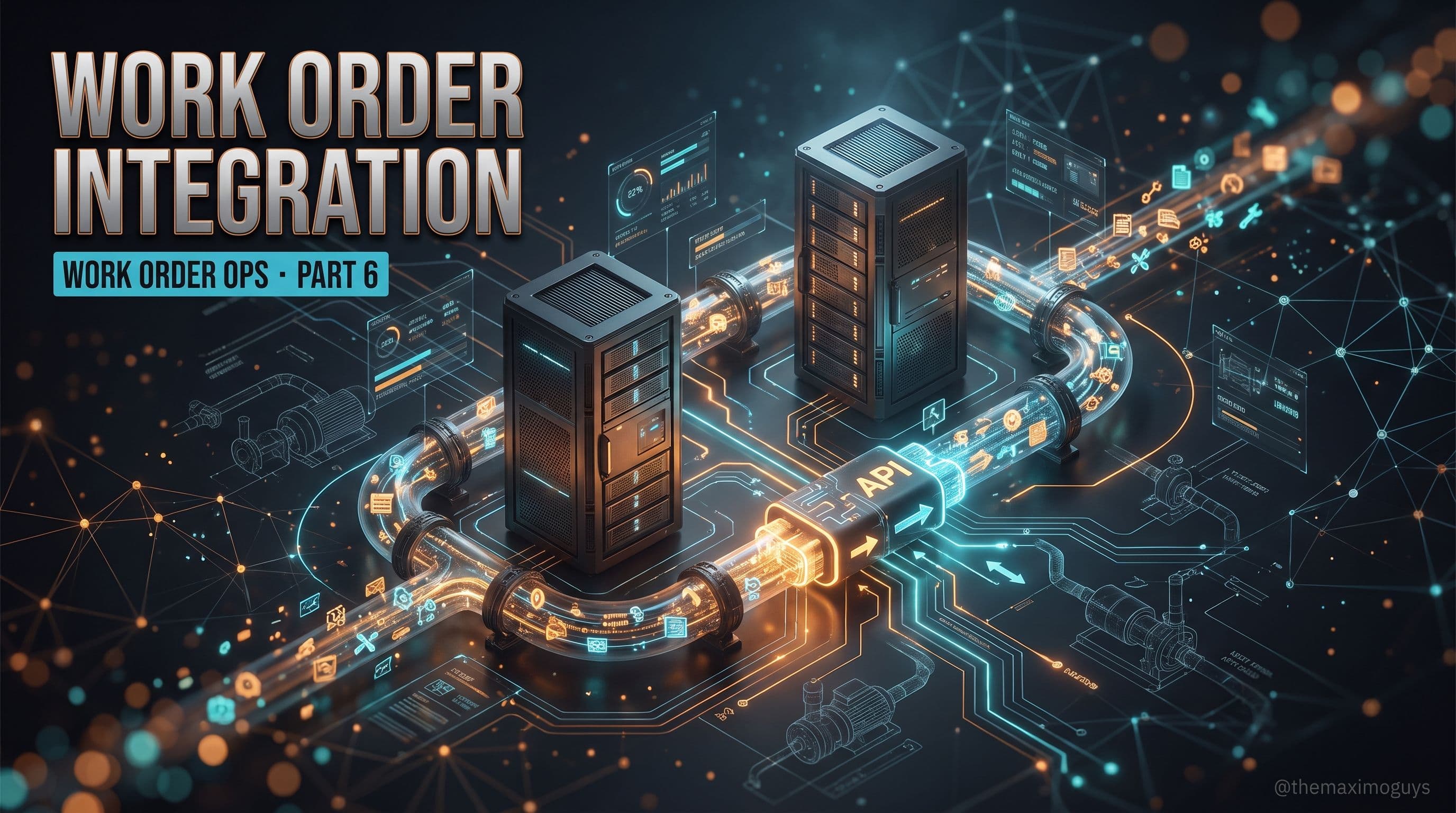
The work order integration surface moved in MAS 9. Here's the JSON API for work orders — /api/os/mxwodetail with lean=1 — with real query and create examples, Kafka events for near-real-time WO changes, and the honest posture on MIF: it still works, but new integrations belong on REST and Kafka.
Venkat Achanta
IBM's Operational Dashboard is the strategic replacement for Start Centers as the maintenance manager's command center. Here's what ships out of the box in MAS 9 Manage — the WO KPIs, the pre-built Maintenance Manager dashboard, the card types worth knowing — and the honest 9.1 limitation that keeps many teams running Start Centers side by side.
Venkat Achanta
BIRT is not formally deprecated in MAS 9 and your existing work order reports still run. The upgrade mistake is treating the report catalog as a rebuild backlog. Here's how to rationalize WO reporting into KPI Manager cards, keep the reports that must stay reports, and know exactly when Cognos Analytics earns the job.
Venkat Achanta
A six-part edge-filler series on the Work Order changes that the standard MAS 9 Manage guides skip: the Service Request RBA, the Approvals application and electronic signatures, the Operational Dashboard and out-of-the-box WO KPIs, custom KPI creation, rationalizing BIRT into KPI Manager, and the new WO REST and Kafka integration surface.
Venkat Achanta
The Service Request Work Center is gone. Here's what replaced it in MAS 9 Manage — the classic SR app in Carbon, the Service Request Role-Based Application on MAF, the dedicated SR mobile app in 9.0 and 9.1 — and the honest truth about the single-screen SR-to-WO conversion that no longer exists.
Venkat Achanta
A practitioner's deep dive into IBM Maximo Manage on MAS 9 — eleven parts covering the new MAF role-based applications, Operational Dashboard, Reliability Strategies, Inspections, Work Management, Graphical Scheduling, Maximo Mobile, embedded AI, and how to configure and administer it all.
Swetansh Kumar
A practitioner's map of how Maximo 7.6 EAM became Maximo Manage in MAS 9 — the move to containers on OpenShift, the Maximo Application Framework, AppPoints licensing, and why your MBOs, scripts, and database survive the journey intact.
Swetansh Kumar
A 4-part series breaking down every major feature change in MAS 9 — from Manage core platform transformation, to suite AI applications, paid add-ons and industry solutions, and the supply chain revolution. Your team's complete upgrade reference.
 Posam LakshminarayanaMar 17, 2026Part 0 of 25
A forward-looking view of where Maximo may head through 2040: AI agents, digital twins, more autonomous workflows, and the five-stage EAM evolution from reactive to increasingly autonomous operations.
The Maximo GuysFeb 6, 2026Part 12 of 12Venkat Achanta