9 part series

A grounded eight-part series on the watsonx-powered Maximo Assistant and the AI features of MAS 9.1 and 9.2 — the watsonx.ai foundation, natural-language work guidance, knowledge capture, guided troubleshooting, the AI Service deployment path, governance and AppPoints, supply chain (querying items, inventory, and PRs natively vs building item-creation, PR-drafting, and similarity tools on the 9.2 MCP server), and an October 2026 capability map. Written for teams who want to know what generative AI in Maximo actually does, and what it does not.

What the Maximo Assistant actually is, the IBM watsonx.ai foundation models that power it, and the Maximo AI Service that connects the two. A grounded introduction to generative AI in MAS 9 — including an honest map of what it does and, just as importantly, what it does not do.
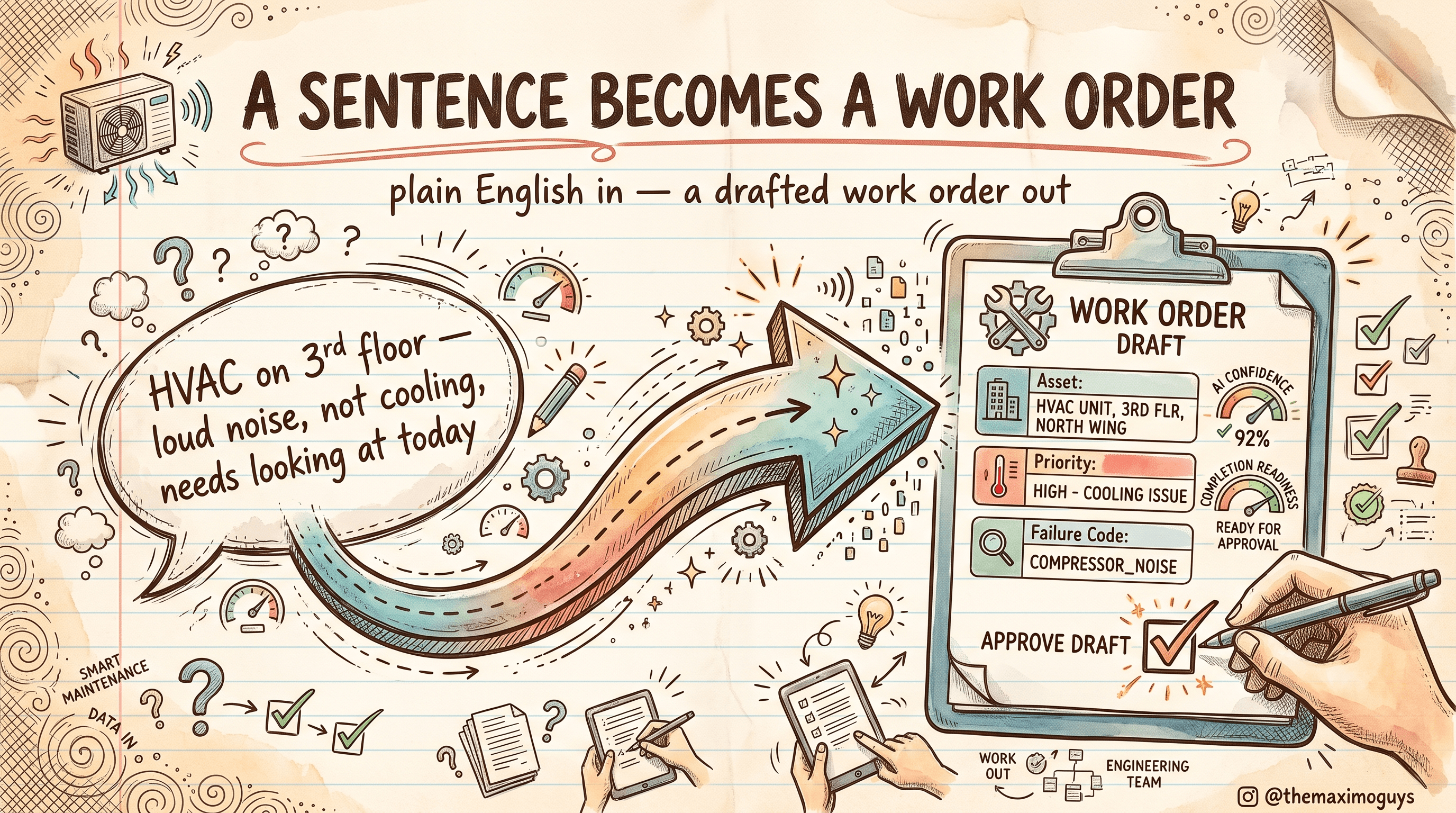
The feature people mean when they say 'AI in Maximo.' How the Maximo Assistant drafts a work order from a plain-English description, replaces filter queries with natural-language asset search, and recommends field values — priority, work type, failure codes, craft — each with a confidence score you can accept, modify, or reject.

Your best fixes live in your veterans' heads and in long-description fields nobody reads. Here's how the Maximo Assistant surfaces them — knowledge base search across manuals, SOPs, and repair narratives; similar-record detection that transfers knowledge from experienced staff to new staff; and where remote-expert connection fits — which is Maximo Collaborate (the former Maximo Assist add-on), not the generative Assistant.
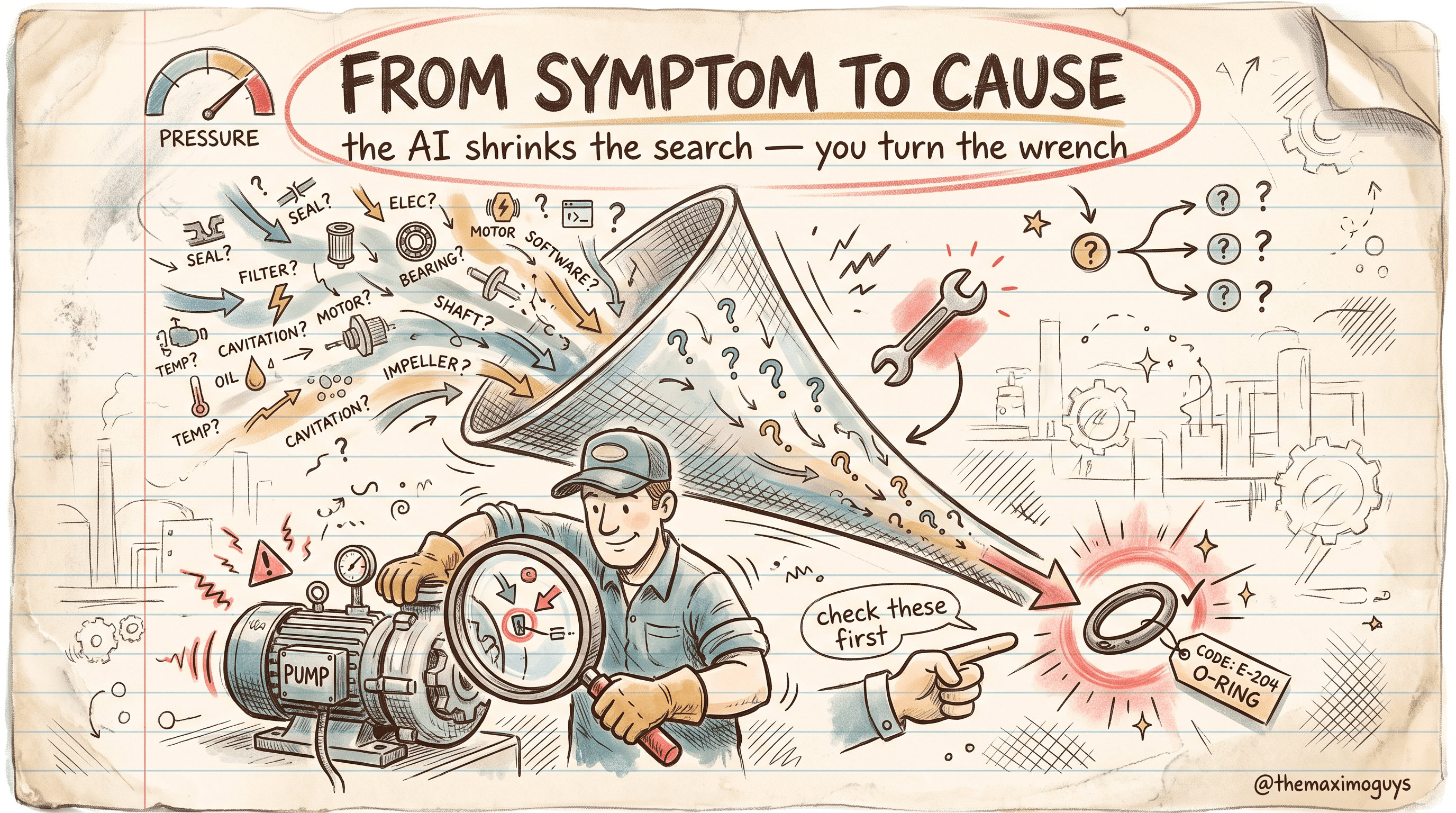
When something is broken and the technician doesn't know why, this is where the Maximo Assistant earns its keep. How step-by-step troubleshooting guidance walks from symptom to likely cause, how AI failure-code identification recommends failure class, problem, cause, and remedy codes, how Visual Inspection folds in visual diagnosis, and how PM optimization recommends which preventive work to cut, tighten, or extend.
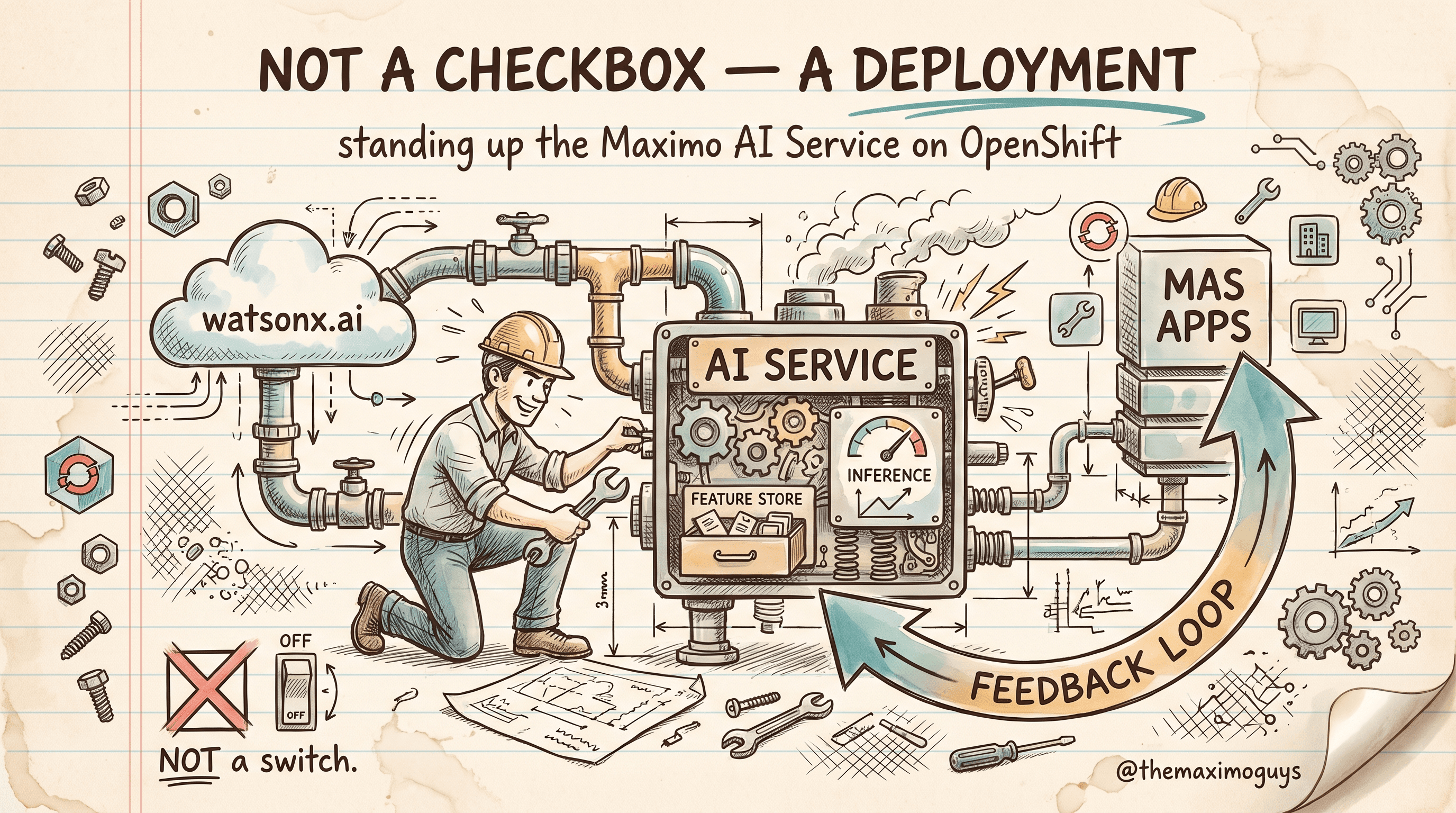
The Maximo Assistant is not a checkbox — it's a deployment project. The real path: the Maximo AI Service operator on OpenShift, the watsonx.ai connection, training recommendation models on your own data, and the feedback loop that keeps them improving. Mapped to IBM's ten team-exploration tasks and the realistic 68–128 hour pilot estimate.
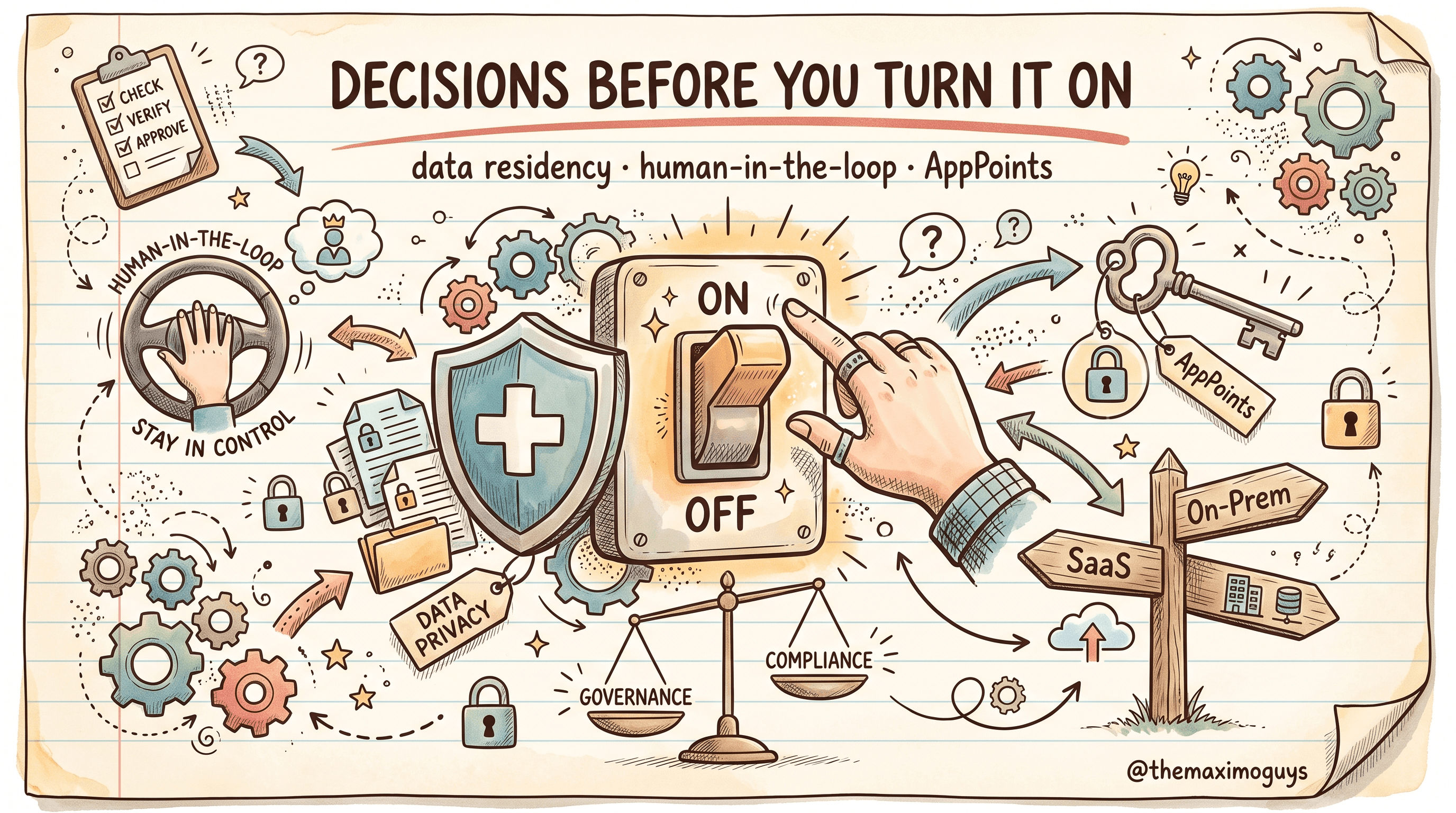
Generative AI is a governance conversation before it is a technology one. The data-residency decision baked into SaaS-versus-on-premises watsonx.ai, the human-in-the-loop controls (confidence scores and accept/modify/reject) that keep the AI a recommender not a decider, the feedback loop as a governed data process, and the AppPoints licensing that gates who gets access — with a go-live governance checklist.
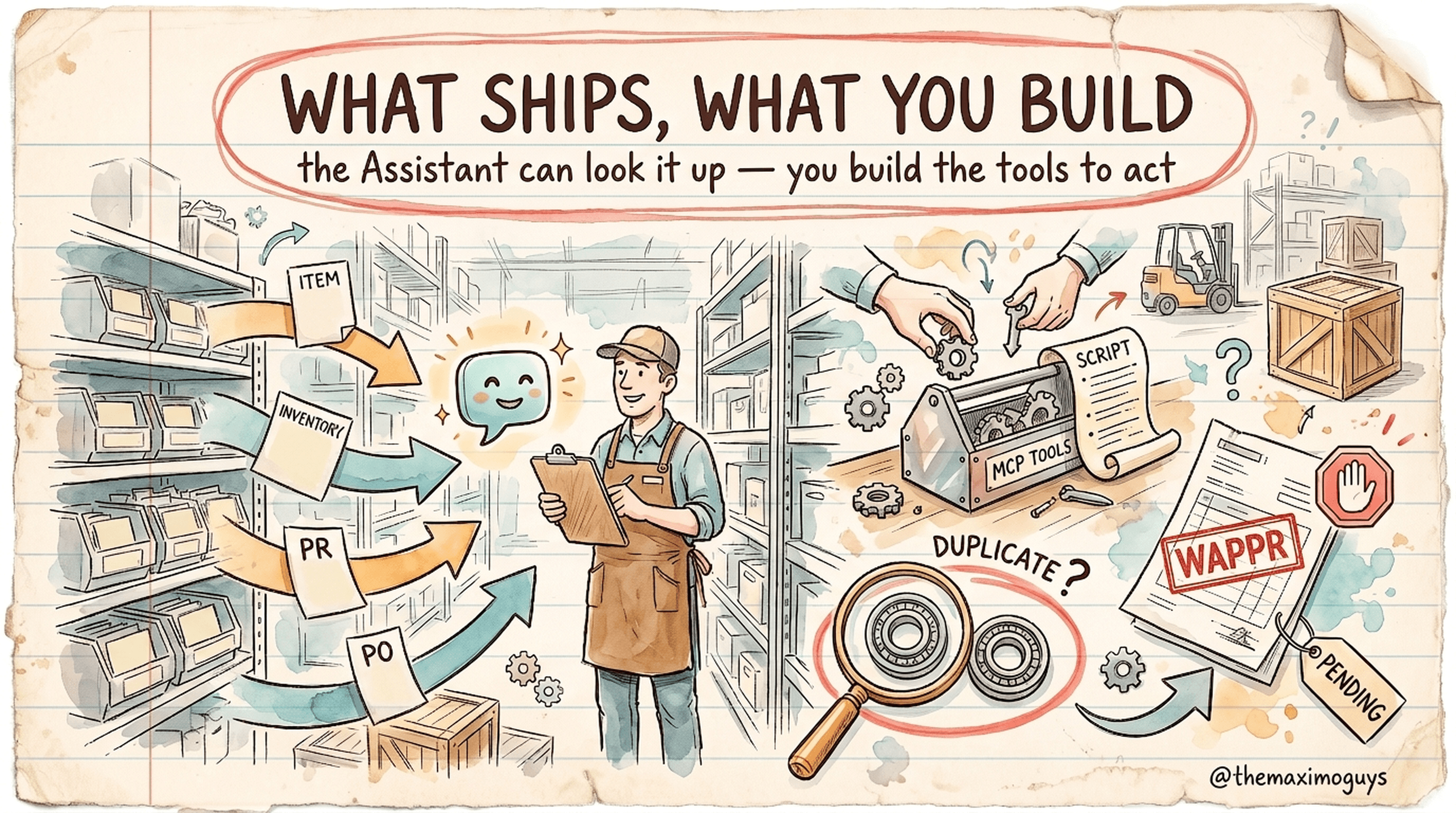
Storekeepers and buyers want to ask the Maximo Assistant to create an item, raise a purchase requisition and check whether a part already exists. This evidence-tiered guide separates what IBM documents today (the Assistant can query supply-chain objects once an admin enables them; similarity is documented for work orders, records and tickets), what IBM has only announced, and what you can build yourself on MAS 9.2 as custom MCP tools — items that land in PENDING, PRs that land in WAPPR and go through your normal approval workflow, and a duplicate-item check — with code, governance and a rollout plan.
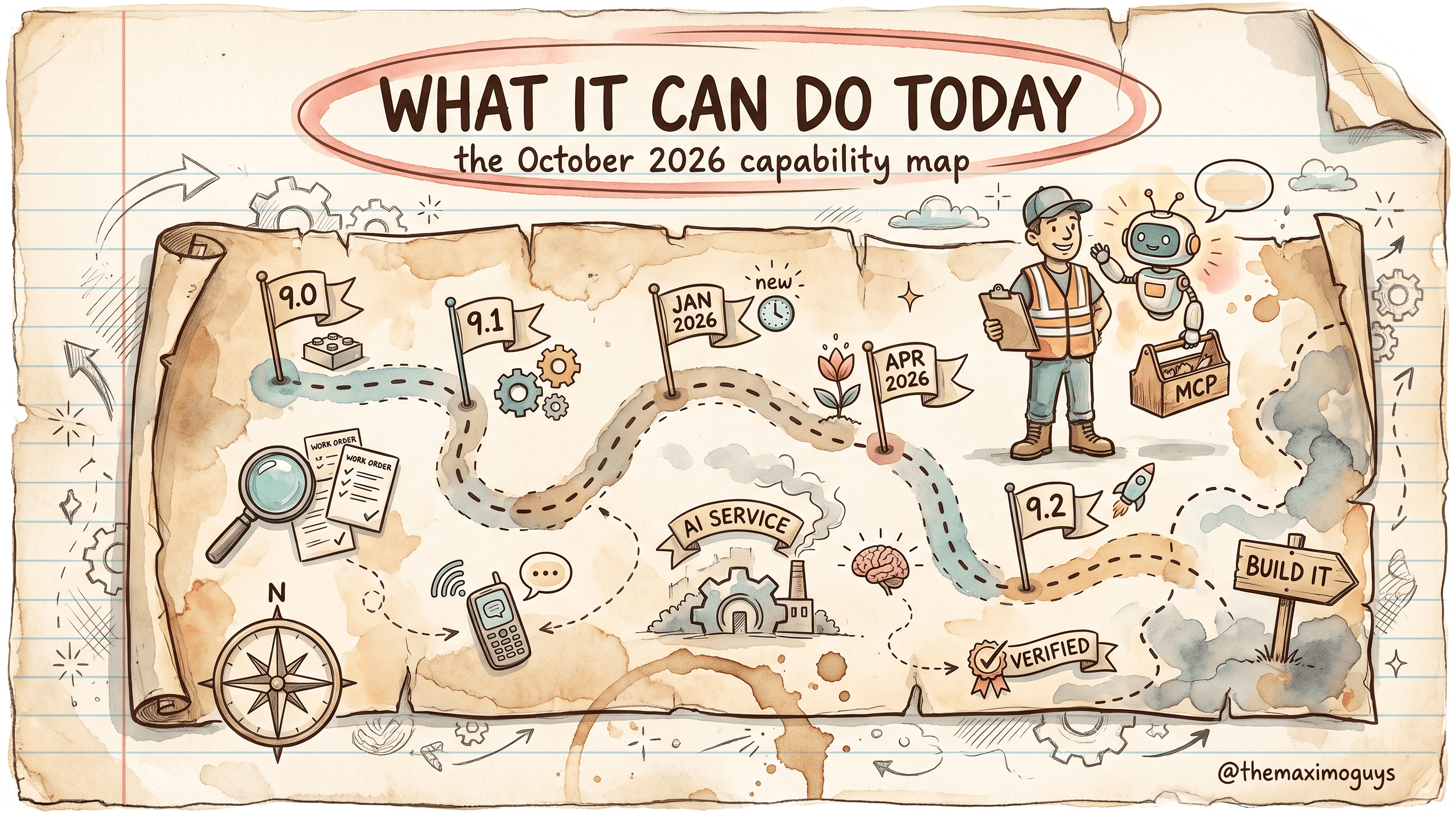
A dated, evidence-tiered reference to the Maximo Assistant and the Maximo AI Service as of October 2026. It traces the path from the 9.0 AI broker through 9.1, the January and April 2026 Feature Channel drops, 9.2 GA's agentic Assistant and MCP server, and the AI Service 9.2.3 patch level. It also covers the security bulletins, a full capability matrix, the model bill of materials, what the Assistant still cannot do, the Assist-versus-Assistant naming correction, and a checklist for verifying each capability in your own instance.
