8 posts tagged “Reliability”
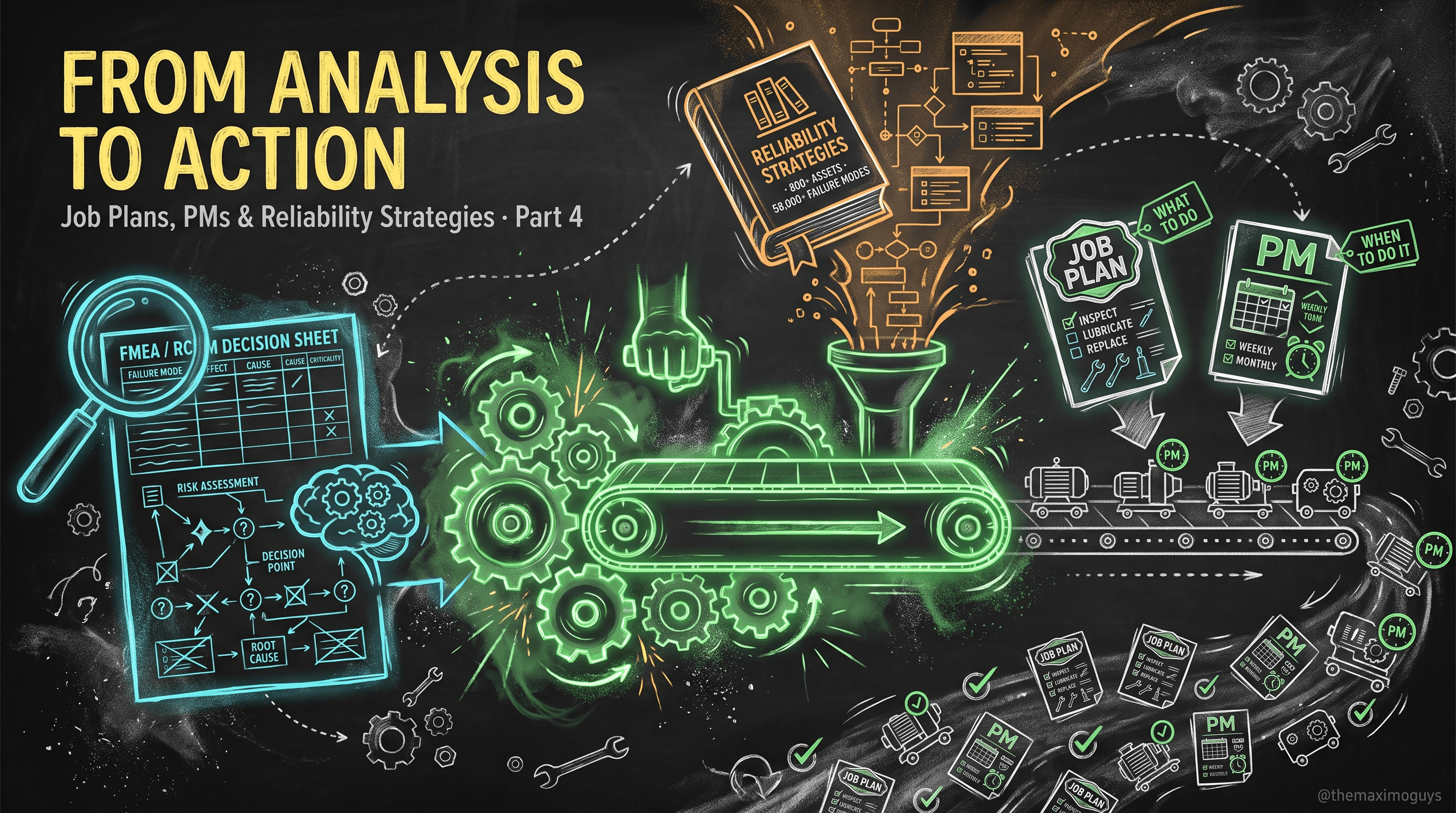
With the spine in place, you attach the maintenance decisions. Job plans define the task, PMs define the schedule, asset templates roll both out at fleet scale, and the dedicated Reliability Strategies application brings RCM/FMEA content natively into Maximo — with a vendor library of 800+ asset types and 58,000+ failure modes.
 Venkat AchantaJul 16, 2026Part 4 of 7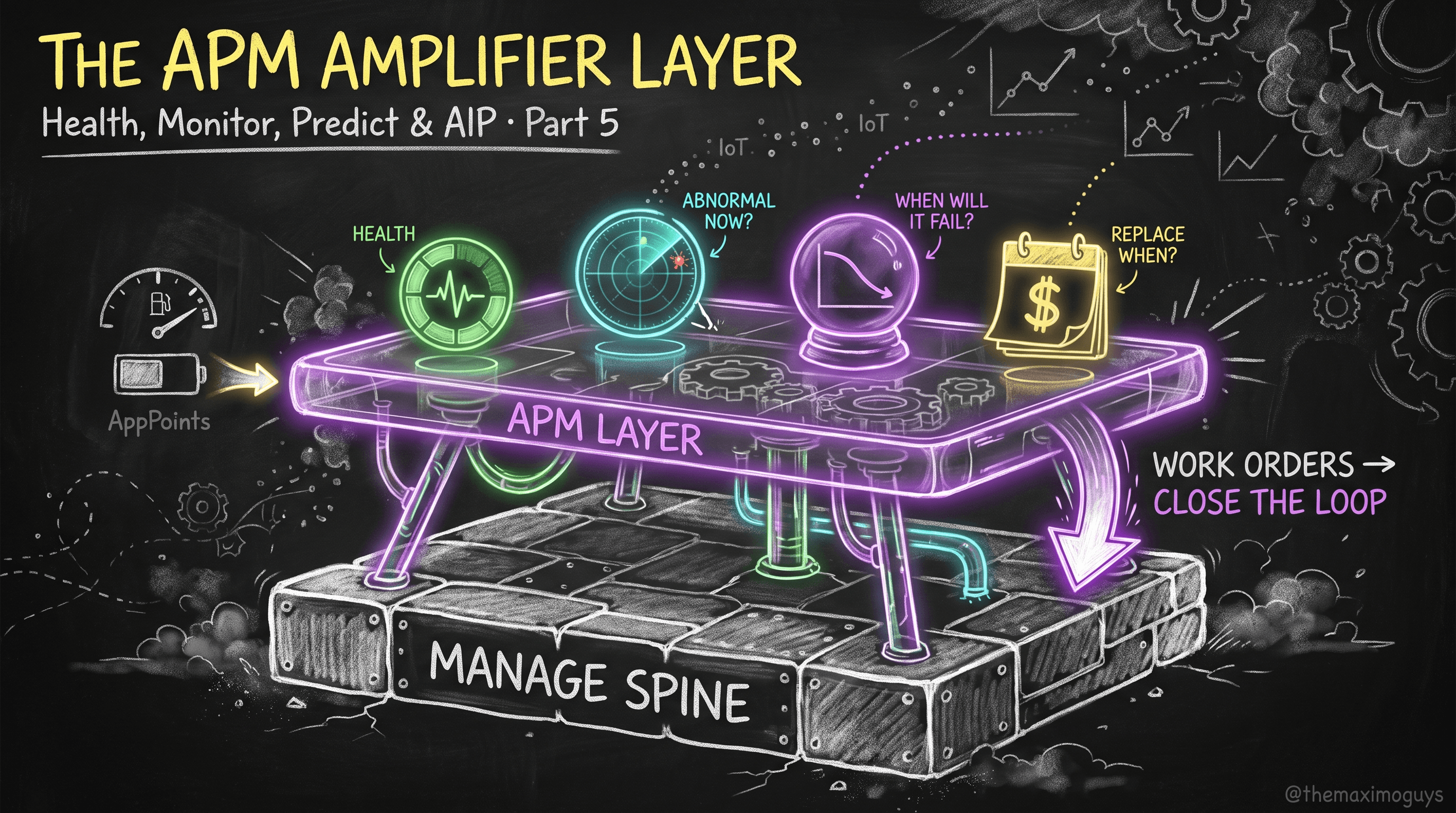
Asset Performance Management sits on top of the Manage spine, not in place of it. Maximo Health scores criticality and risk, Monitor answers 'is it abnormal now?', Predict answers 'when will it fail?', and Asset Investment Planning turns risk into capital timing — and all of them push work orders back into Manage to close the loop.
Venkat AchantaJul 16, 2026Part 5 of 7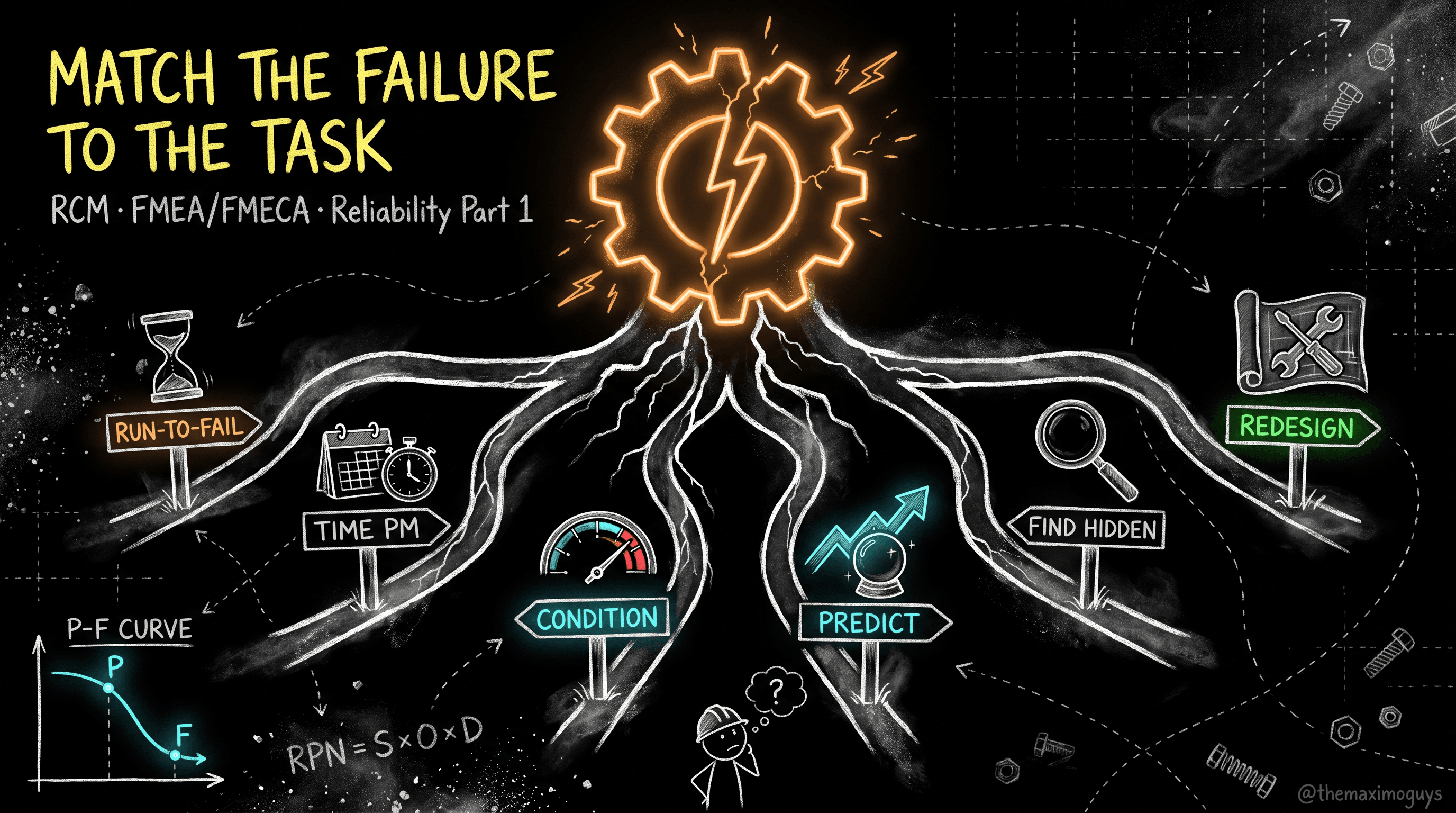
Before you touch a Maximo application, get the method right. This is Reliability Centered Maintenance reduced to SAE JA1011's seven questions, FMEA/FMECA with the RPN screen, and the decision logic that maps every failure mode to exactly one task type — run-to-failure, PM, condition-based, predictive, failure-finding, or redesign.
Venkat AchantaJul 16, 2026Part 1 of 7
The metrics are the feedback loop that tunes the strategy. This is MTBF, MTTF, MTTR, availability, failure rate and OEE from first principles, the bathtub curve explained, and the Nowlan & Heap finding turned into a concrete PM-optimization method you can run against your own Maximo failure history.
Venkat AchantaJul 16, 2026Part 2 of 7
Everything in this series assembles into a phased program: Phase 0 legacy cleanse during the upgrade window, Phase 1 the reference-data spine, Phase 2 the maintenance decisions, Phase 3 the Reliability Strategies layer, Phase 4 APM, and Phase 5 closing the loop — the phase that never ends. Each phase has exit criteria so you know when you can move on.
Venkat AchantaJul 16, 2026Part 7 of 7
This is where reliability implementation succeeds or stalls. The strategy is only as good as the data underneath it, and the data has a hard dependency order. Here are the five realistic load tools, the eleven-step load sequence the MBO layer forces on you, per-object load specifics including the FAILURELIST restricted-object gotcha, and the validation and cleansing that must happen before you load anything.
Venkat AchantaJul 16, 2026Part 6 of 7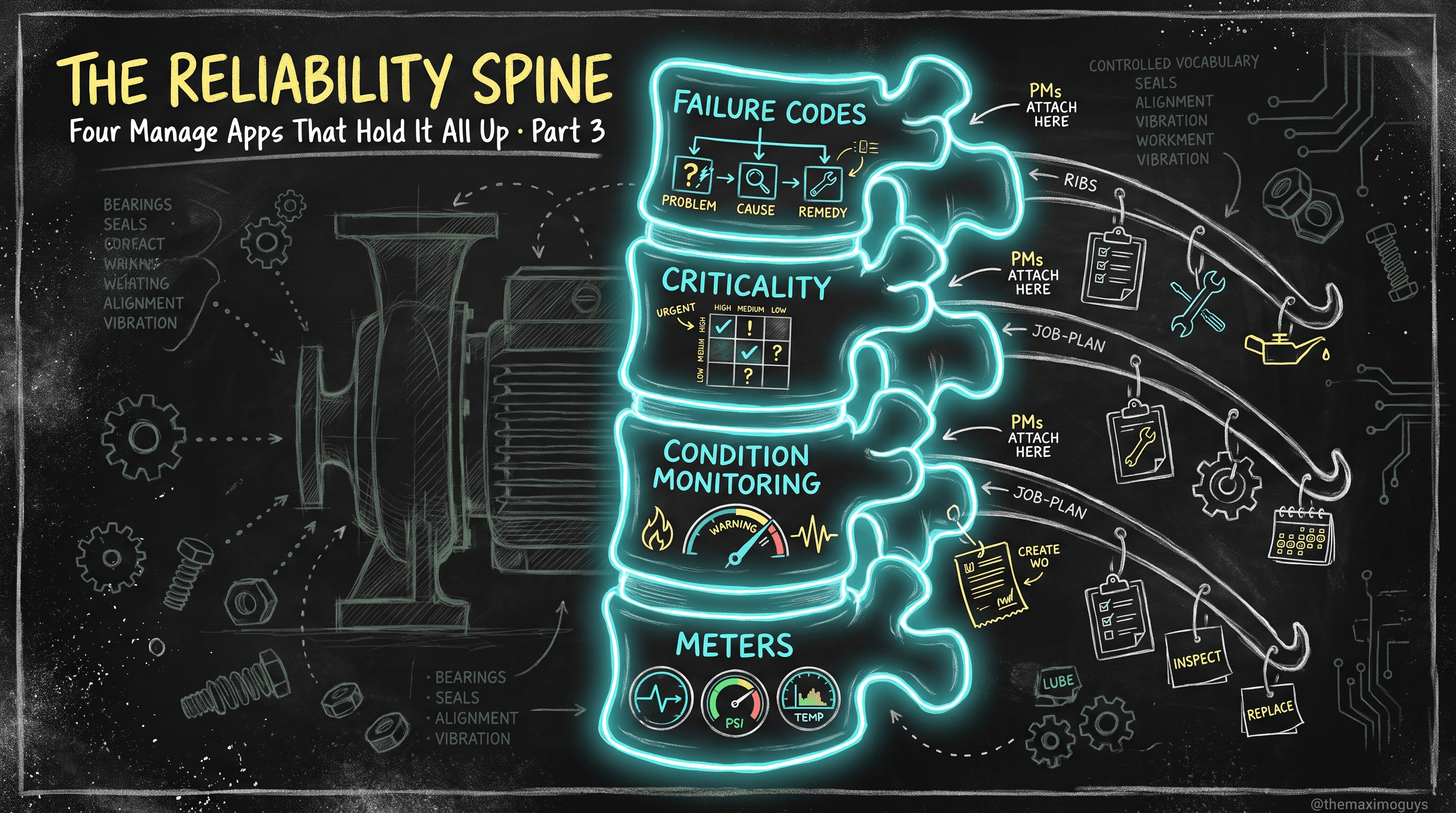
Methodology becomes reference data here. The reliability spine is four stock MAS 9 Manage applications — Failure Codes, asset criticality, Condition Monitoring, and Meters — that together turn free-text guesswork into a controlled vocabulary, risk-based effort, and automatic condition-based work order generation.
Venkat AchantaJul 16, 2026Part 3 of 7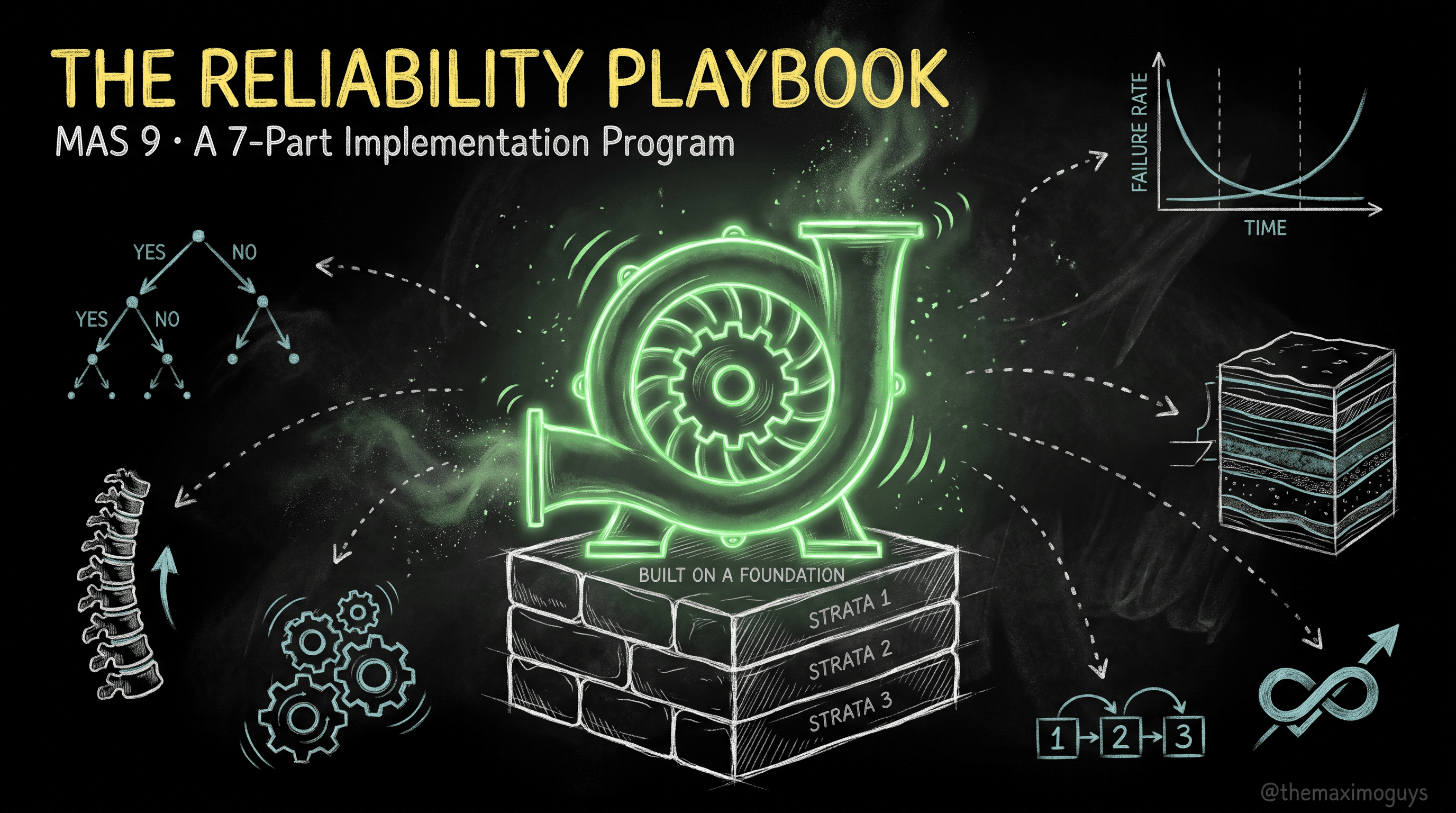
An end-to-end, seven-part program for standing up a real reliability strategy in IBM Maximo Application Suite 9 — from RCM and FMEA fundamentals, through the Manage reliability spine, the Reliability Strategies app, and the APM layer, to dependency-correct data loads and a phased, upgrade-window rollout.
Venkat AchantaJul 16, 2026Part 0 of 7