8 posts tagged “Databricks”
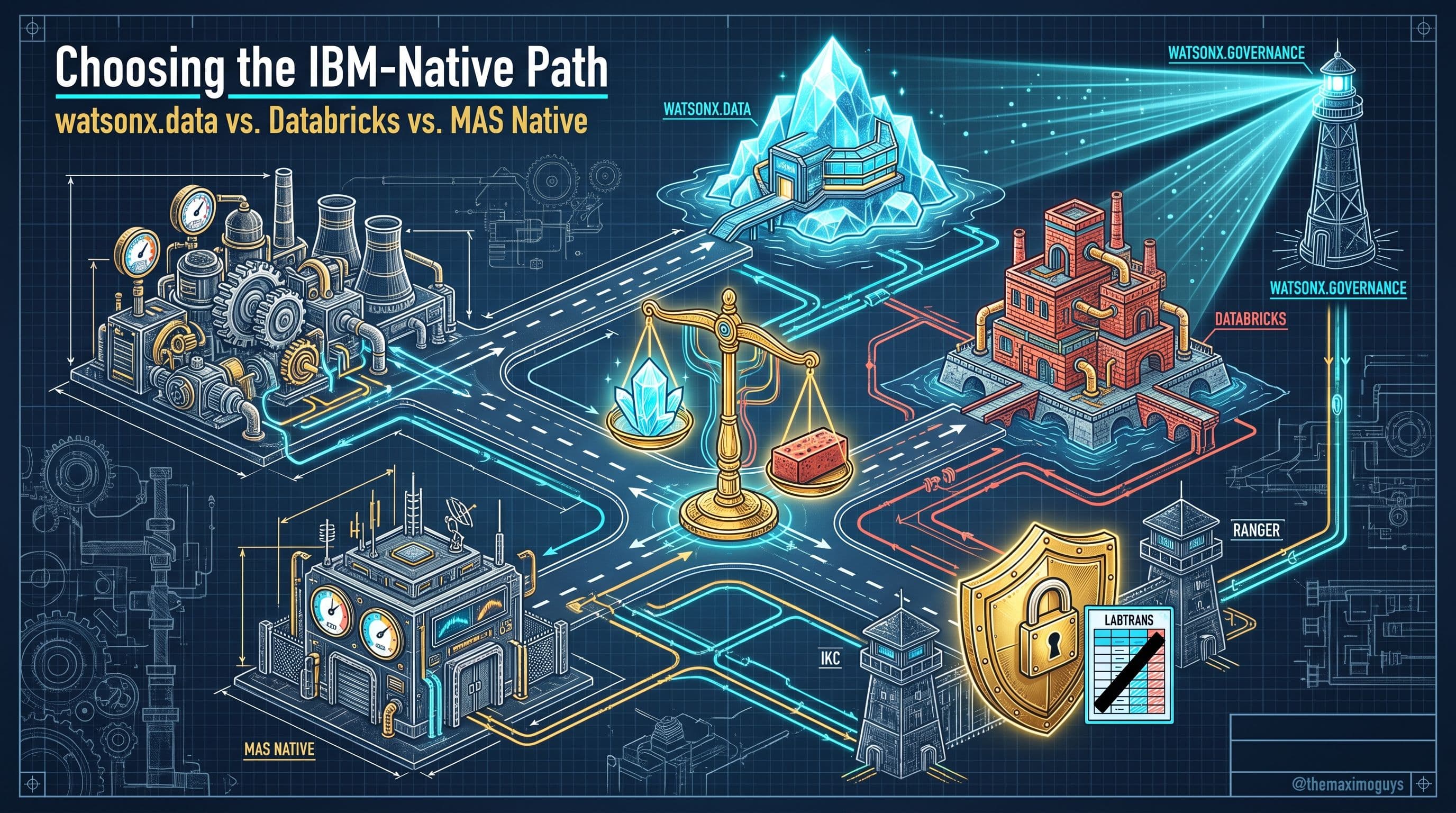
The series finale: a caveated head-to-head — Iceberg vs. Delta, Presto C++/Velox vs. Photon, IBM Knowledge Catalog vs. Unity Catalog, Milvus/OpenRAG vs. Databricks vector search — plus how IKC and Apache Ranger govern Maximo-derived data, LABTRANS PII masking, and watsonx.governance lineage.
 Surendra KattaJul 19, 2026Part 6 of 6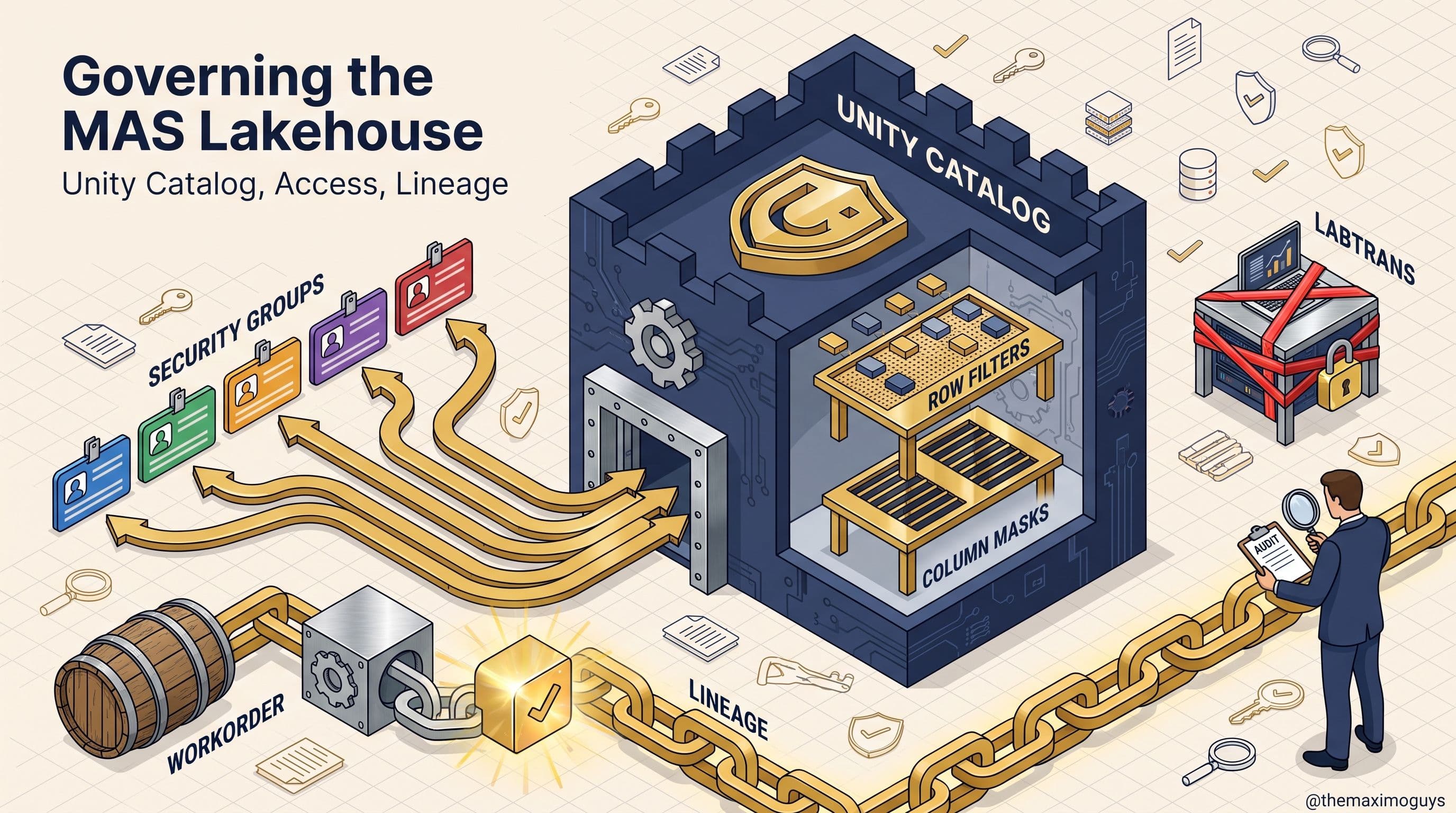
How Unity Catalog's row filters, column masks, and lineage graph turn a Maximo-derived Databricks lakehouse into an auditable asset — mapped directly to the Maximo security groups, site/org restrictions, and data restrictions administrators already configure.
Surendra Katta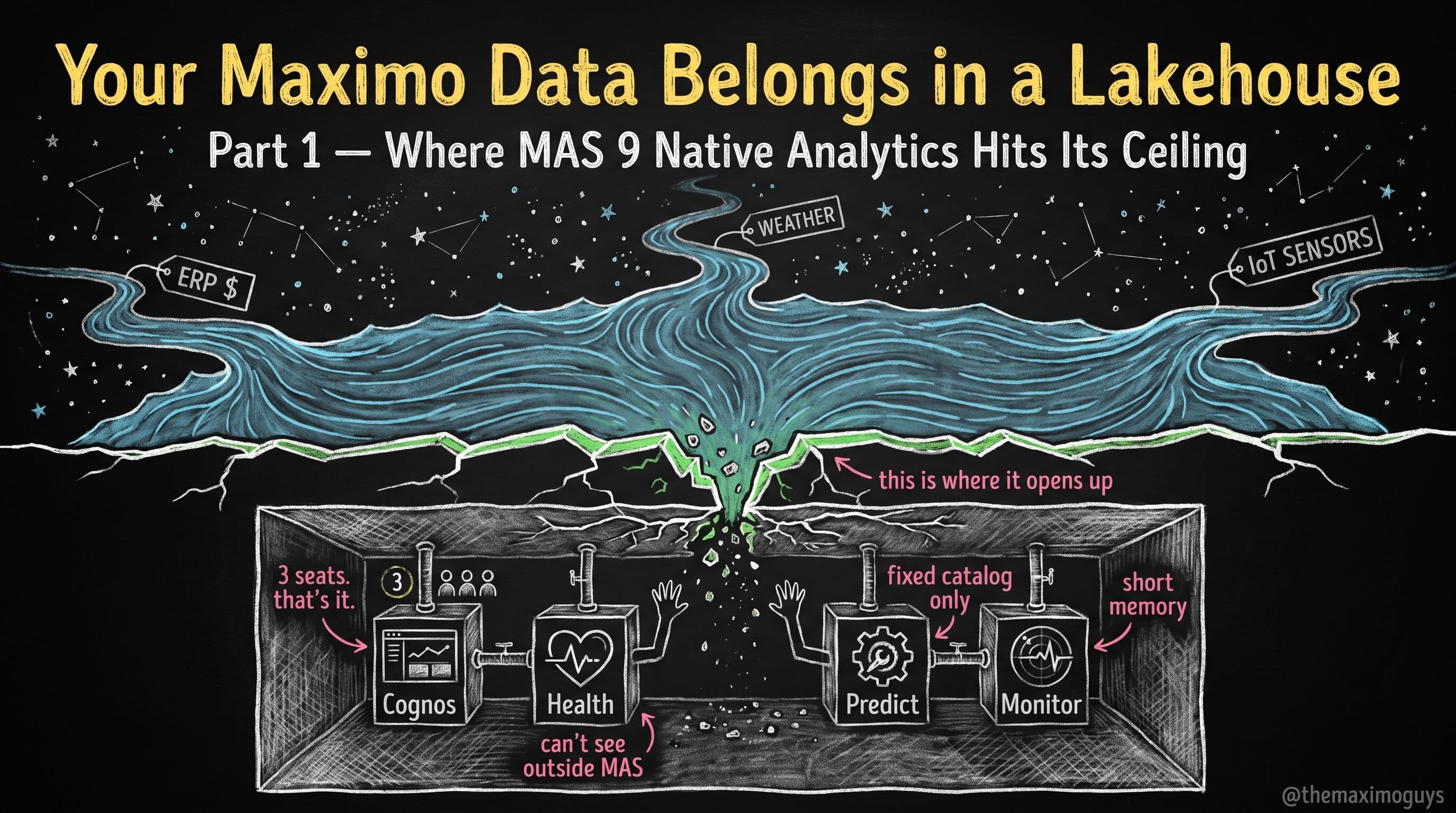
MAS 9 ships real native analytics — Operational Dashboards, Cognos, Health, Predict, Monitor — but every one of them has a ceiling. Part 1 names those ceilings precisely and explains why a lakehouse, not another dashboard, is what sits past them.
Surendra KattaJul 17, 2026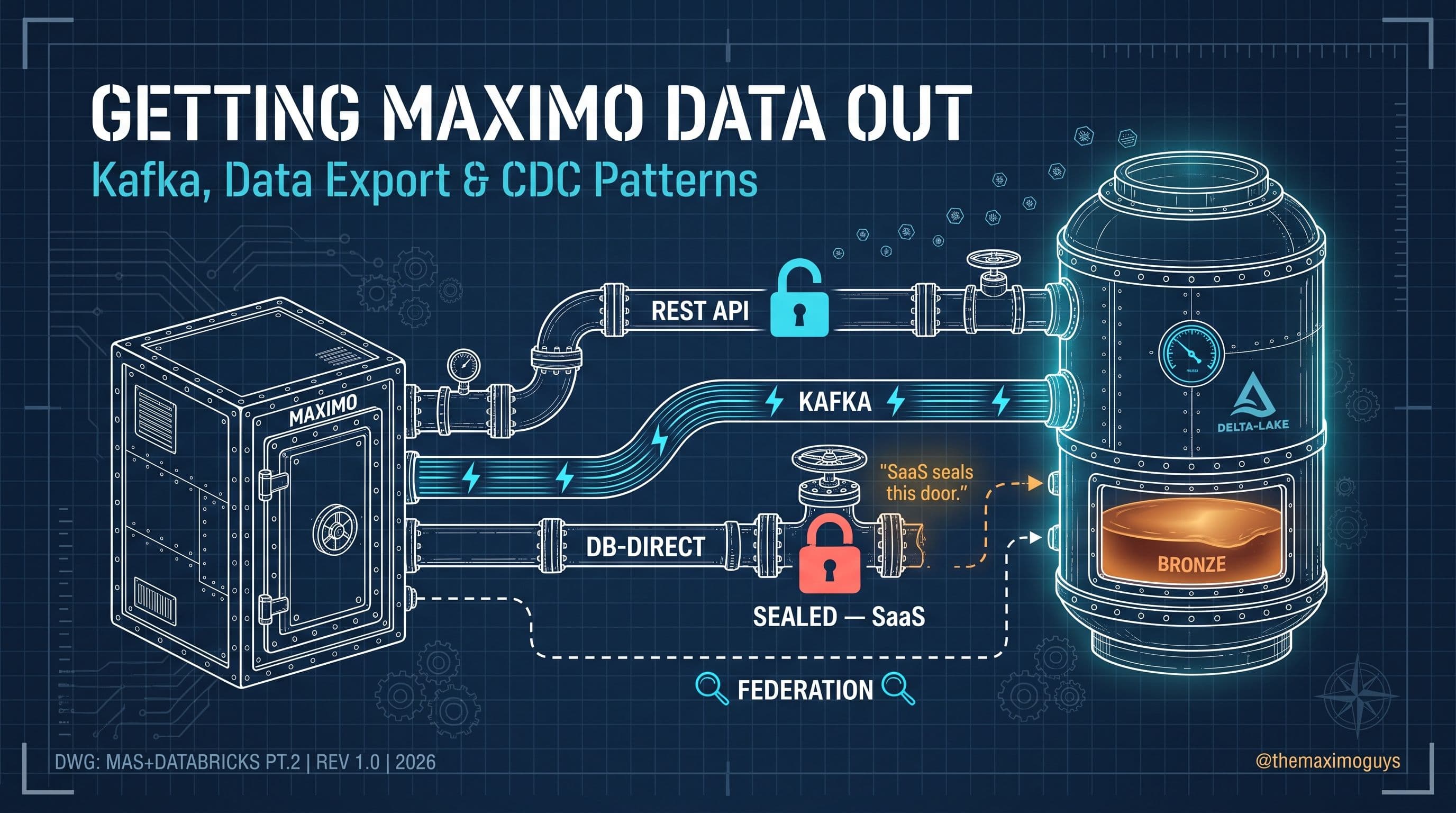
Four real ways to extract MAS 9 data for a Databricks lakehouse — REST/JSON API, MIF over Kafka and the Data Export framework, DB-direct, and Lakehouse Federation — with real object structures, Kafka broker config, and honest CDC framing.
Surendra KattaJul 17, 2026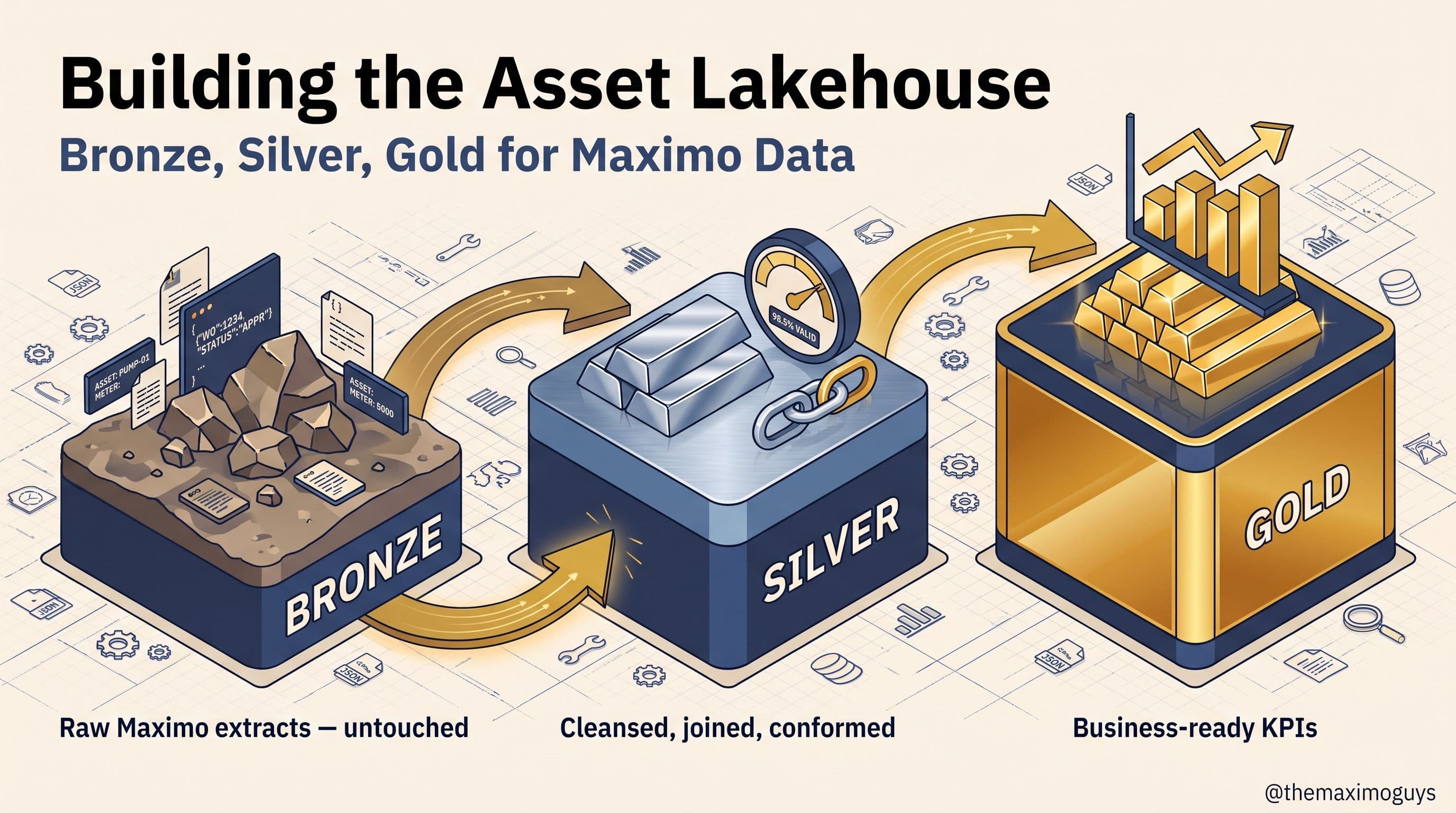
A table-by-table medallion architecture for MAS 9 data — cleansing rules for WORKORDER, ASSET, MATUSETRANS, PM, and meter data, conformed dimensions, and gold marts for reliability and cost analytics.
Surendra KattaJul 17, 2026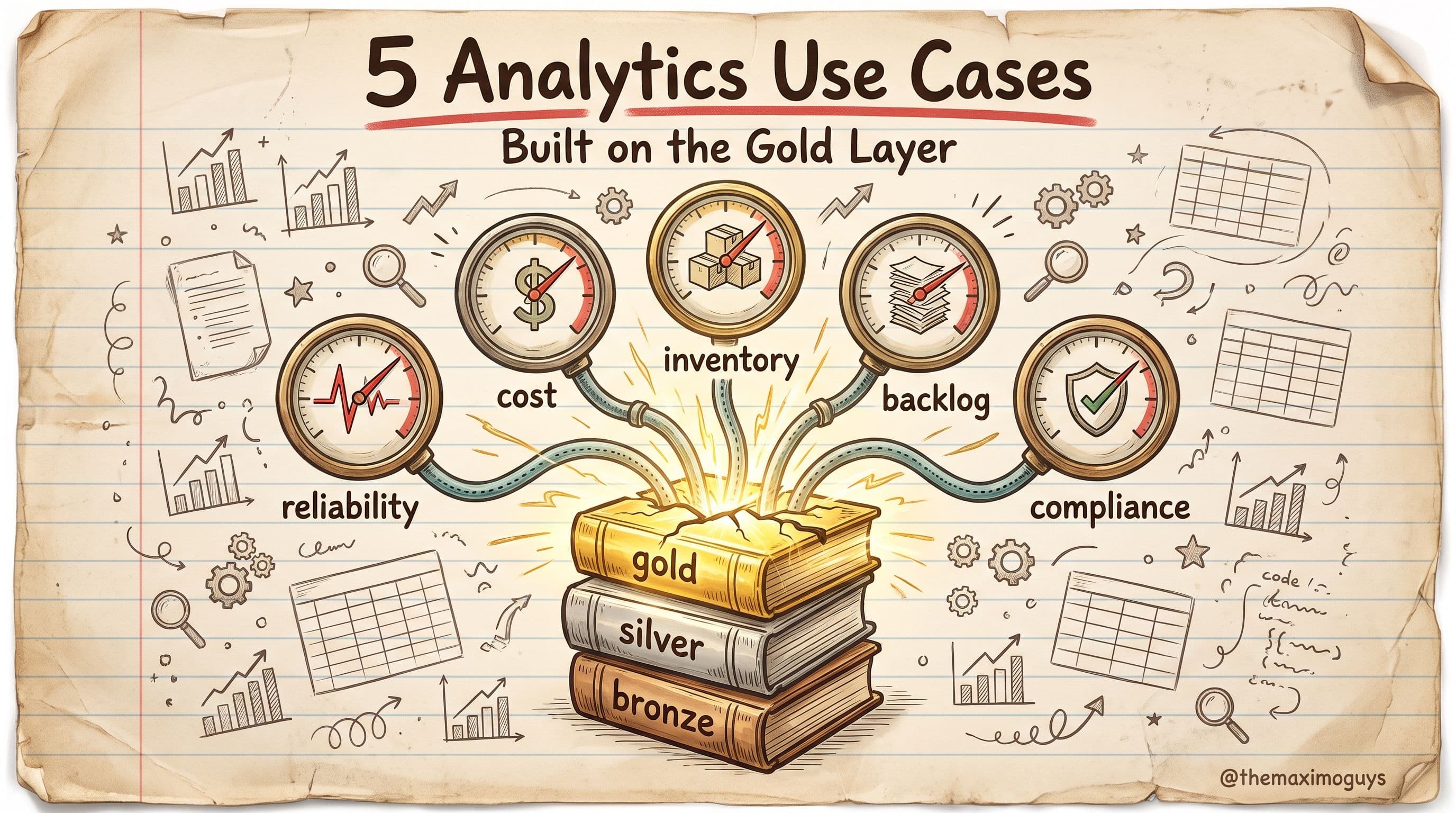
Worked Databricks SQL for the five gold-layer questions a maintenance leader actually asks: MTBF/MTTR trend health, maintenance cost rollups, slow-moving inventory, work order backlog aging, and PM compliance — built on Part 3's silver and gold tables.
Surendra Katta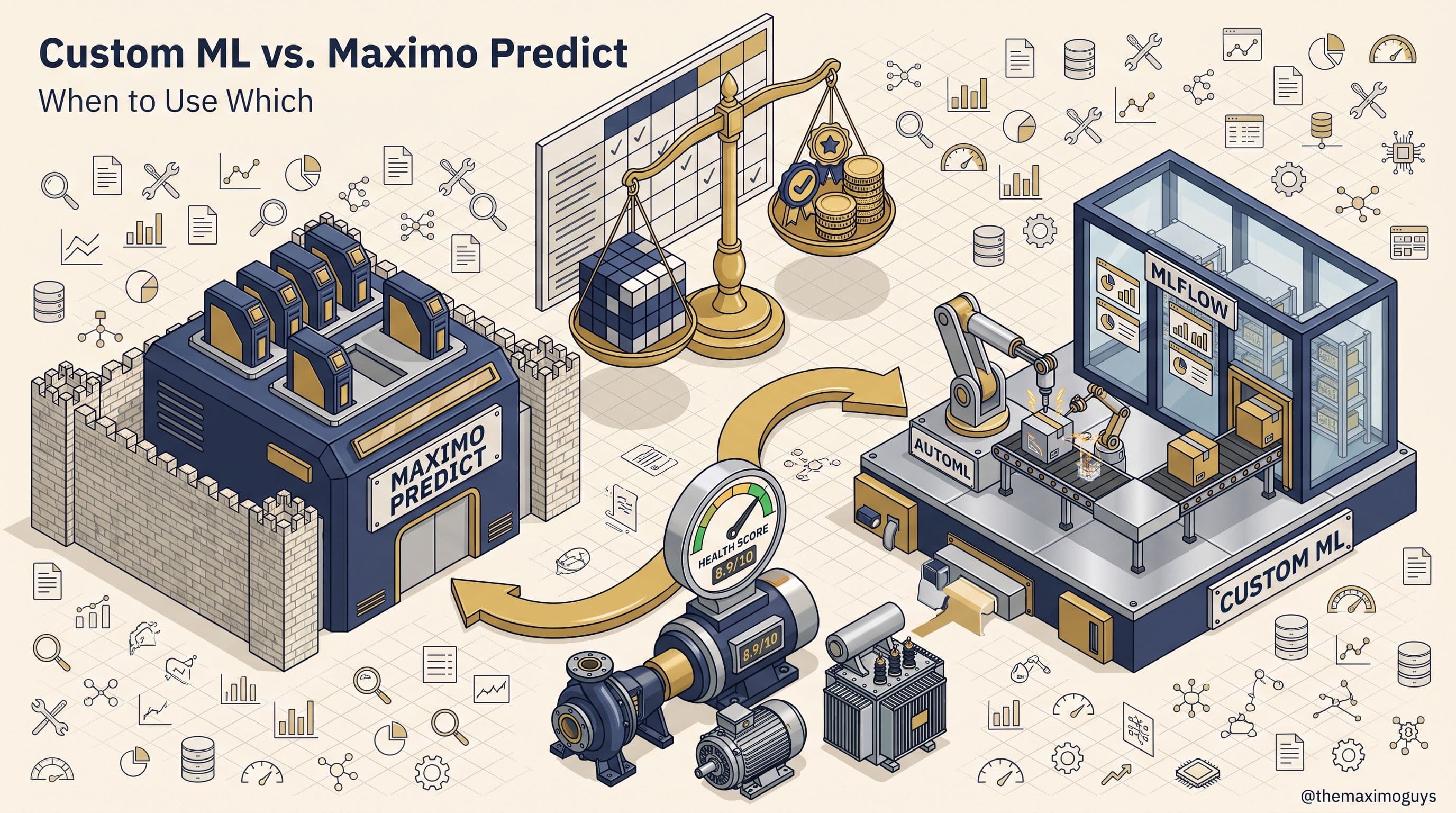
A scored decision framework for choosing between Maximo Predict's prebuilt models and a custom AutoML/MLflow model in Databricks — data needs, in-house ML skills, AppPoints economics, and how to write a score back into Maximo.
Surendra KattaJul 17, 2026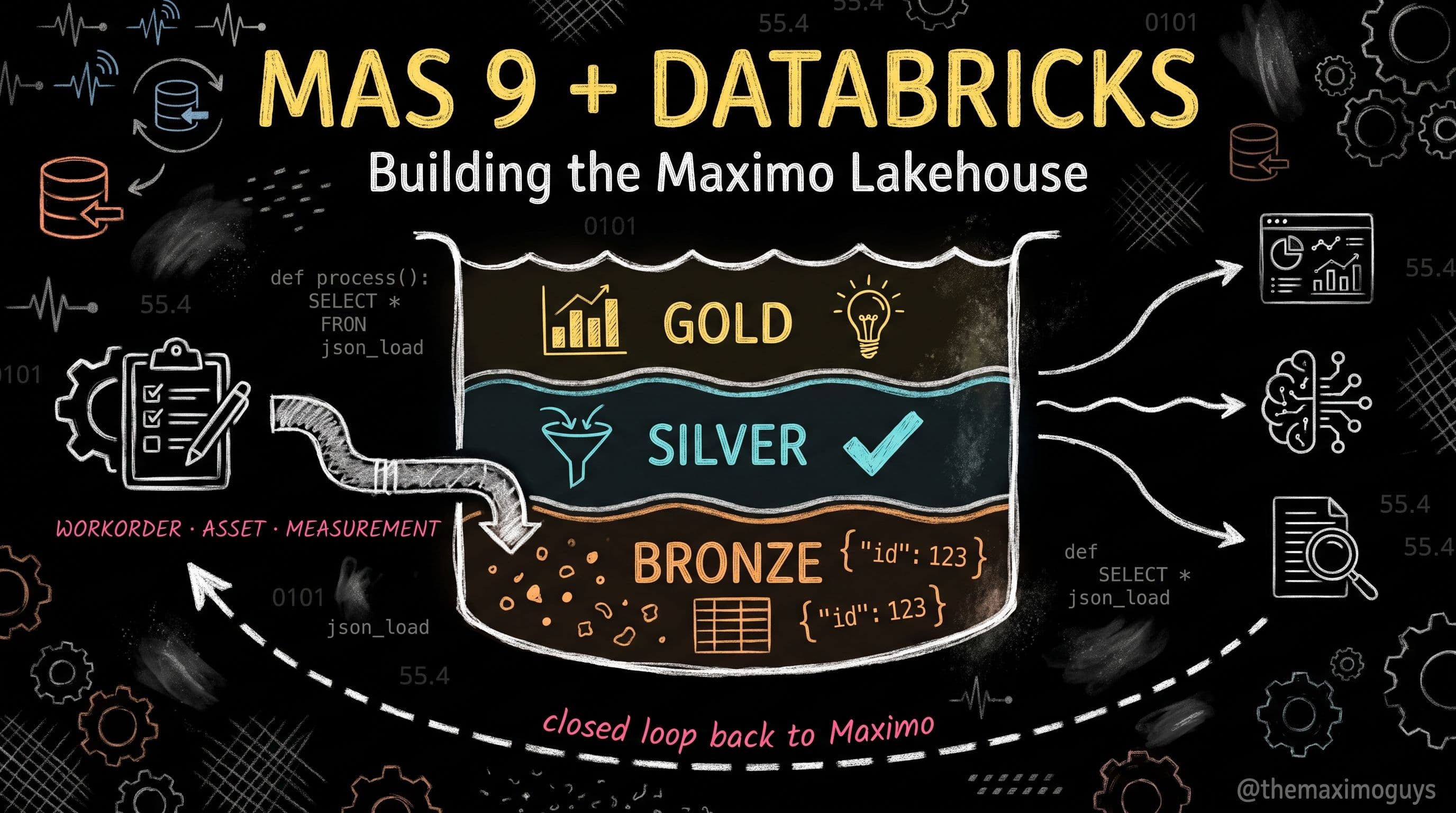
A six-part series on where MAS 9 native analytics stops and Databricks starts — data extraction patterns, the medallion architecture for Maximo objects, five concrete analytics use cases, custom ML versus Maximo Predict, and lakehouse governance.
Surendra KattaJul 17, 2026Part 0 of 6