7 part series
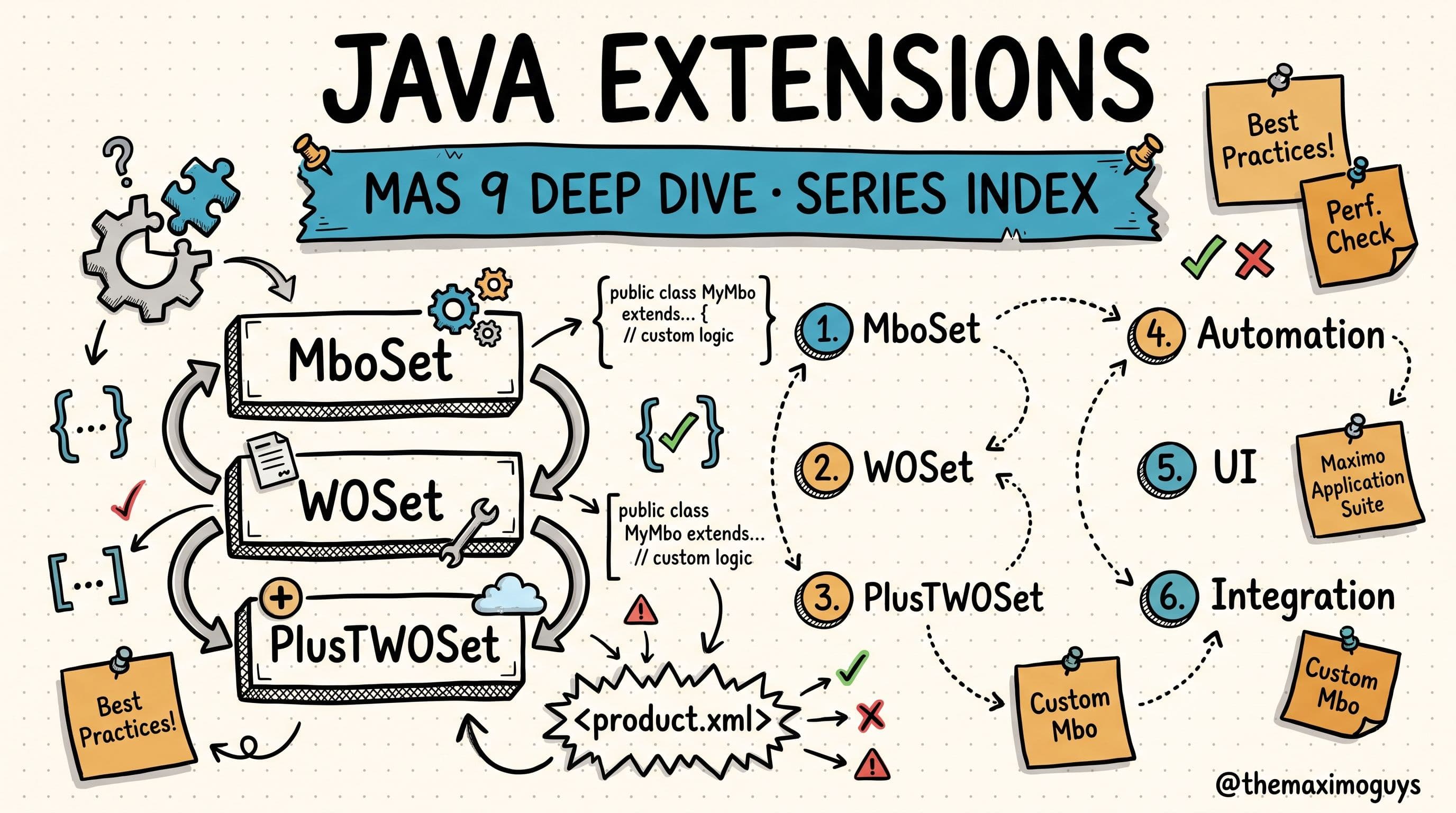
A developer's deep dive into how IBM Maximo add-ons and industry solutions extend the core through Java — PLUS prefixes, the four-file MBO pattern, MBO inheritance chains, product.xml, bytecode injection, the compatibility matrix, the MAS 9 Customization Archive, and the Java 17 shift.
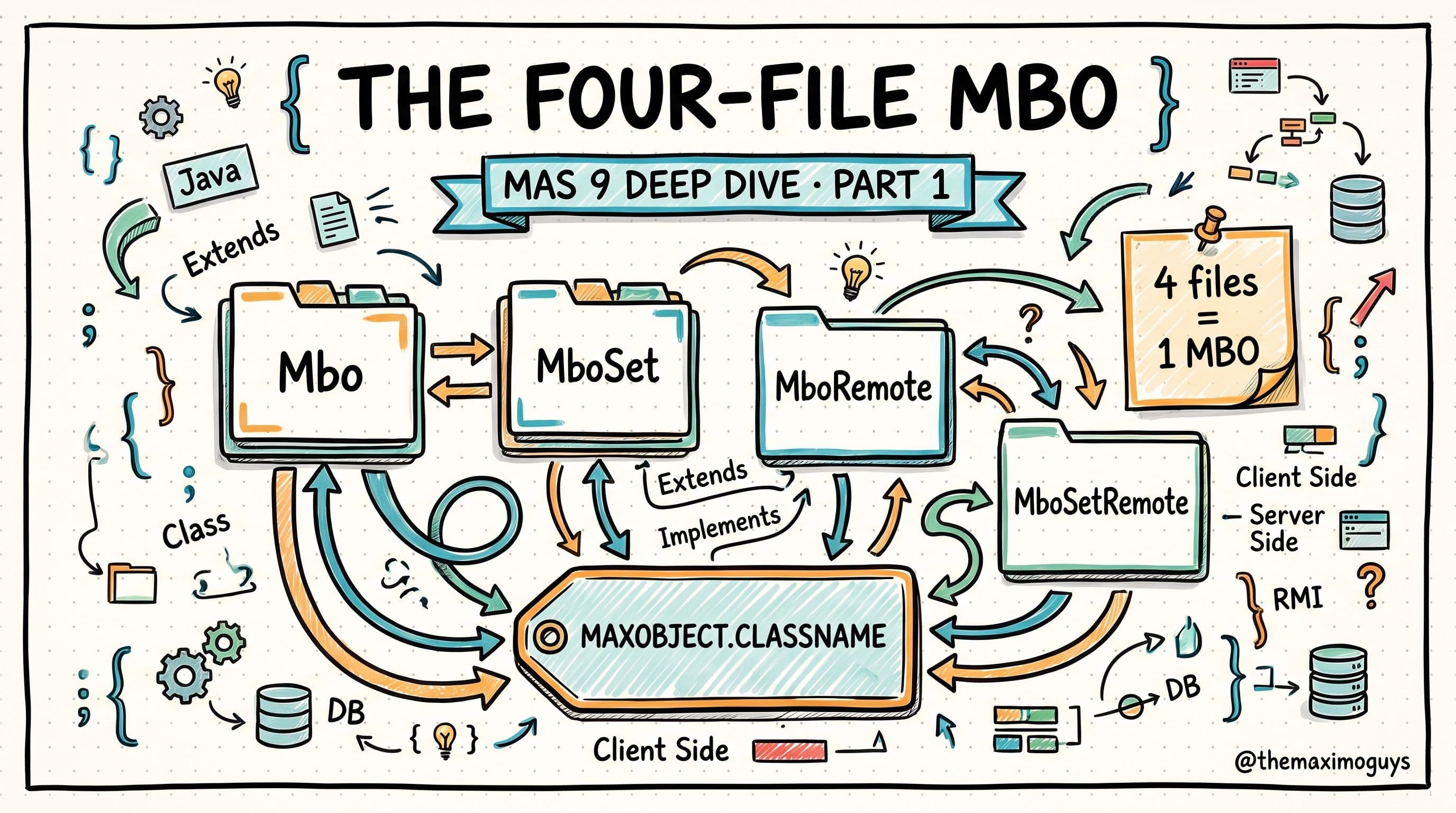
A developer's deep dive into the four-file MBO pattern behind every Maximo object, how MAXOBJECT.CLASSNAME links an object to its MBO Set class, and how a PLUS add-on layers on top through plain Java inheritance.
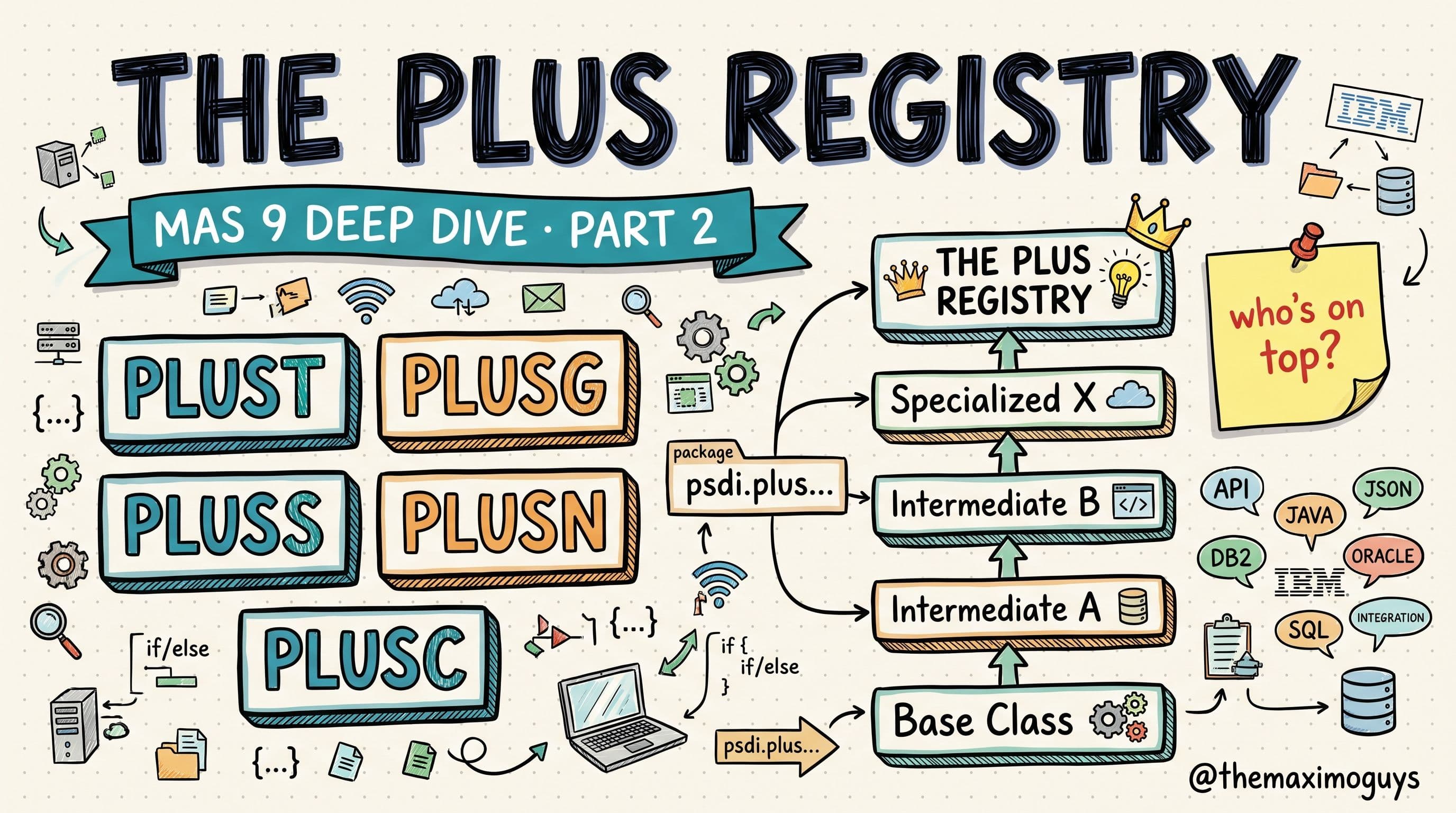
The reference every Maximo developer bookmarks: the complete PLUS prefix directory (PLUSA through PLUSV, TLOAM, custom), which prefixes are included capabilities versus paid add-ons versus legacy, the five-layer extension hierarchy, and exactly how Maximo stitches multiple add-ons into one MBO inheritance chain — with the WorkOrder and Asset chains resolved step by step.
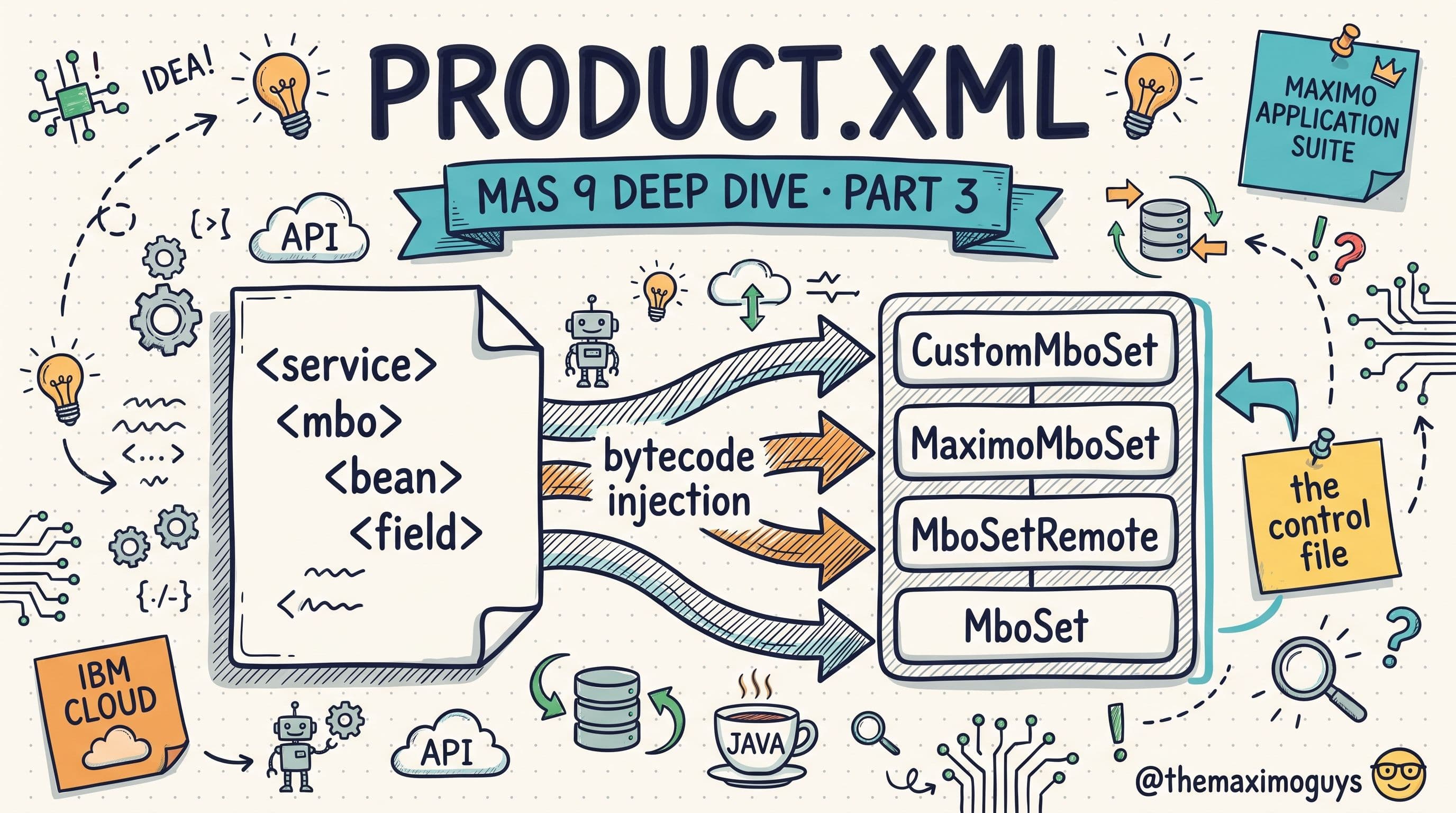
A developer's deep dive into product.xml — the extension control file behind every Maximo add-on. Learn the anatomy of mboset, mbo, class, field, and bean declarations, why alphabetical prefix order matters, what bytecode injection does at build time, and how the resolved top-of-chain class lands in MAXOBJECT.CLASSNAME so you can predict super() behavior.
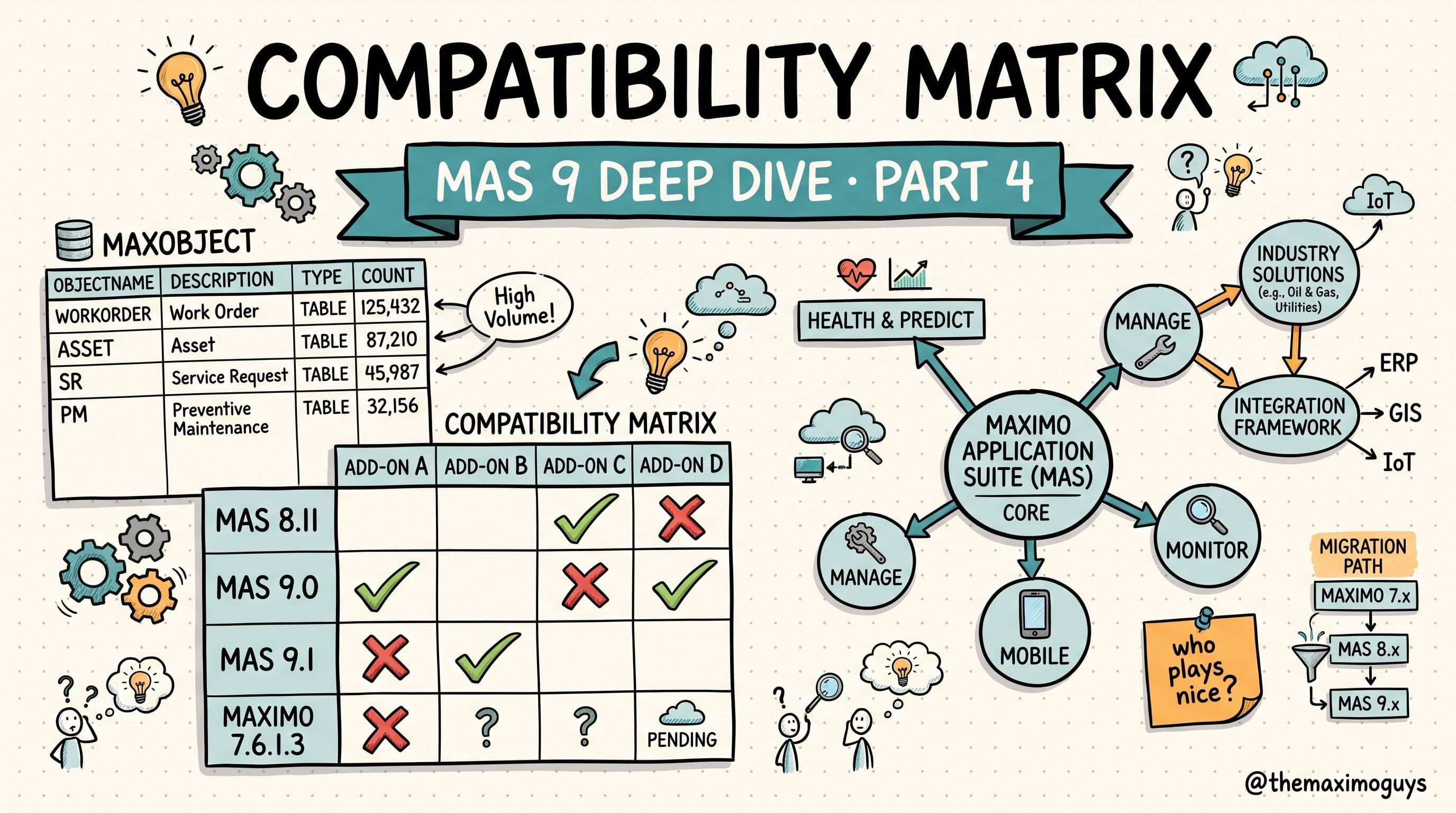
How to read MAXOBJECT counts as an add-on's real database footprint, why HSE ships inside Oil & Gas under one shared PLUSG prefix, why Aviation conflicts with almost everything, and the exact MAS 9 compatibility matrix that tells you which extensions can coexist.
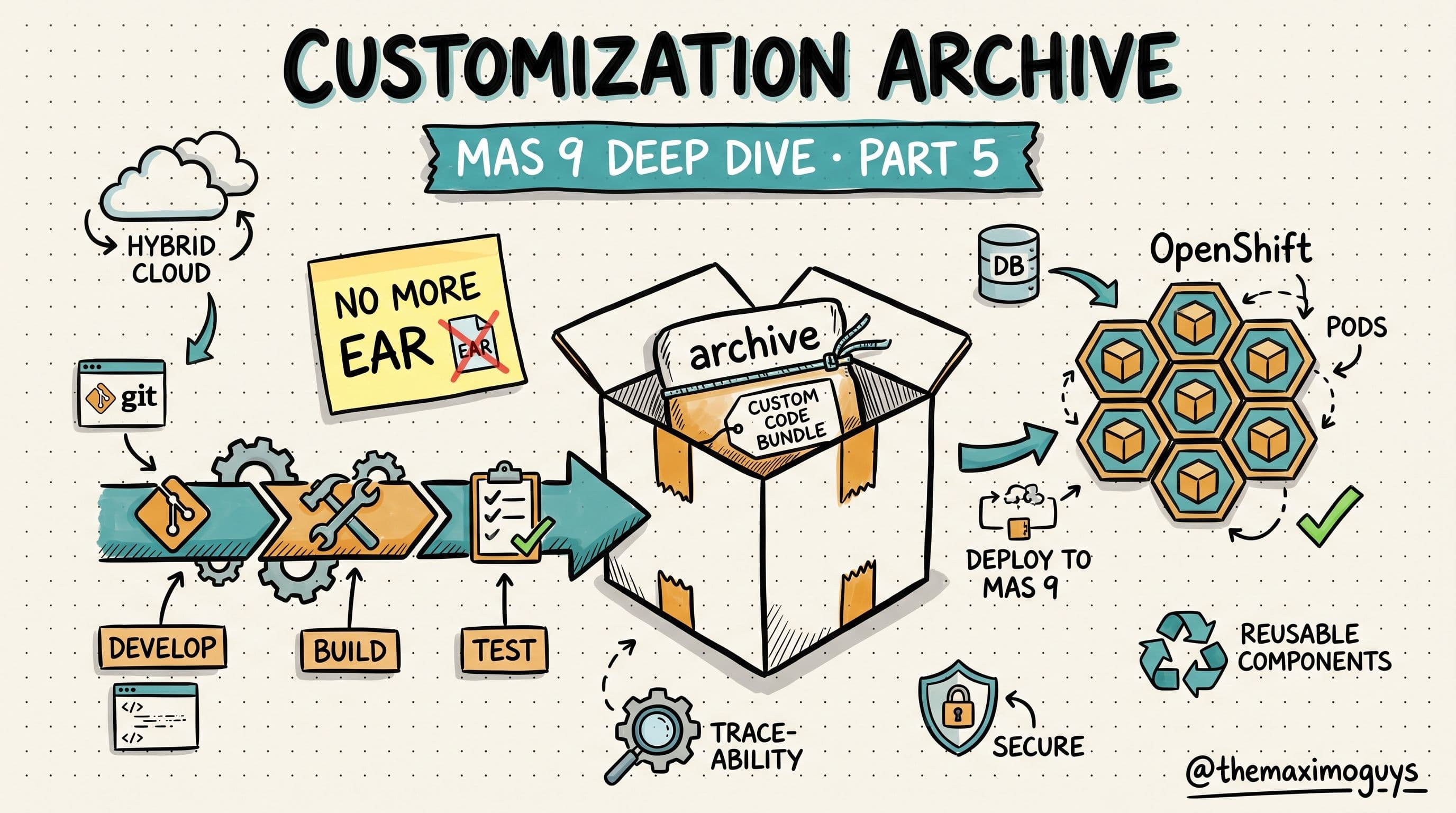
How Maximo add-ons are activated in the MAS Manage component model, and how custom Java is now delivered as a Customization Archive baked into a container image on OpenShift instead of dropped into WebSphere — the old-world/MAS-world post for developers and upgrade teams.
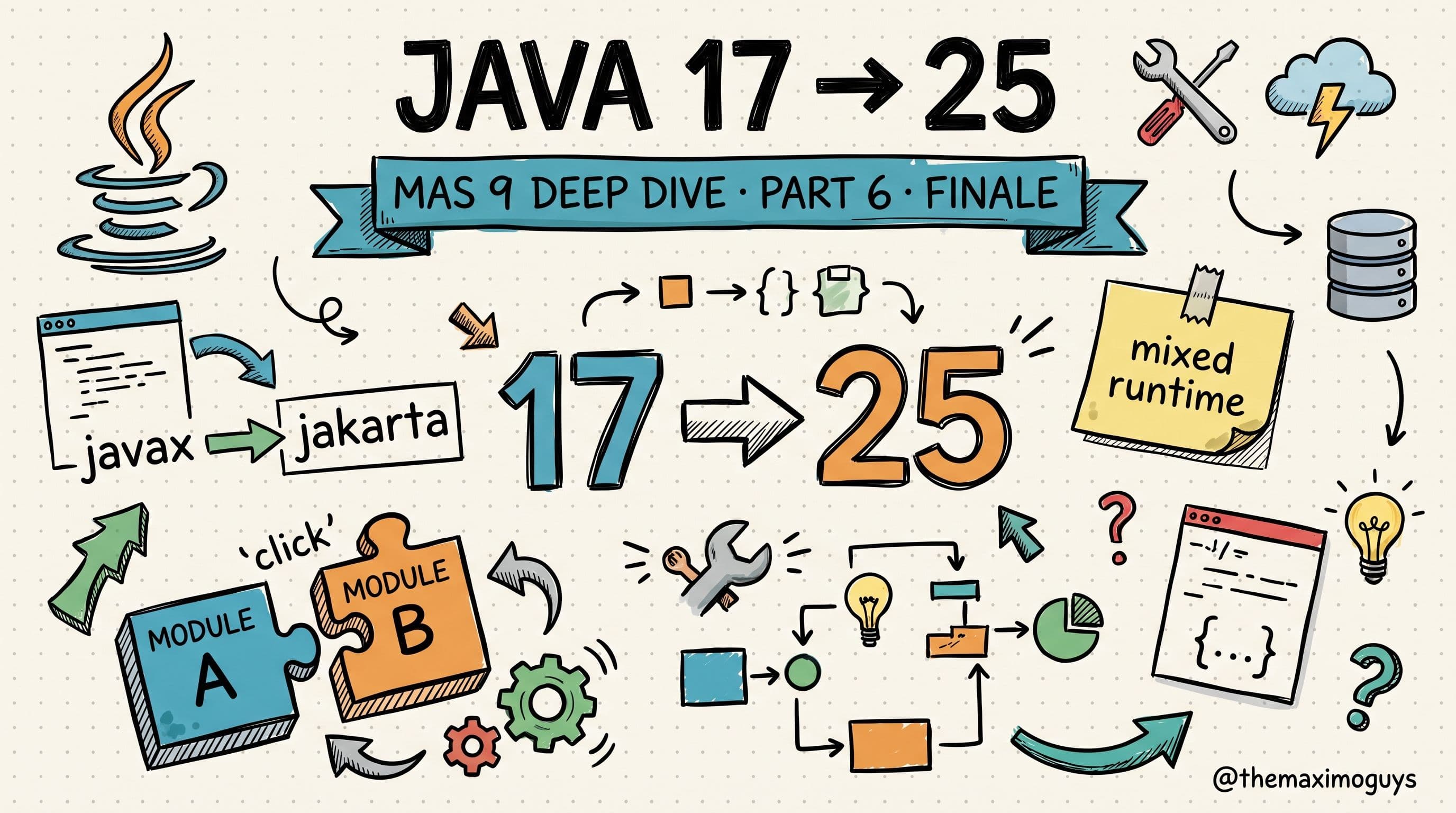
MAS 9.1 moved the JVM under every Maximo customization from Java 11 to Java 17. MAS 9.2 (June 2026) adds Java 25 at the platform and AI-Service level while Java 17 stays the baseline for Manage and your custom code. Here is what changes for existing extensions, why 9.2 is a mixed Java-17/Java-25 environment, how to test and remediate, and why the extension model endured while everything around it modernized.
