8 part series
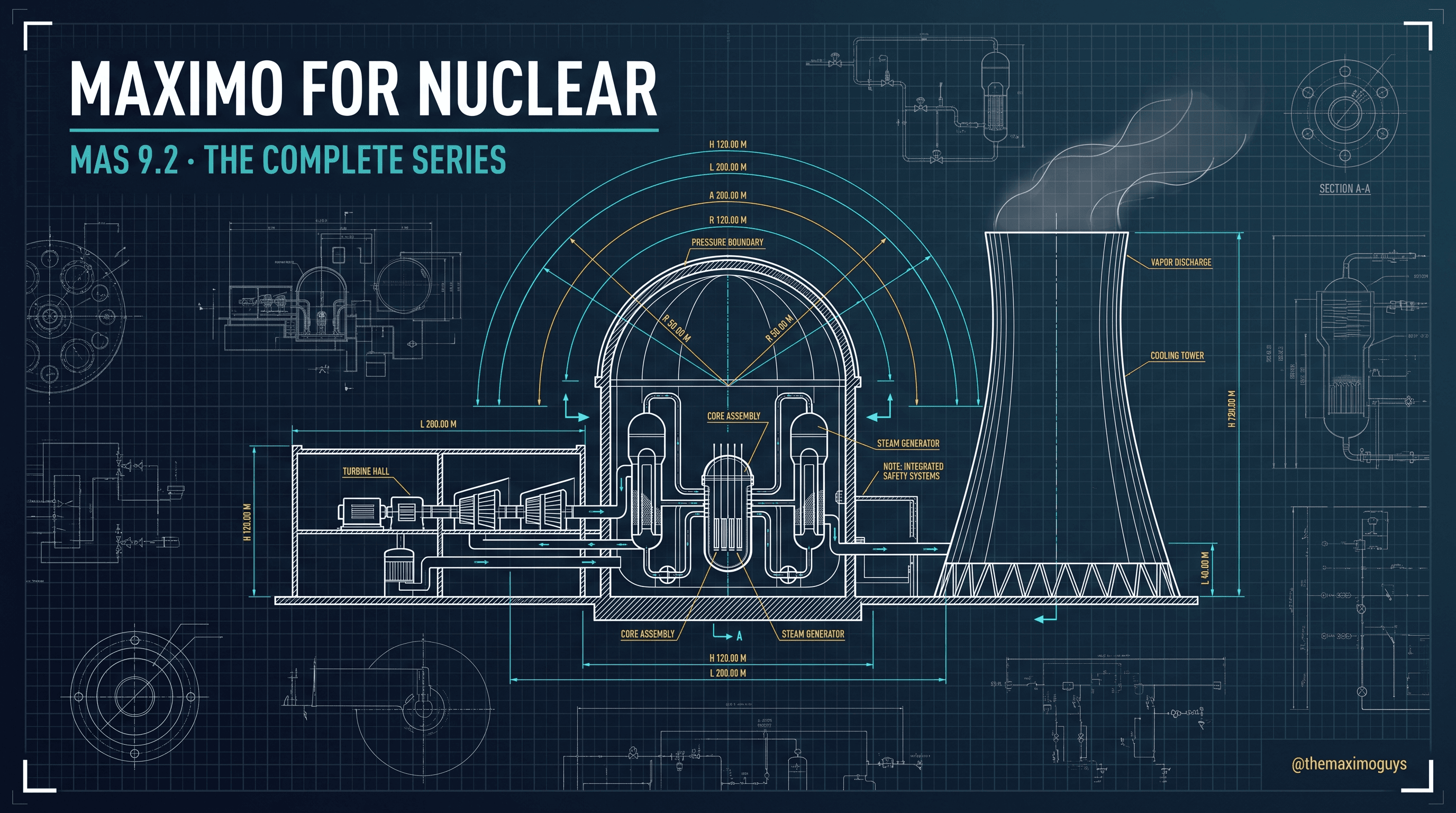
A seven-part, nuclear-specific guide to IBM Maximo Nuclear as it ships inside MAS Manage on the MAS 9.x stream: product lineage and AppPoints Premium licensing, Tech Specs and LCO Tracking, configuration control and nuclear work packages, the Maintenance Rule (10 CFR 50.65), the Corrective Action Program and Clearance/Tagout, a full regulatory crosswalk, and the honest state of what's new in MAS 9.x for nuclear.

The two generations of Maximo for Nuclear — legacy MNP 7.6 on WebSphere versus the current Maximo Nuclear industry solution inside MAS Manage — and why conflating them is where most analysis goes wrong. Plus the AppPoints Premium licensing model, the single part number that entitles it, the 7.6.1.x End of Support clock, and why AI Service is a separate line in your model.
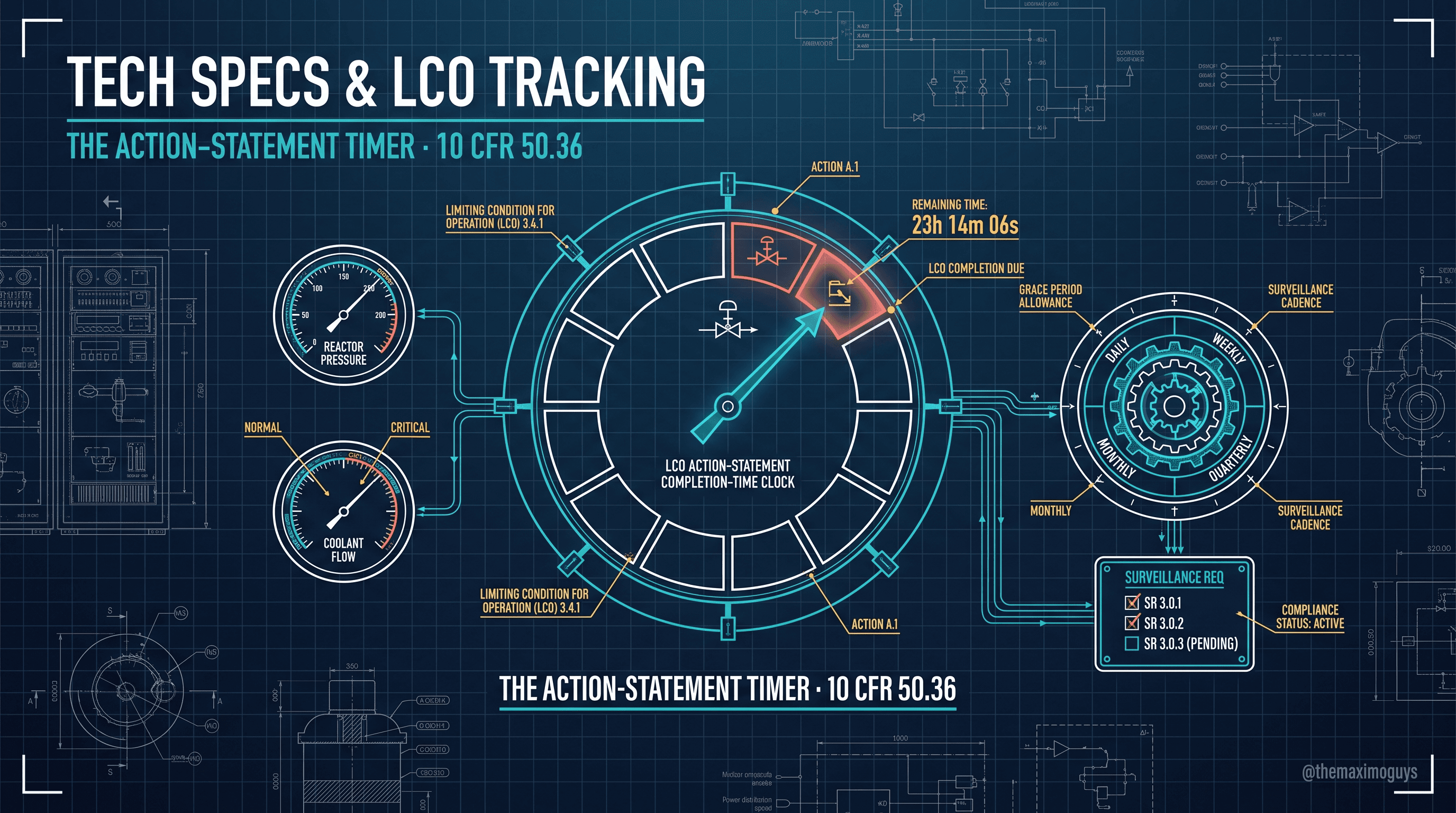
The regulatory core of Maximo Nuclear: how Tech Specs (Nuc) implements the Technical Specification register under 10 CFR 50.36, how Surveillance Requirements (Nuc) proves a Tech Spec is met, how LCO Tracking (Nuc) runs the action-statement timers that operationalize completion times, and where surveillance frequency and grace live in Maximo's frequency machinery.

Design change under 10 CFR 50.59 and the work packages that execute it. How the Configuration Change Management (Nuc) module — Configuration Change Designer, Changes, Releases, Configuration Items — drives design control, how nuclear work packages assemble in Work Order Tracking (Nuc) with Impact Plans, and where hold points, QC points, and inspection points actually live when there is no application named for them.
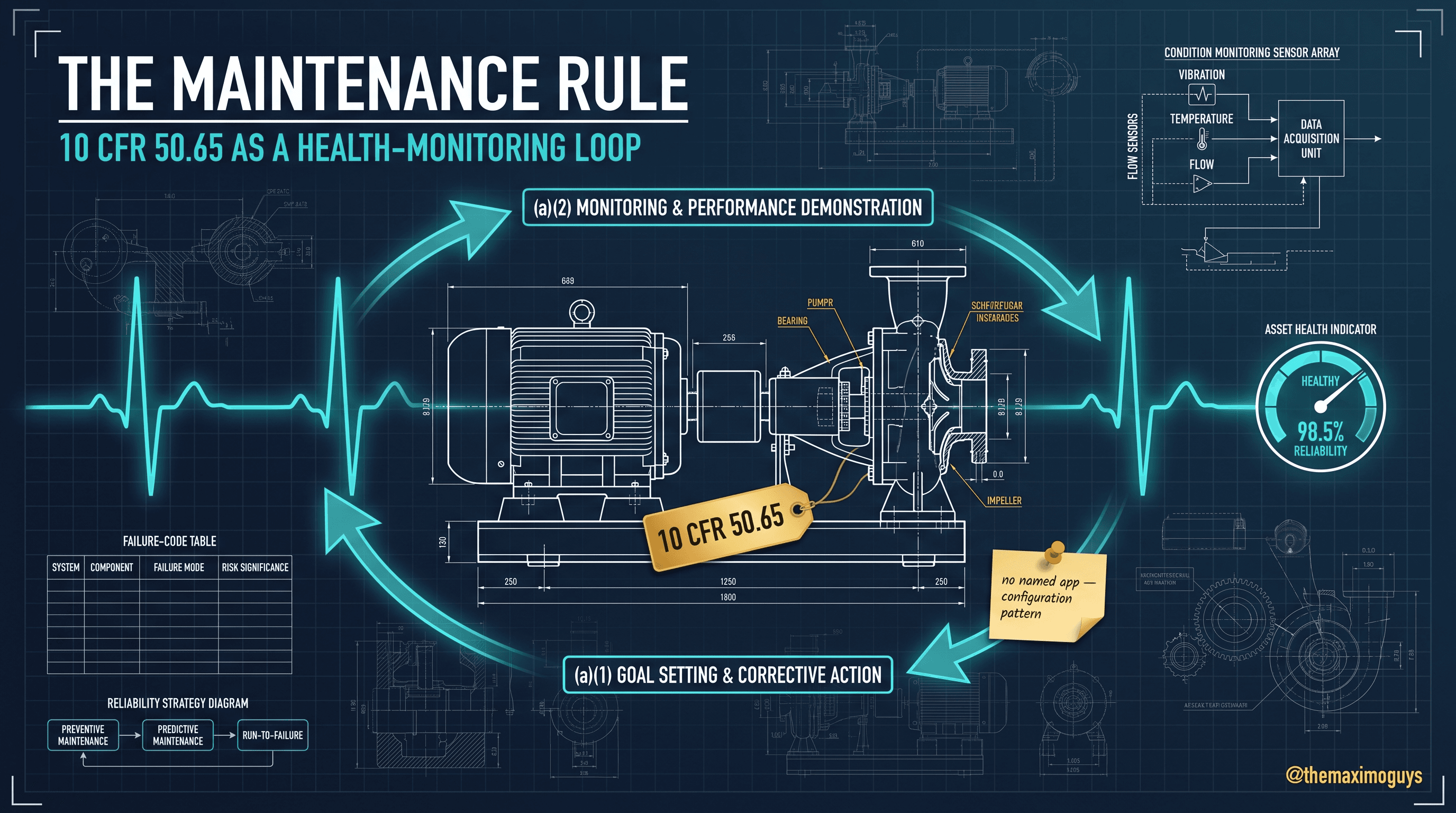
The honest one. There is no application called Maintenance Rule in Maximo Nuclear. This part explains how 10 CFR 50.65 is actually implemented — through Assets (Nuc) performance monitoring, failure codes, Condition Monitoring, and Maximo Health — and how AP-913 equipment reliability rides the same configuration-not-app pattern, with the critical-component flag and Reliability Strategies doing the scoping work.
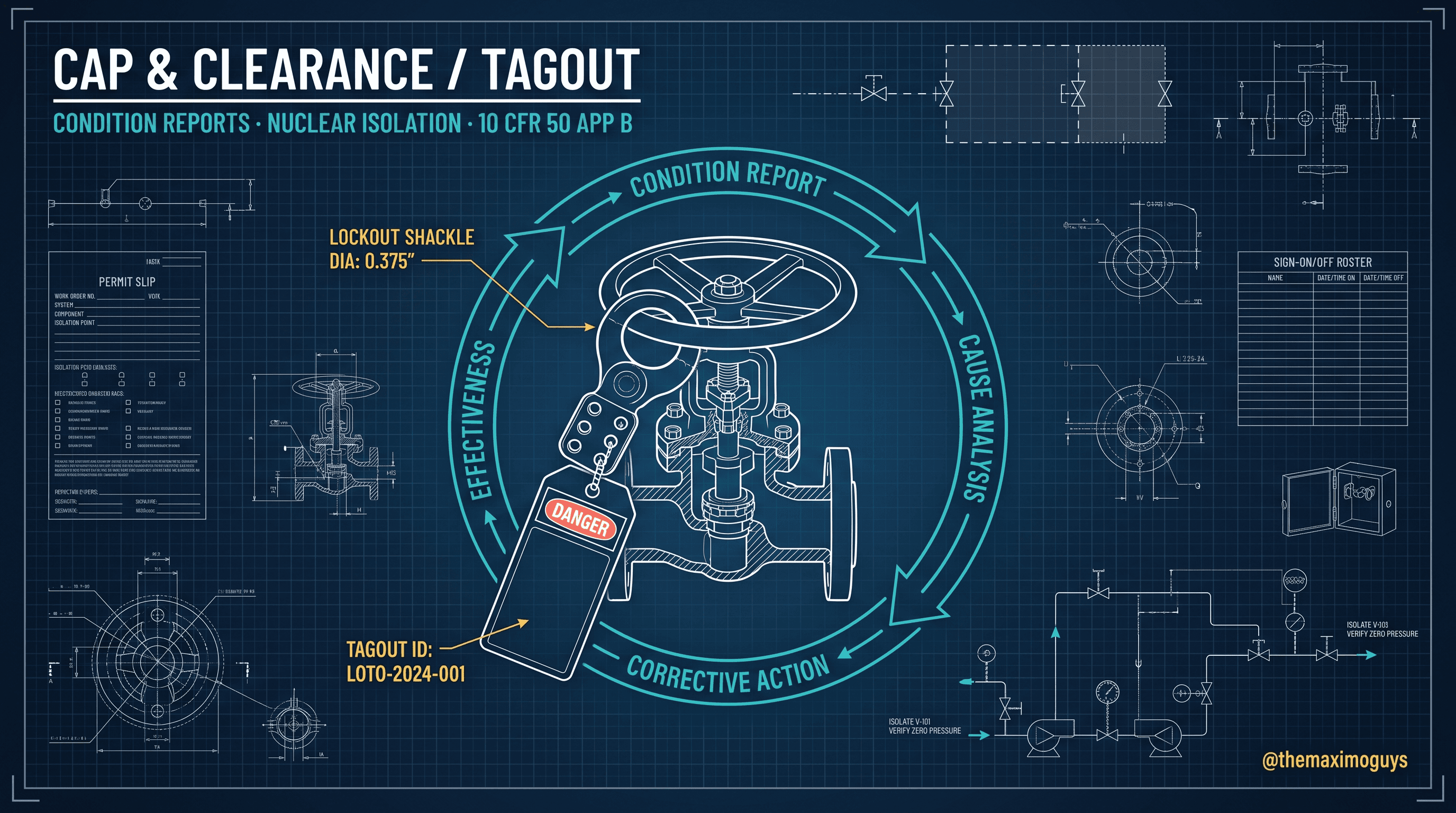
The CAP backbone and the safety controls around work. How Condition Reports (Nuc) runs the Corrective Action Program under 10 CFR 50 Appendix B XVI, how the Solutions library enables operating-experience reuse, why nuclear Clearances are richer than core Maximo Lockout/Tagout, and how Permits (Nuc) and Sign On/Off wrap safety controls around the work package.
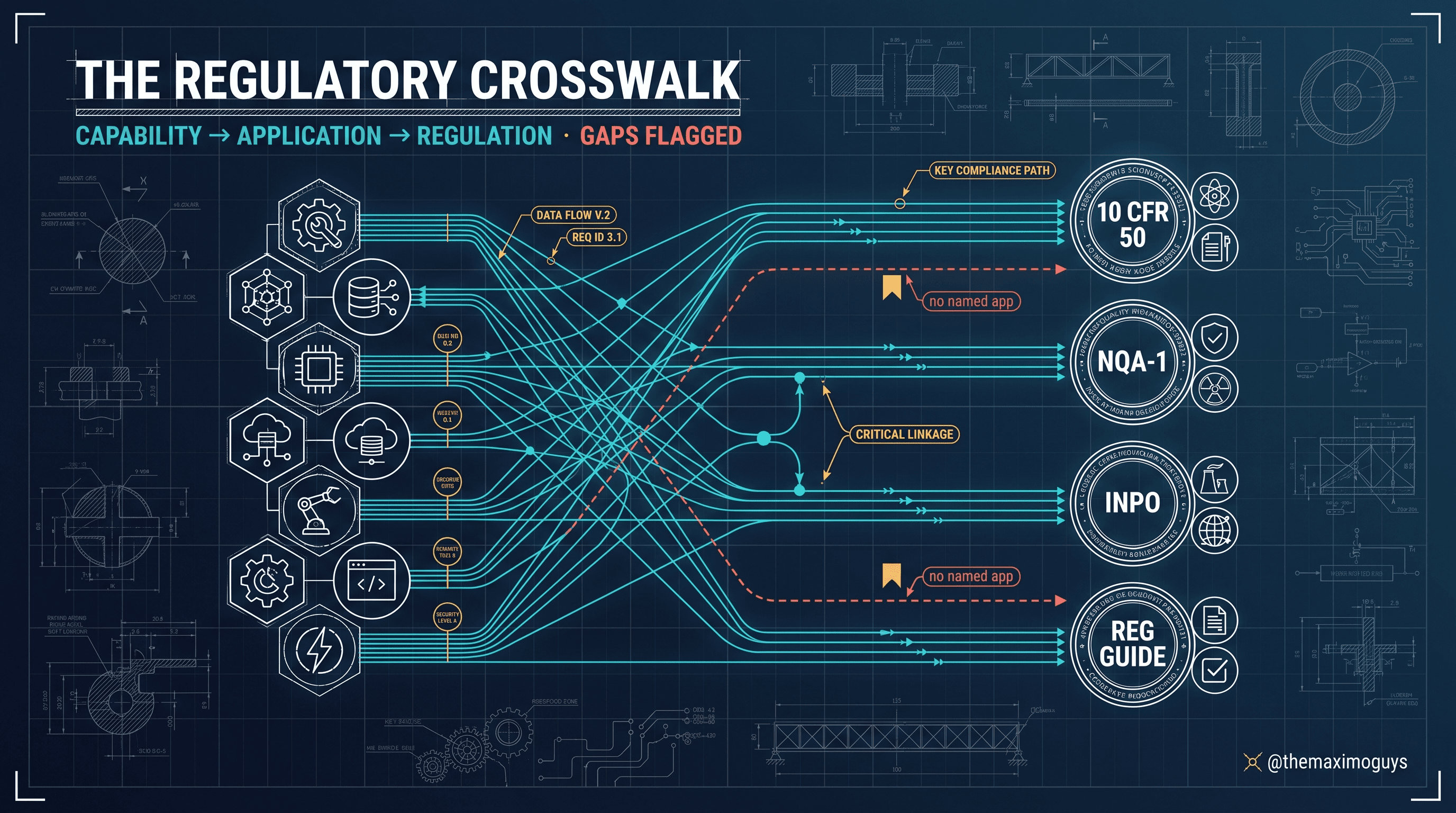
One table you can hand to an auditor or an analyst: the capability-to-regulator crosswalk for Maximo Nuclear. Every nuclear capability, the IBM-named application that delivers it (or the honest no-named-app note), and the primary regulatory driver across 10 CFR 50, NRC Regulatory Guides, INPO programs, and ASME NQA-1 — with the gaps flagged, not hidden.
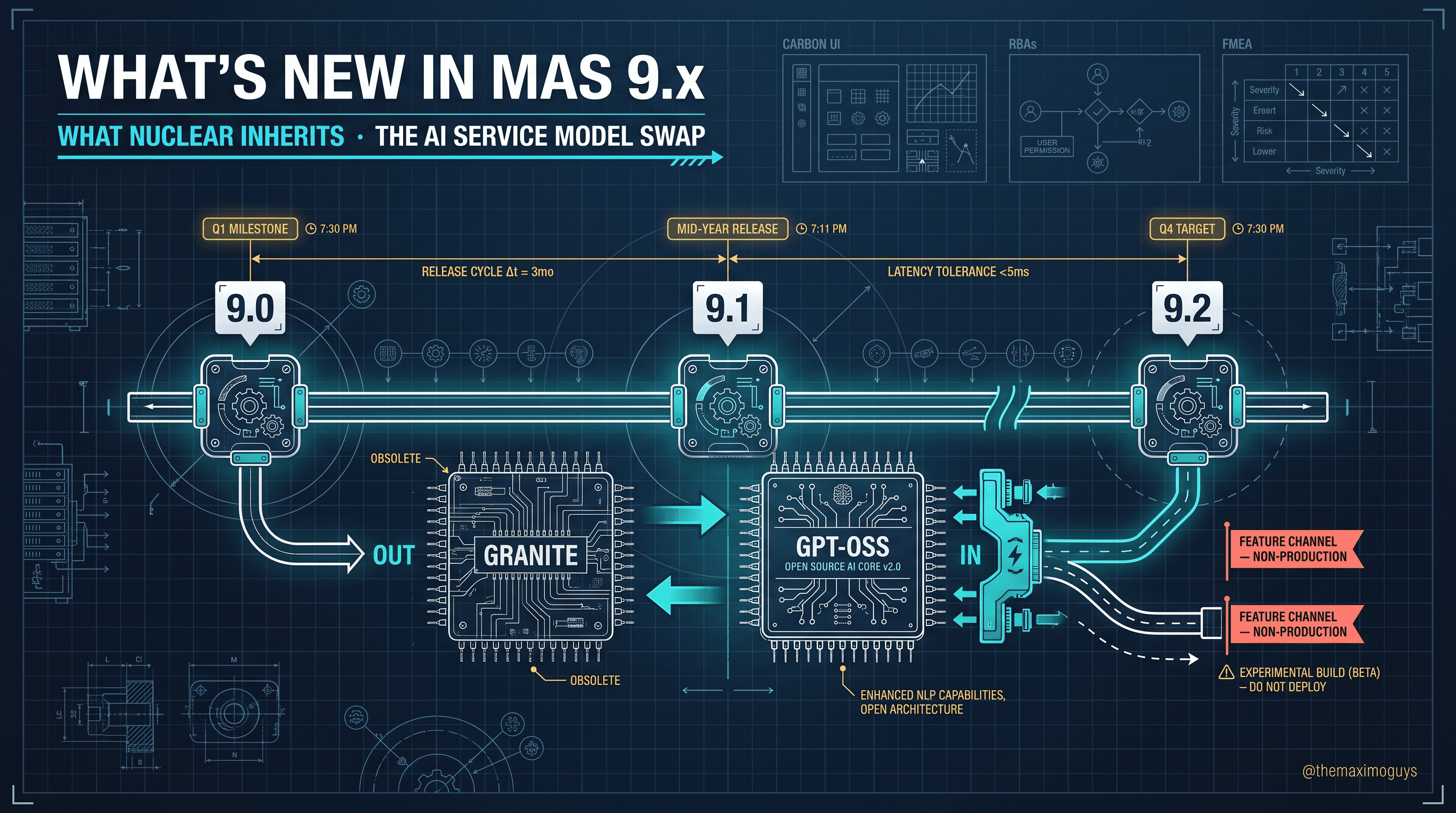
The grounded read on the 9.x era for nuclear. What the non-nuclear-specific 9.0 and 9.1 foundations give nuclear by inheritance, why the MAS 9.2 Feature Channel's non-production caveat matters for change control, what the AI Service language-model transition means, that Nuclear has its own 9.2 APAR/DT stream, and where the nuclear-versus-generation product boundary actually sits.
