7 part series
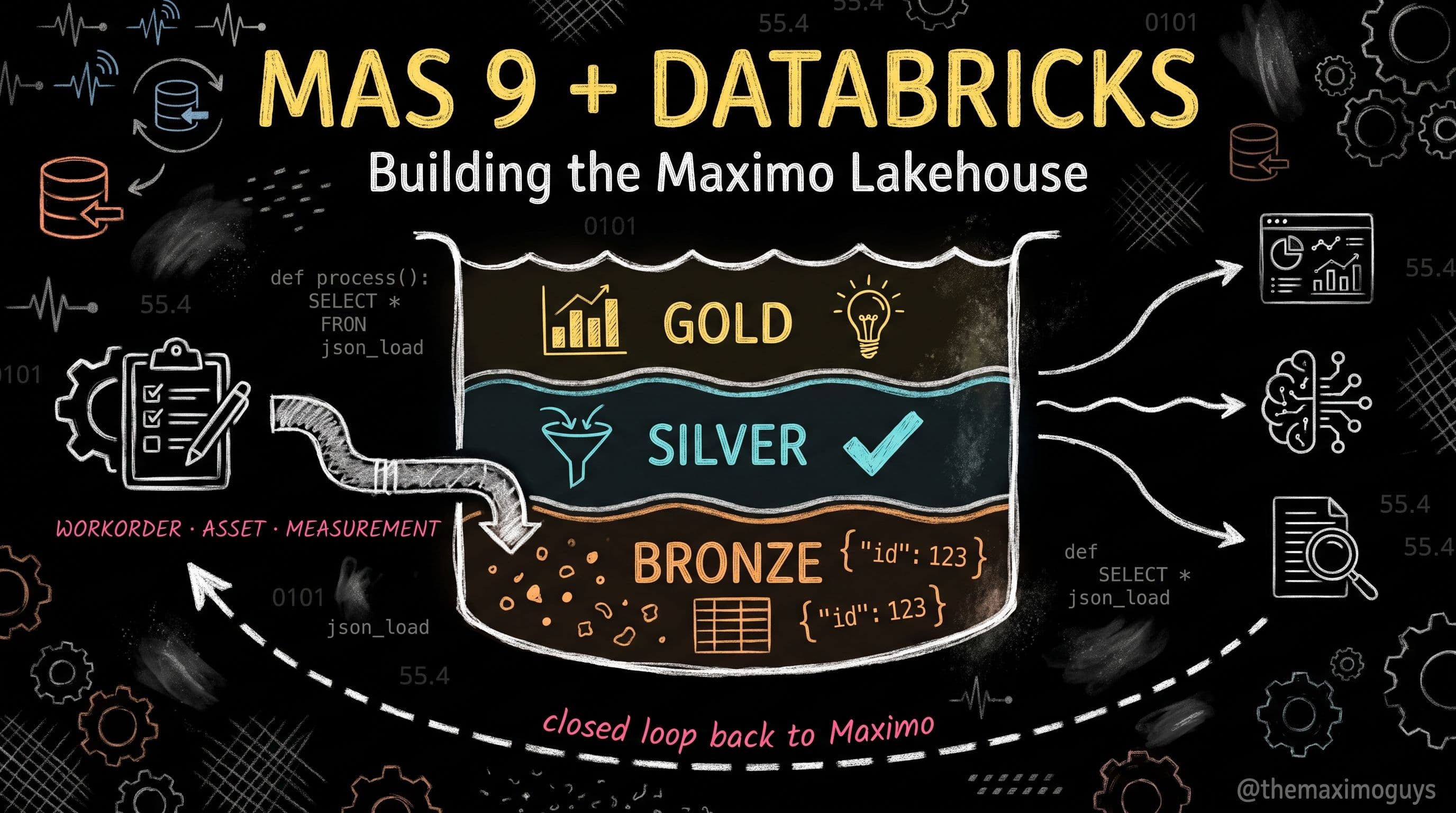
A six-part series on where MAS 9 native analytics stops and Databricks starts — data extraction patterns, the medallion architecture for Maximo objects, five concrete analytics use cases, custom ML versus Maximo Predict, and lakehouse governance.
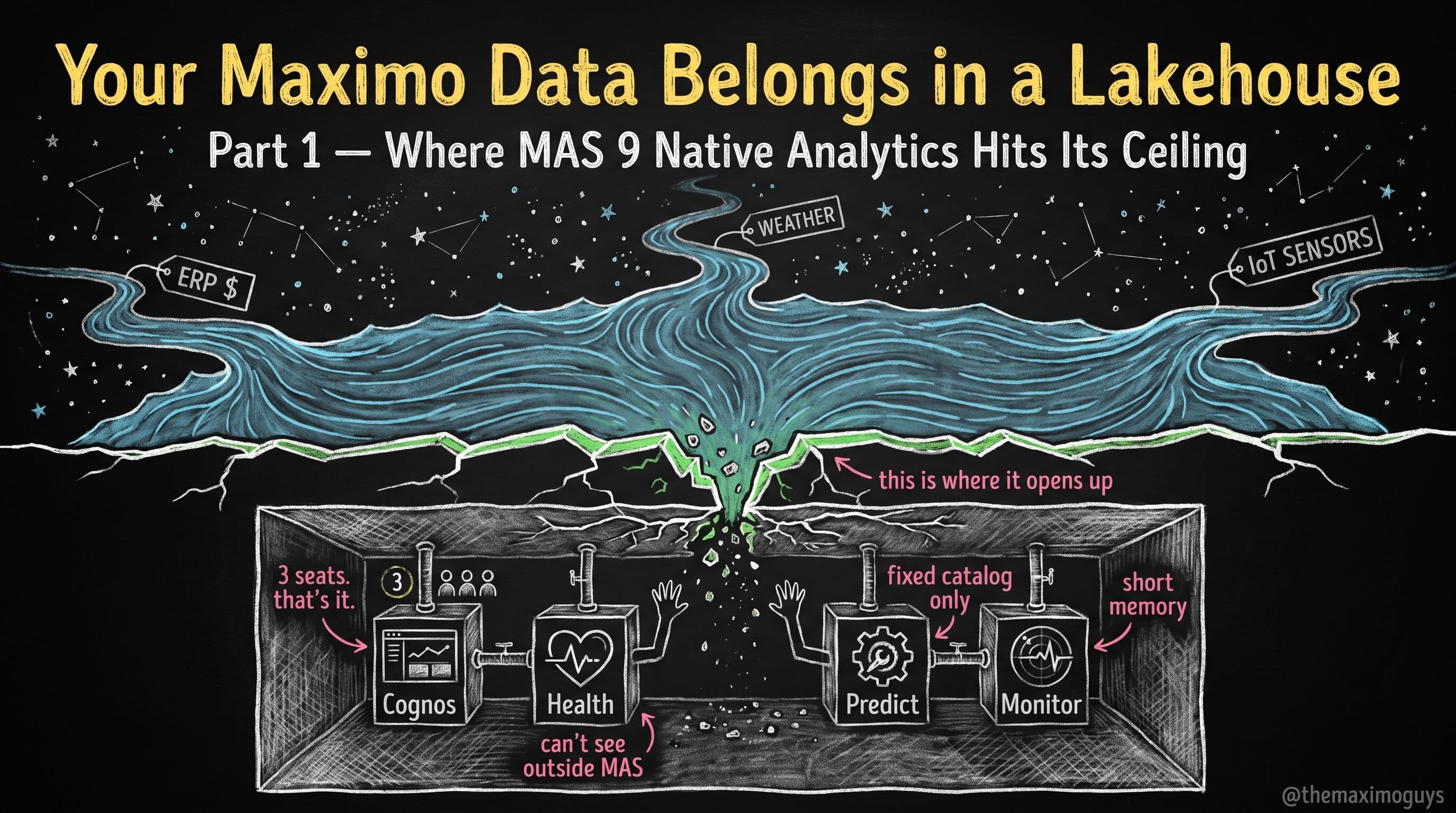
MAS 9 ships real native analytics — Operational Dashboards, Cognos, Health, Predict, Monitor — but every one of them has a ceiling. Part 1 names those ceilings precisely and explains why a lakehouse, not another dashboard, is what sits past them.
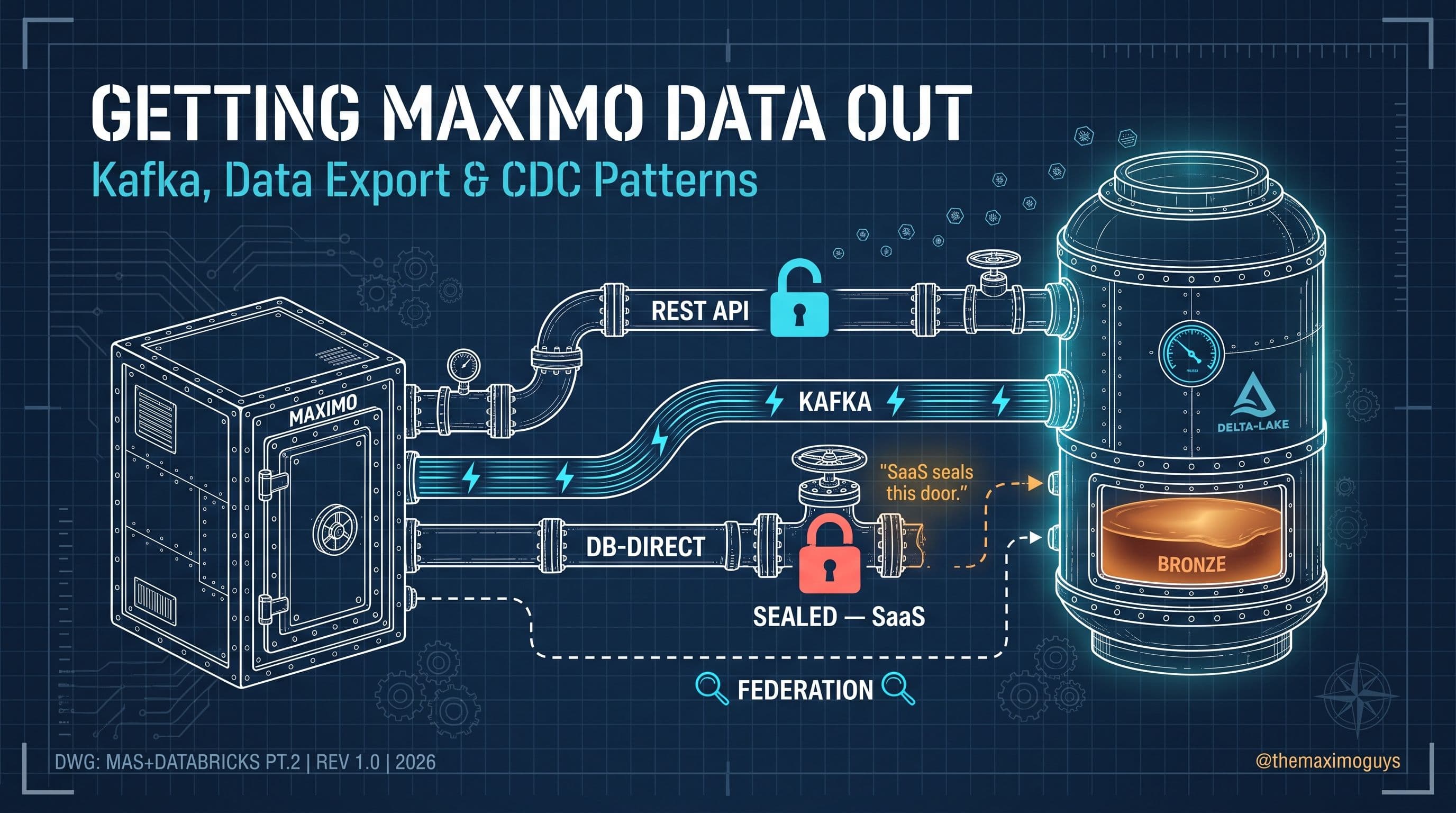
Four real ways to extract MAS 9 data for a Databricks lakehouse — REST/JSON API, MIF over Kafka and the Data Export framework, DB-direct, and Lakehouse Federation — with real object structures, Kafka broker config, and honest CDC framing.
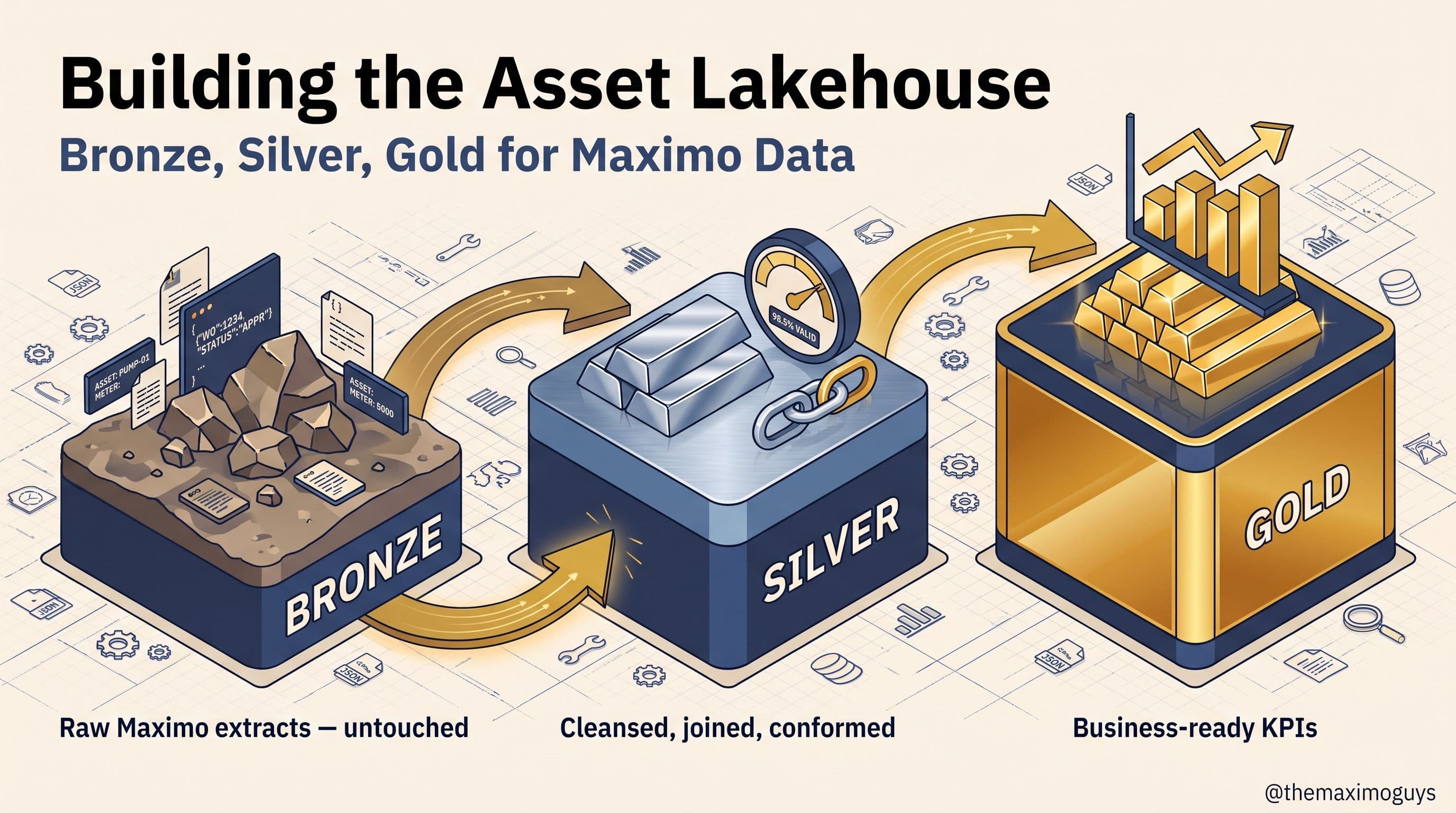
A table-by-table medallion architecture for MAS 9 data — cleansing rules for WORKORDER, ASSET, MATUSETRANS, PM, and meter data, conformed dimensions, and gold marts for reliability and cost analytics.
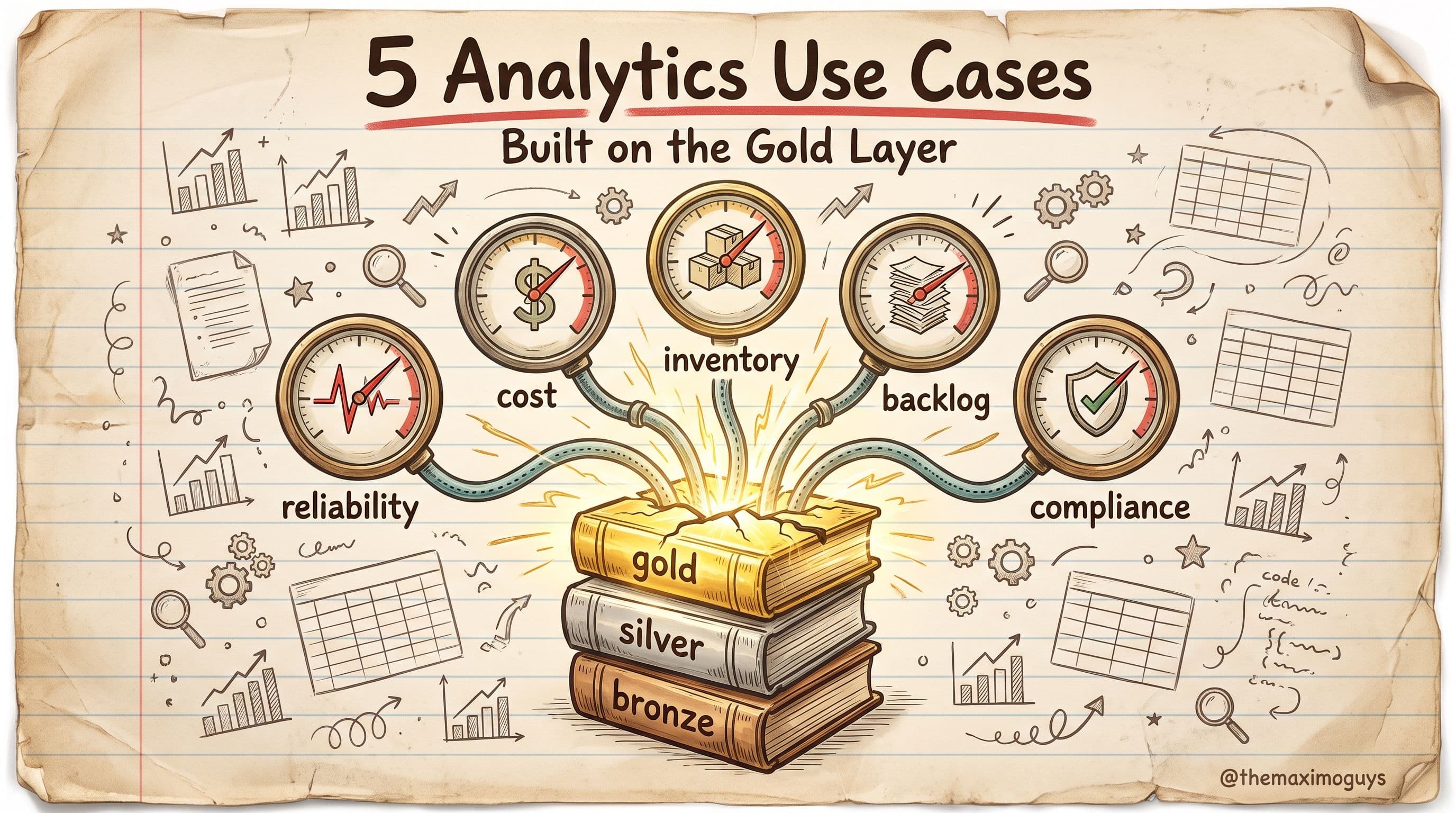
Worked Databricks SQL for the five gold-layer questions a maintenance leader actually asks: MTBF/MTTR trend health, maintenance cost rollups, slow-moving inventory, work order backlog aging, and PM compliance — built on Part 3's silver and gold tables.

A scored decision framework for choosing between Maximo Predict's prebuilt models and a custom AutoML/MLflow model in Databricks — data needs, in-house ML skills, AppPoints economics, and how to write a score back into Maximo.

How Unity Catalog's row filters, column masks, and lineage graph turn a Maximo-derived Databricks lakehouse into an auditable asset — mapped directly to the Maximo security groups, site/org restrictions, and data restrictions administrators already configure.
