7 posts tagged “watsonx.ai”
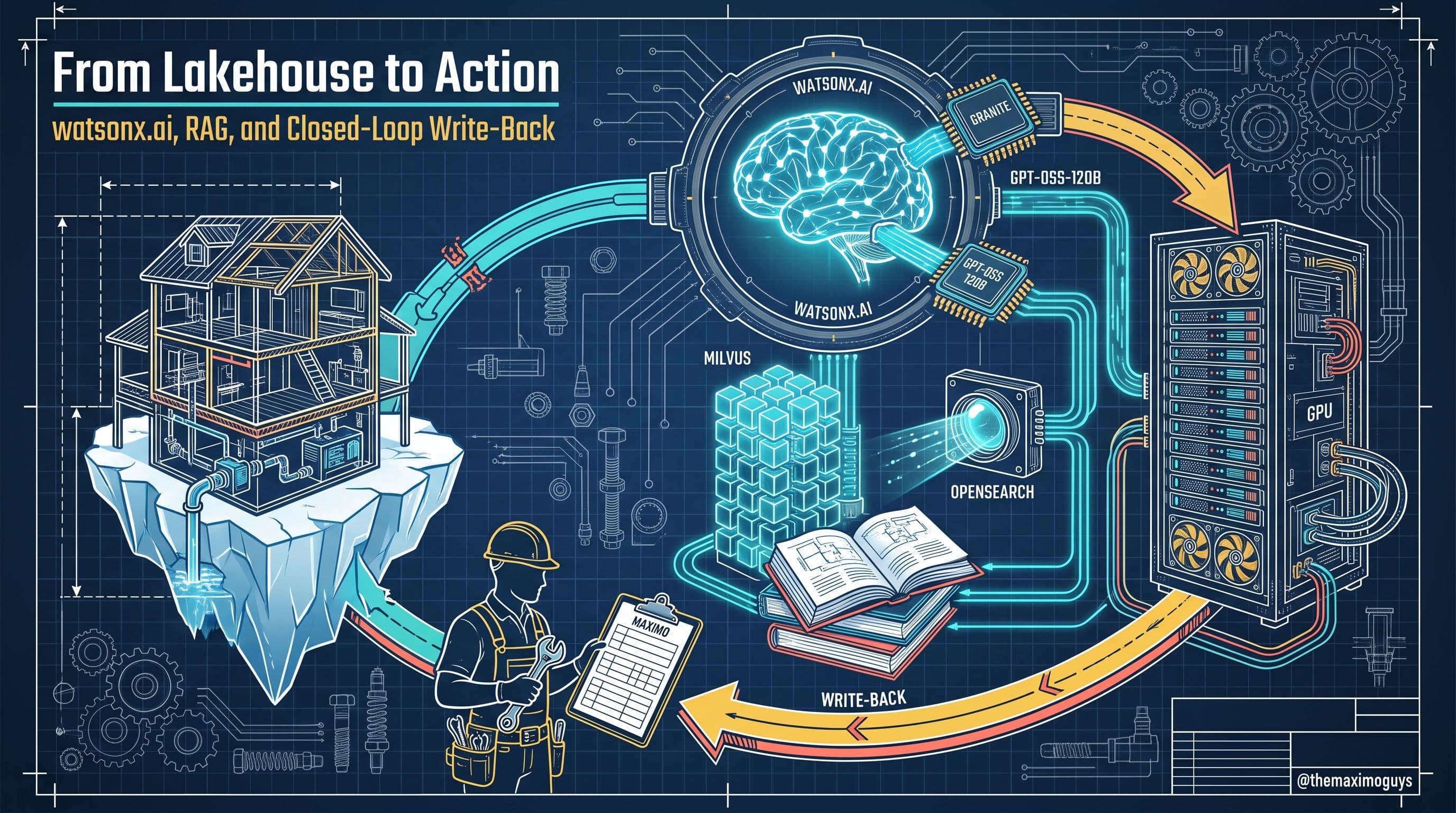
How the Maximo Iceberg lakehouse stops being a reporting layer: custom PdM/RUL models on watsonx.ai, AutoAI for RAG, the Milvus/OpenSearch/OpenRAG stack over maintenance manuals and work-order text, Granite and Llama model routing, and three concrete ways to write AI outputs back into Maximo.
 Surendra KattaJul 19, 2026Part 5 of 6
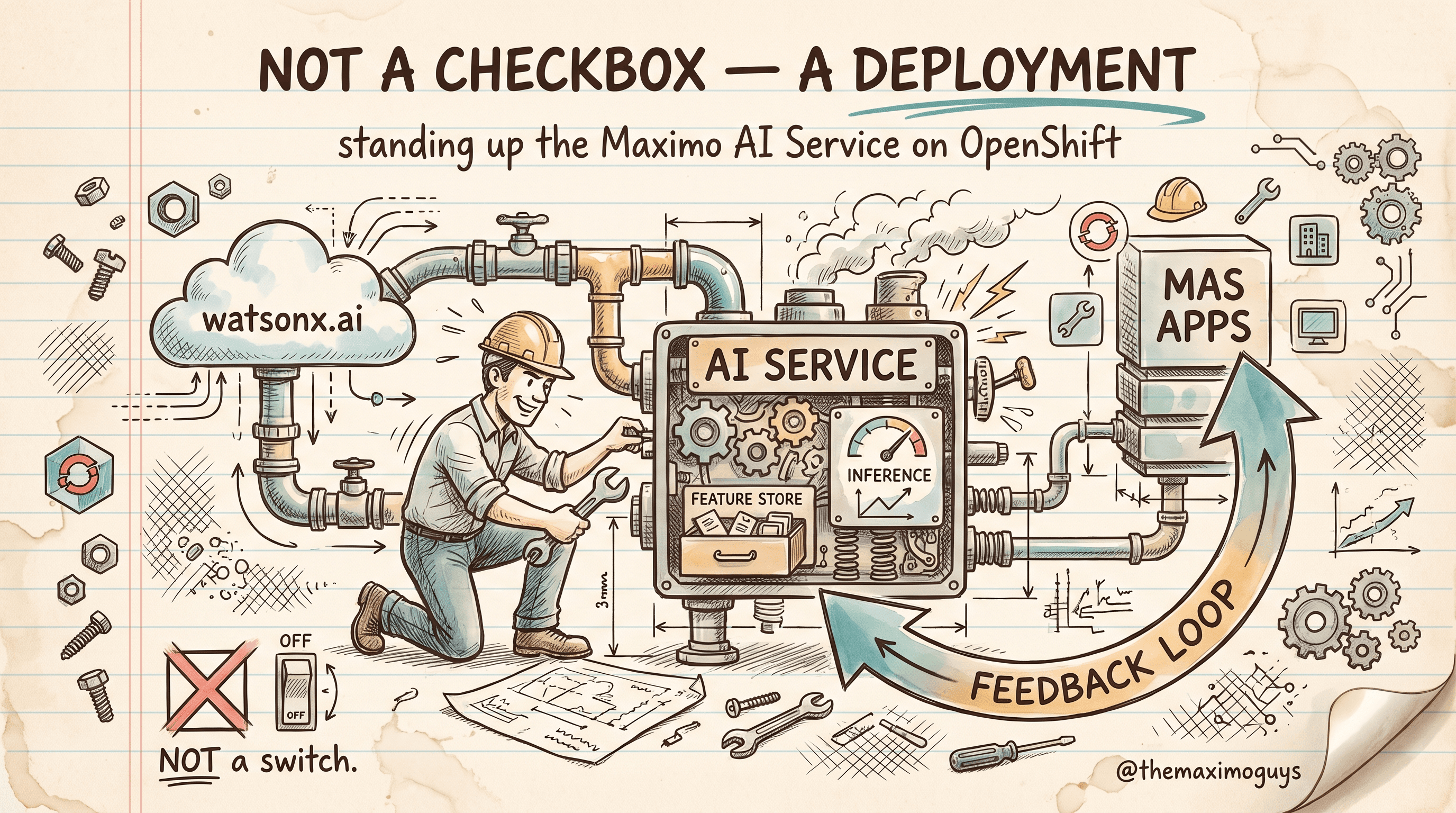
The Maximo Assistant is not a checkbox — it's a deployment project. The real path: the Maximo AI Service operator on OpenShift, the watsonx.ai connection, training recommendation models on your own data, and the feedback loop that keeps them improving. Mapped to IBM's ten team-exploration tasks and the realistic 68–128 hour pilot estimate.
Surendra Katta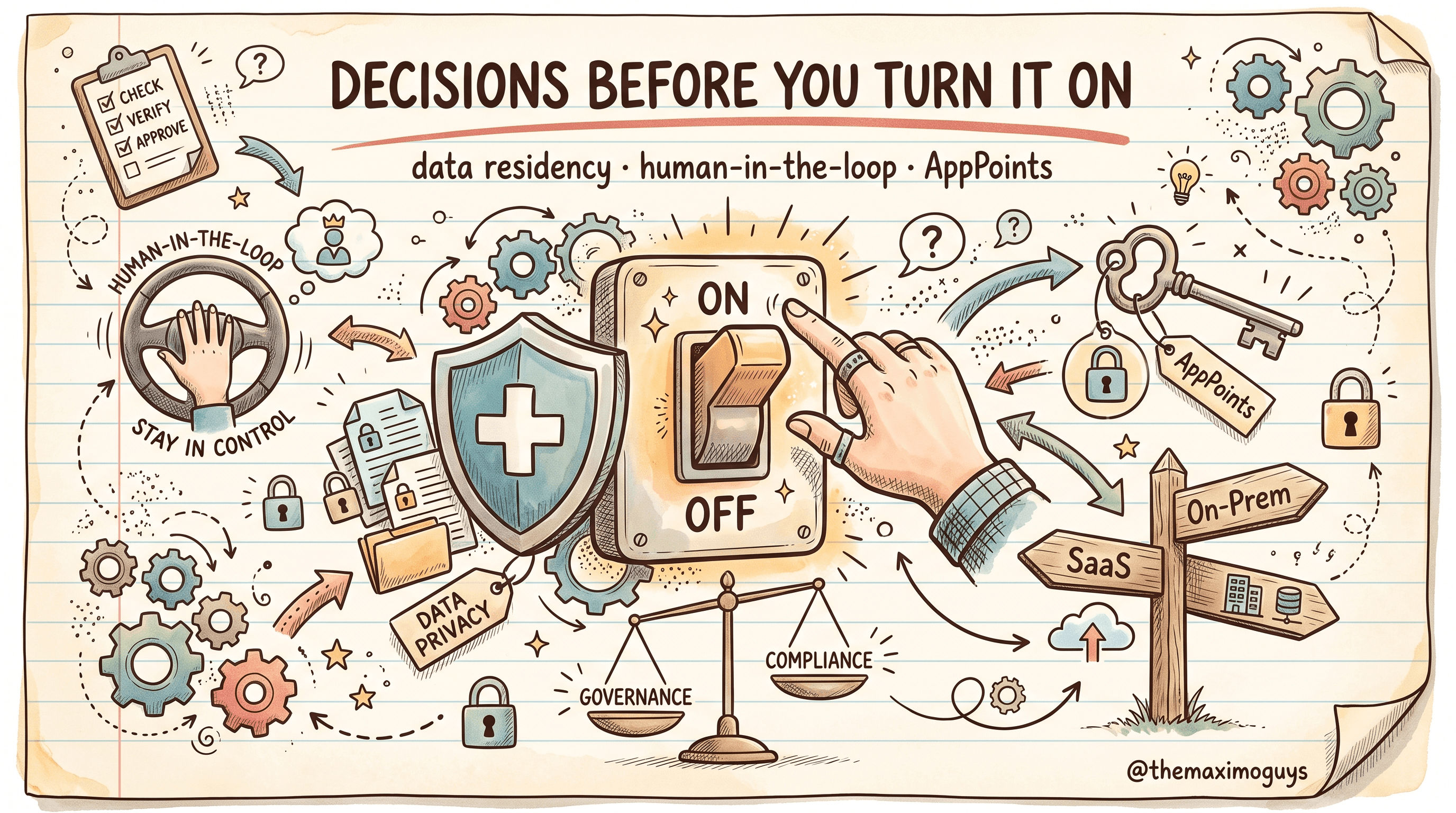
Generative AI is a governance conversation before it is a technology one. The data-residency decision baked into SaaS-versus-on-premises watsonx.ai, the human-in-the-loop controls (confidence scores and accept/modify/reject) that keep the AI a recommender not a decider, the feedback loop as a governed data process, and the AppPoints licensing that gates who gets access — with a go-live governance checklist.

What the Maximo Assistant actually is, the IBM watsonx.ai foundation models that power it, and the Maximo AI Service that connects the two. A grounded introduction to generative AI in MAS 9 — including an honest map of what it does and, just as importantly, what it does not do.
Surendra Katta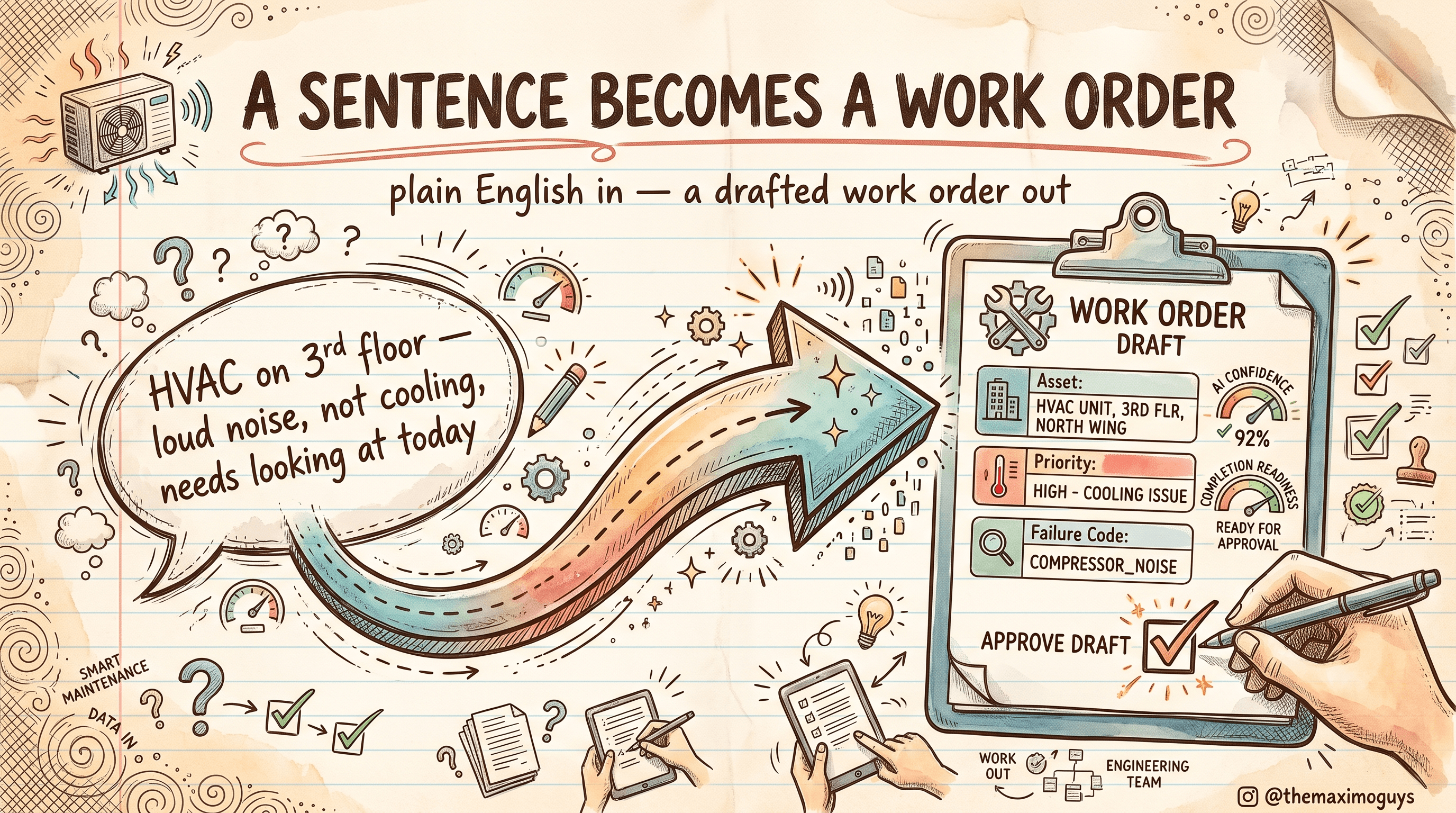
The feature people mean when they say 'AI in Maximo.' How the Maximo Assistant drafts a work order from a plain-English description, replaces filter queries with natural-language asset search, and recommends field values — priority, work type, failure codes, craft — each with a confidence score you can accept, modify, or reject.
Surendra Katta
A grounded six-part series on the Maximo Assistant and AI Assist in MAS 9 — the watsonx.ai foundation, natural-language work guidance, SME collaboration and knowledge capture, guided troubleshooting, the AI Service deployment path, and the governance, data-privacy, and AppPoints decisions that gate it. Written for teams who want to know what generative AI in Maximo actually does, and what it does not.
Surendra Katta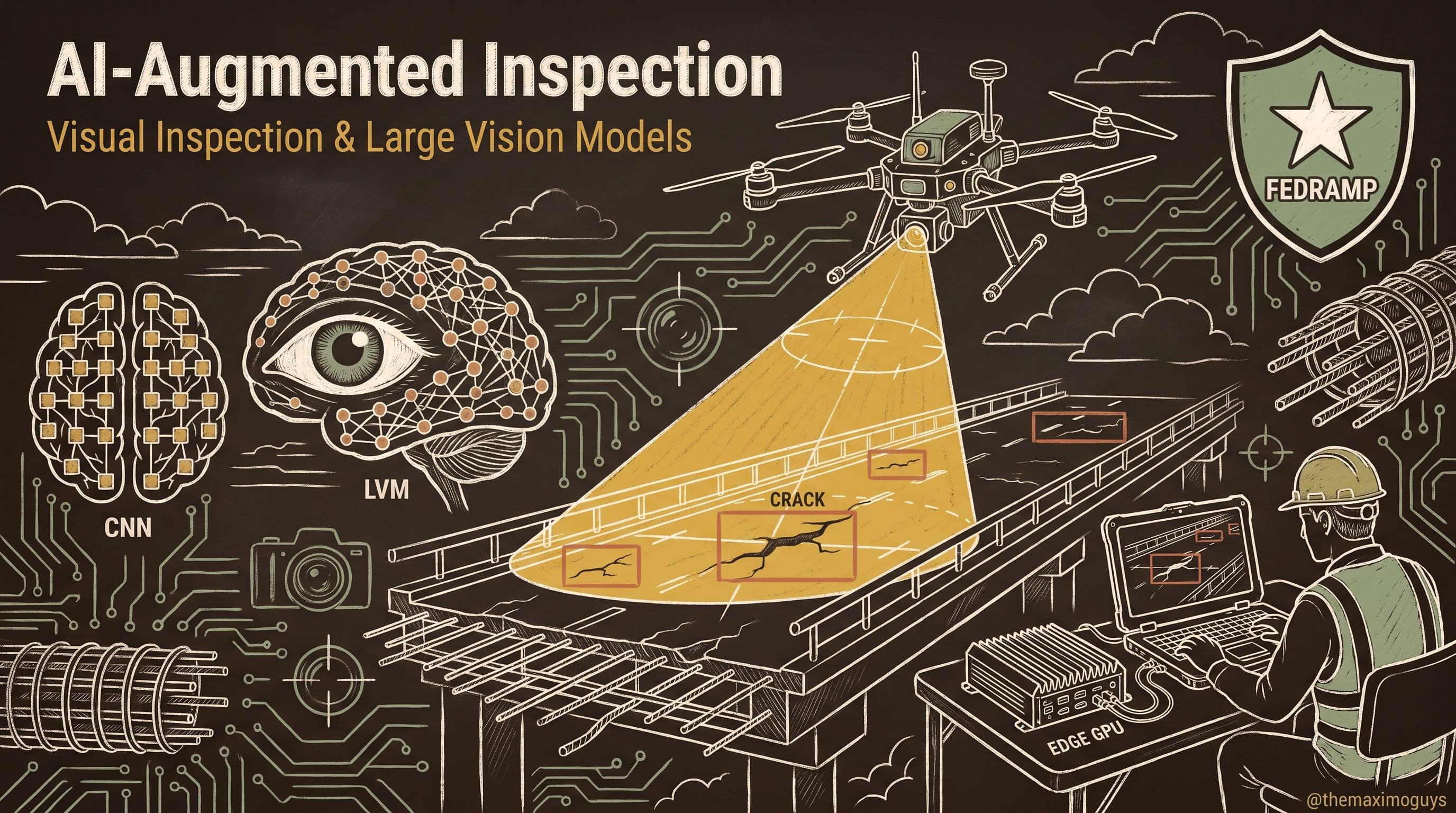
How Maximo Civil Infrastructure uses Visual Inspection to analyze drone and camera imagery for automated defect detection on bridge decks, piers, and beams; the difference between classic CNN models and the Large Vision Models introduced in MAS 9.1 that are trained for civil infrastructure and need minimal training data; the GPU, camera, and training-data requirements; how visual evidence links to element-level inspection records; and the honest watsonx.ai/FedRAMP reality that determines whether the LVM capability is even available to a government agency.
Surendra KattaJul 16, 2026Part 4 of 5