6 posts tagged “Claude Code”
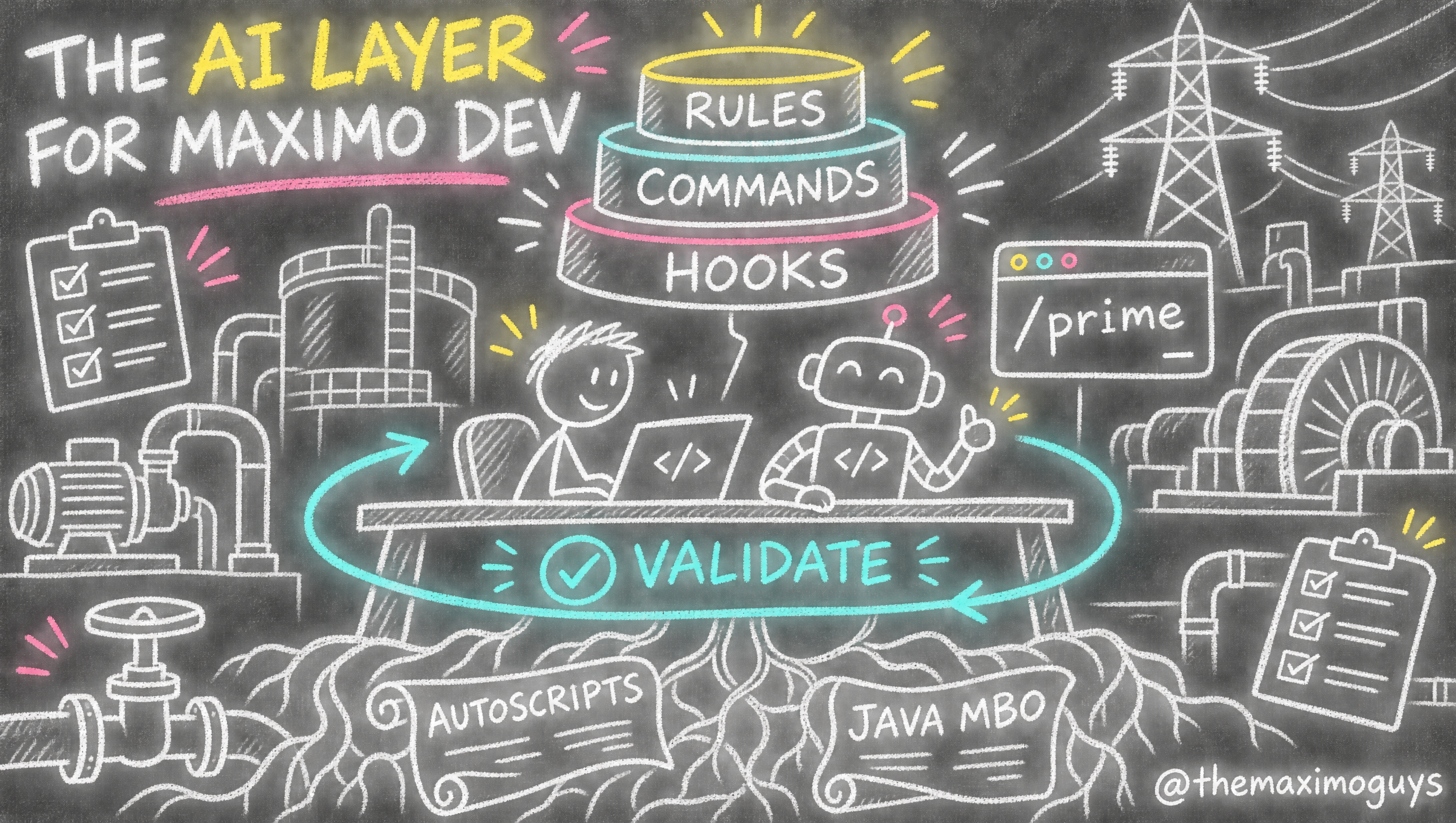
How a Maximo development team builds an AI Layer on top of its customisation repo so any coding agent (Claude Code, IBM Bob, Codex) writes autoscripts, Java MBO extensions, DBC scripts, MAF apps and integrations the house way: lean global rules, per-artifact rules, a command library (/prime, /plan-autoscript, /validate), hooks, validation against a dev Manage instance, a separate reviewer, autonomy levels per artifact, parallel work, and system evolution in a 15-year-old customised codebase.
 Krishna NeelaNov 19, 2026Part 6 of 8
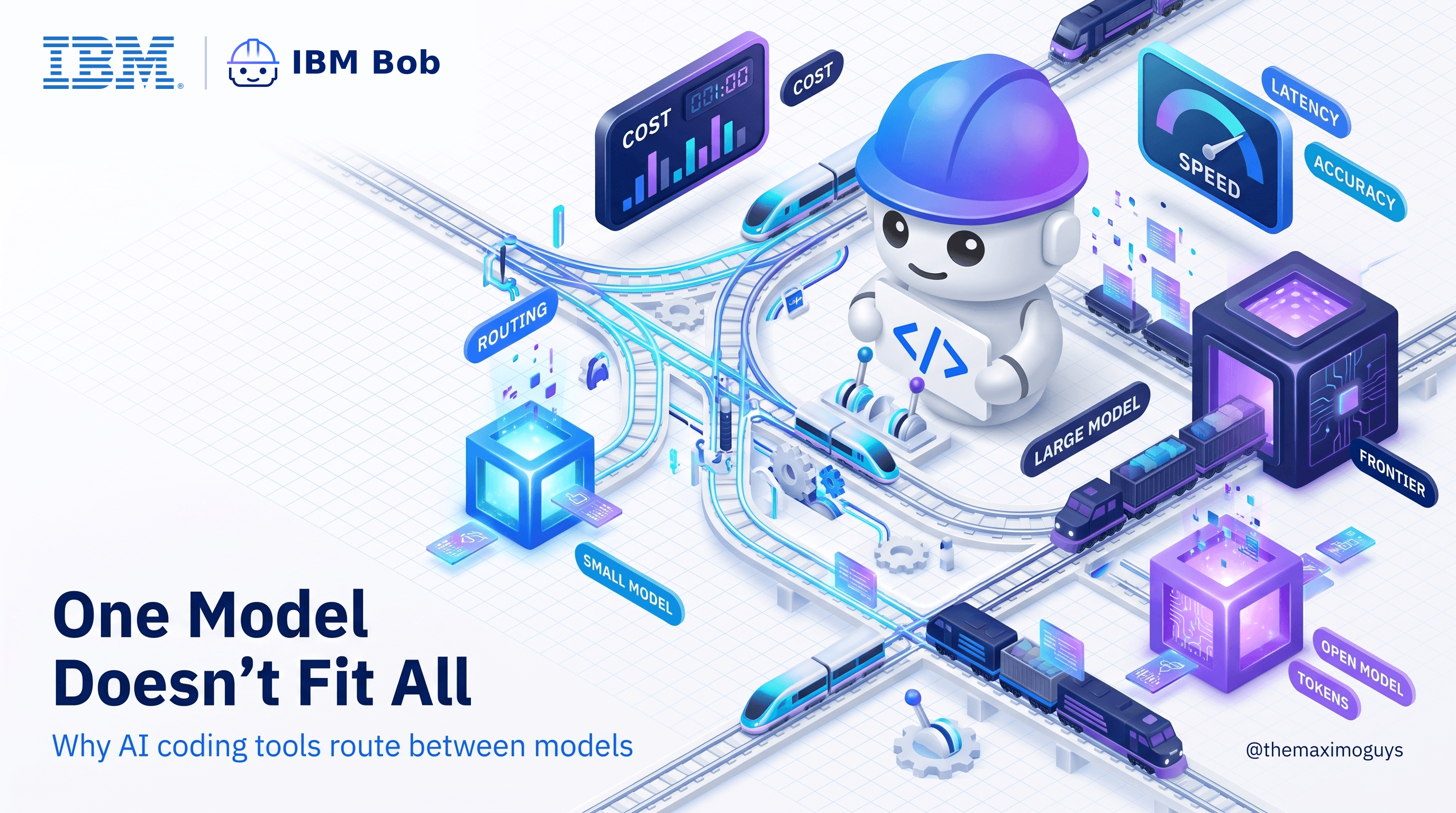
Autocomplete, legacy refactoring, and architecture planning don't need the same AI model. Here's how enterprise coding tools decide which model does which job, and why letting the tool choose for you has a catch.
Krishna NeelaSep 9, 2026Part 8 of 13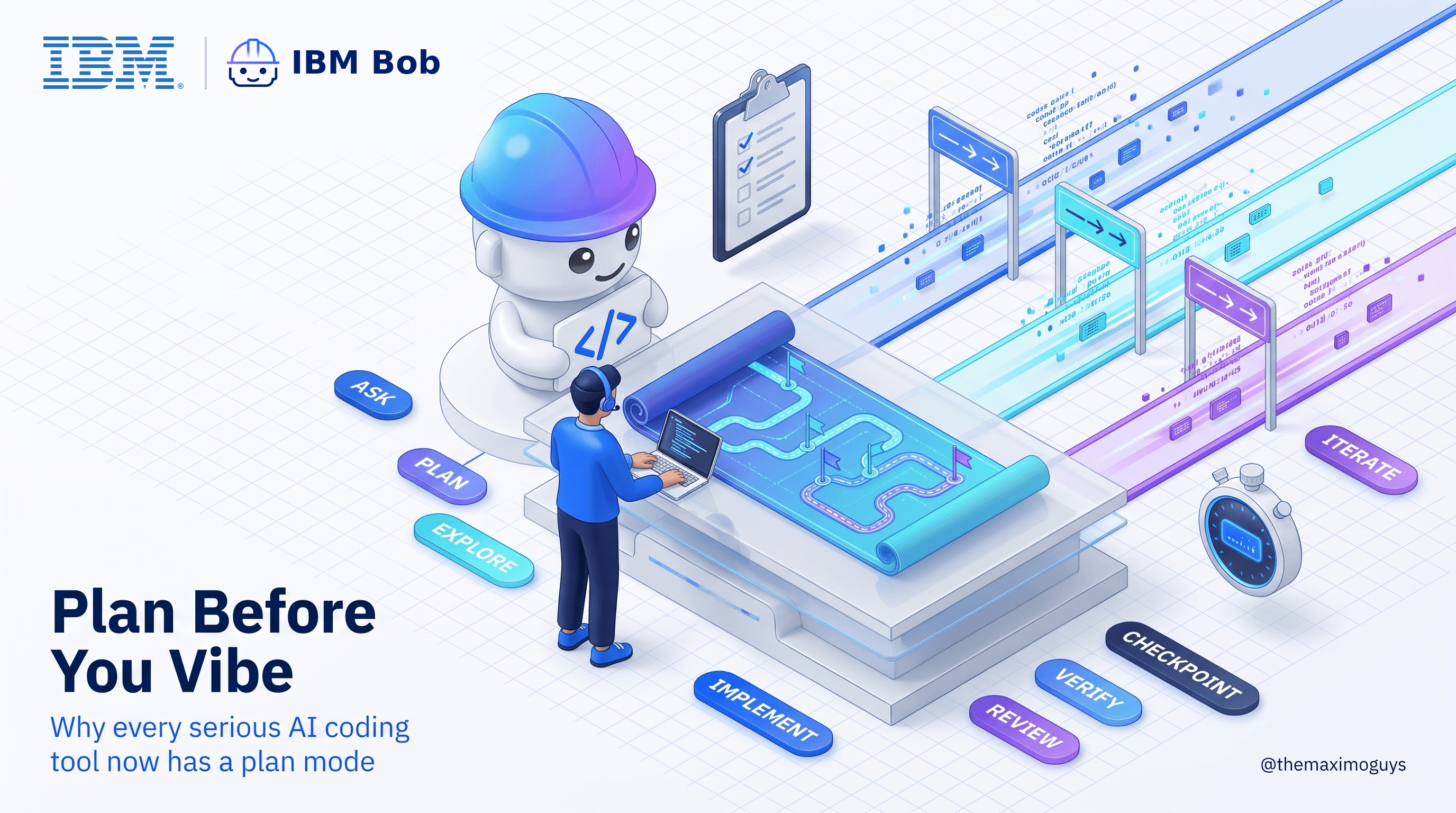
Cursor, Claude Code, Kiro and IBM Bob all ship some version of Ask, Plan and Agent modes. Here's why the 'think first, type second' habit is the single cheapest guardrail in enterprise vibe coding — and when to skip it.
Krishna NeelaAug 21, 2026Part 4 of 13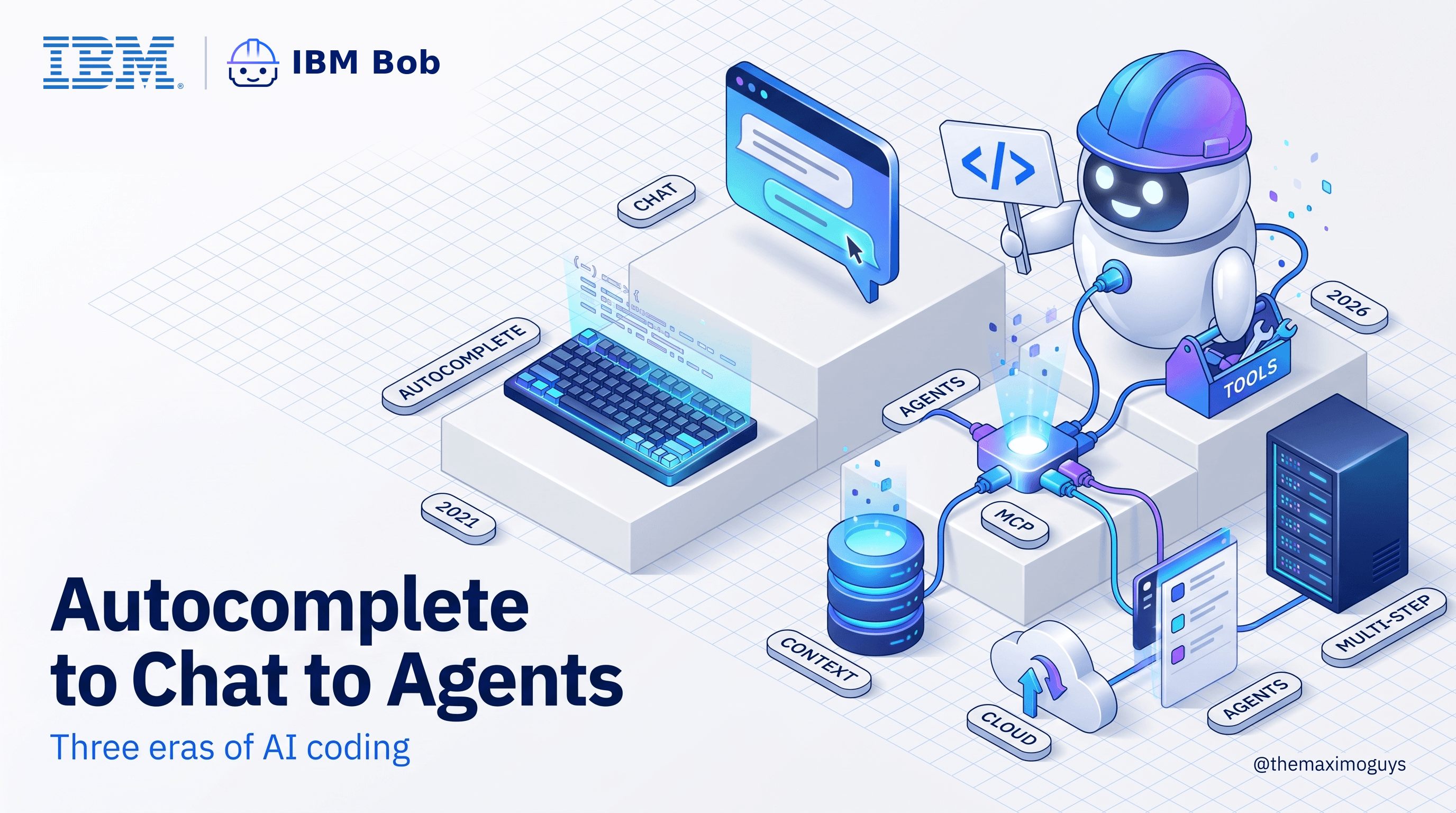
AI coding went from finishing your line, to answering your questions, to doing the work across your whole system. Here is what changed in each era, why agents need a way into enterprise systems, and how the Model Context Protocol became that way in.
Krishna NeelaAug 16, 2026Part 3 of 13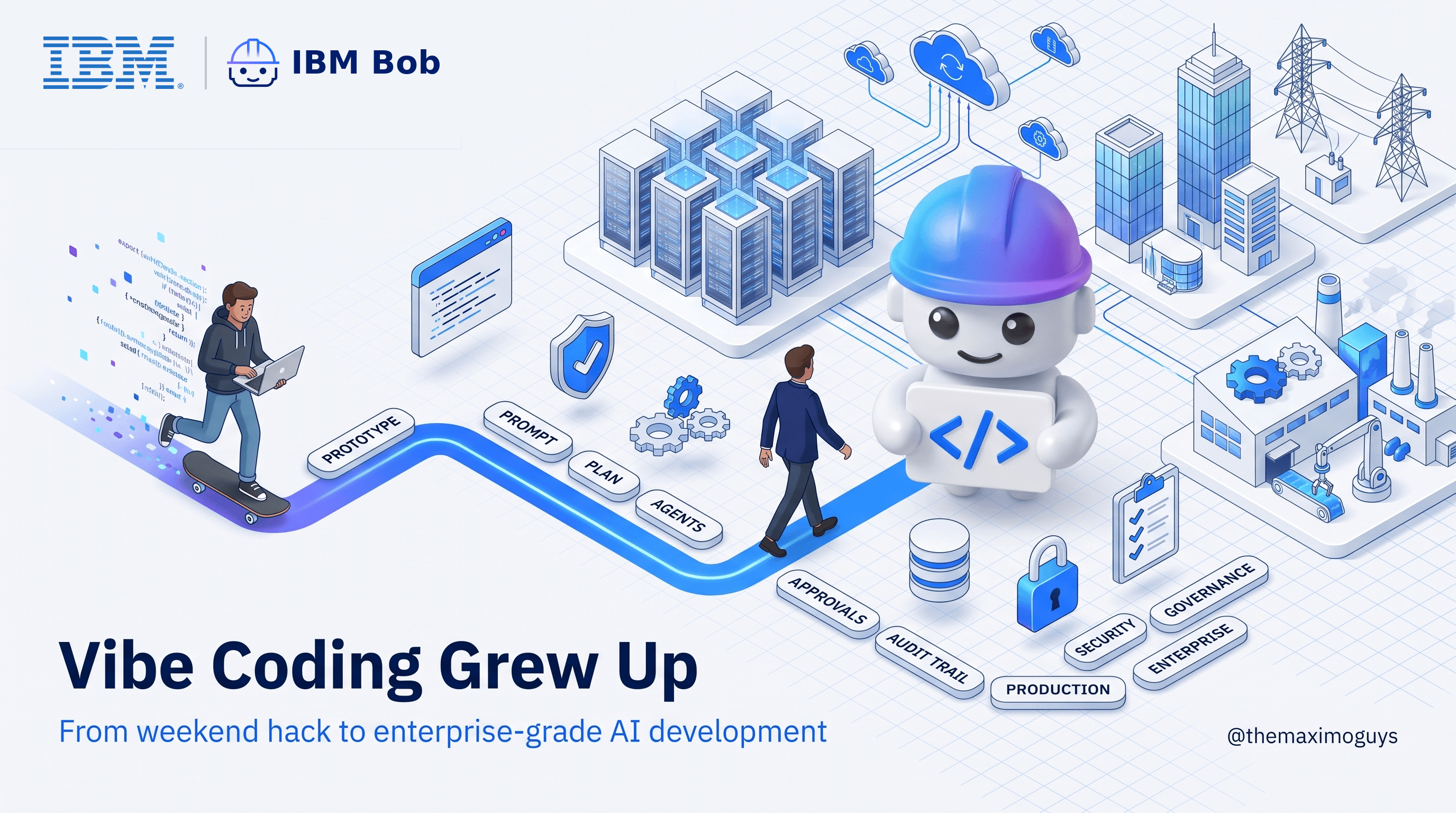
Vibe coding started as a throwaway tweet about letting the AI drive. Eighteen months later it is inside banks, utilities and government agencies, wearing a navy blazer. Here is what changed, what didn't, and why even IBM won't call it vibe coding.
Krishna NeelaAug 6, 2026Part 1 of 13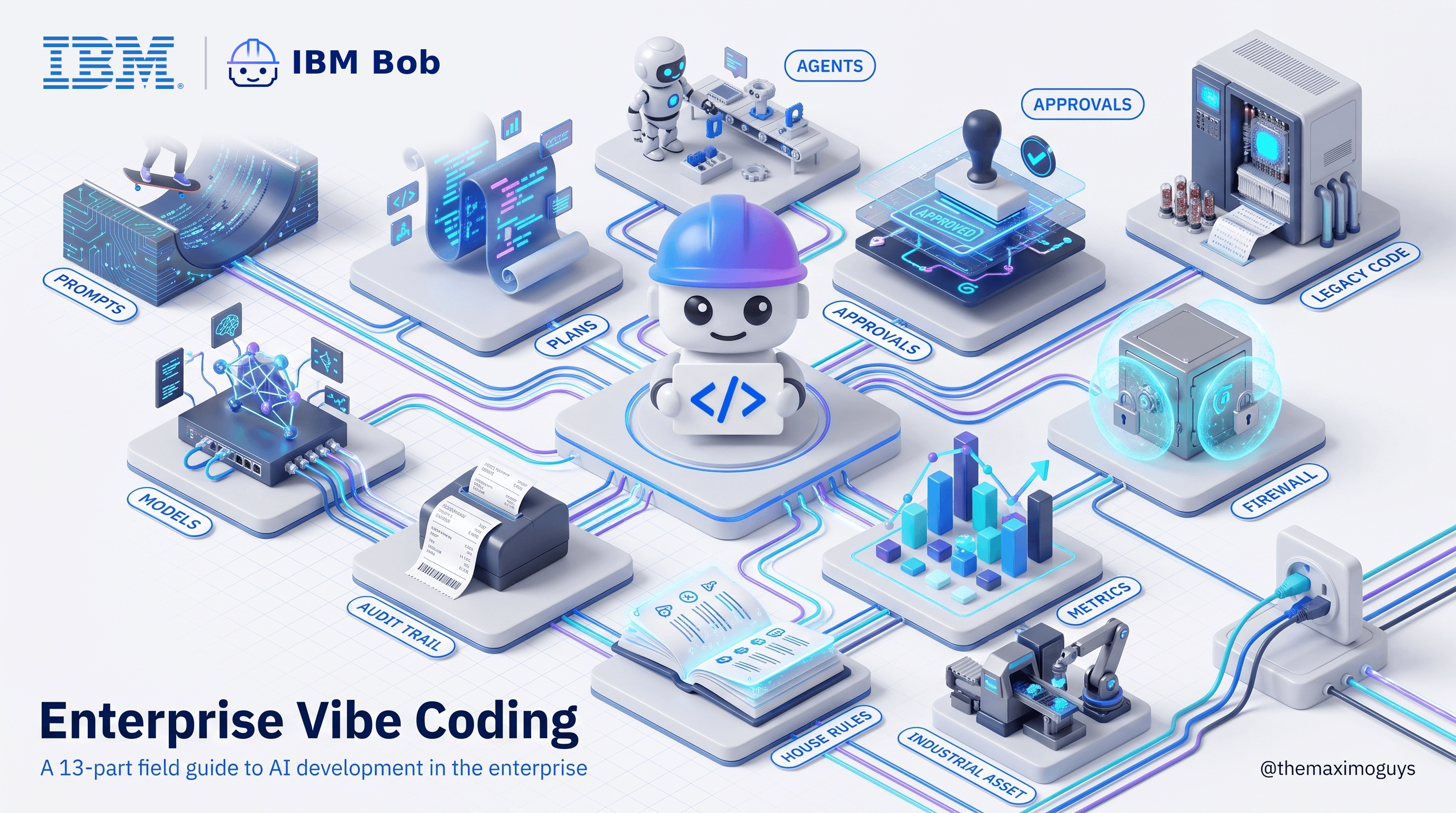
A 13-part, plain-English series on what happens when vibe coding leaves the weekend side project and walks into banks, utilities, insurers, government agencies and manufacturers. Specs, agents, approvals, audit trails, legacy code, firewalls, and how to read the productivity numbers.
Krishna NeelaAug 1, 2026Part 0 of 13