13 posts tagged “AI Agents”
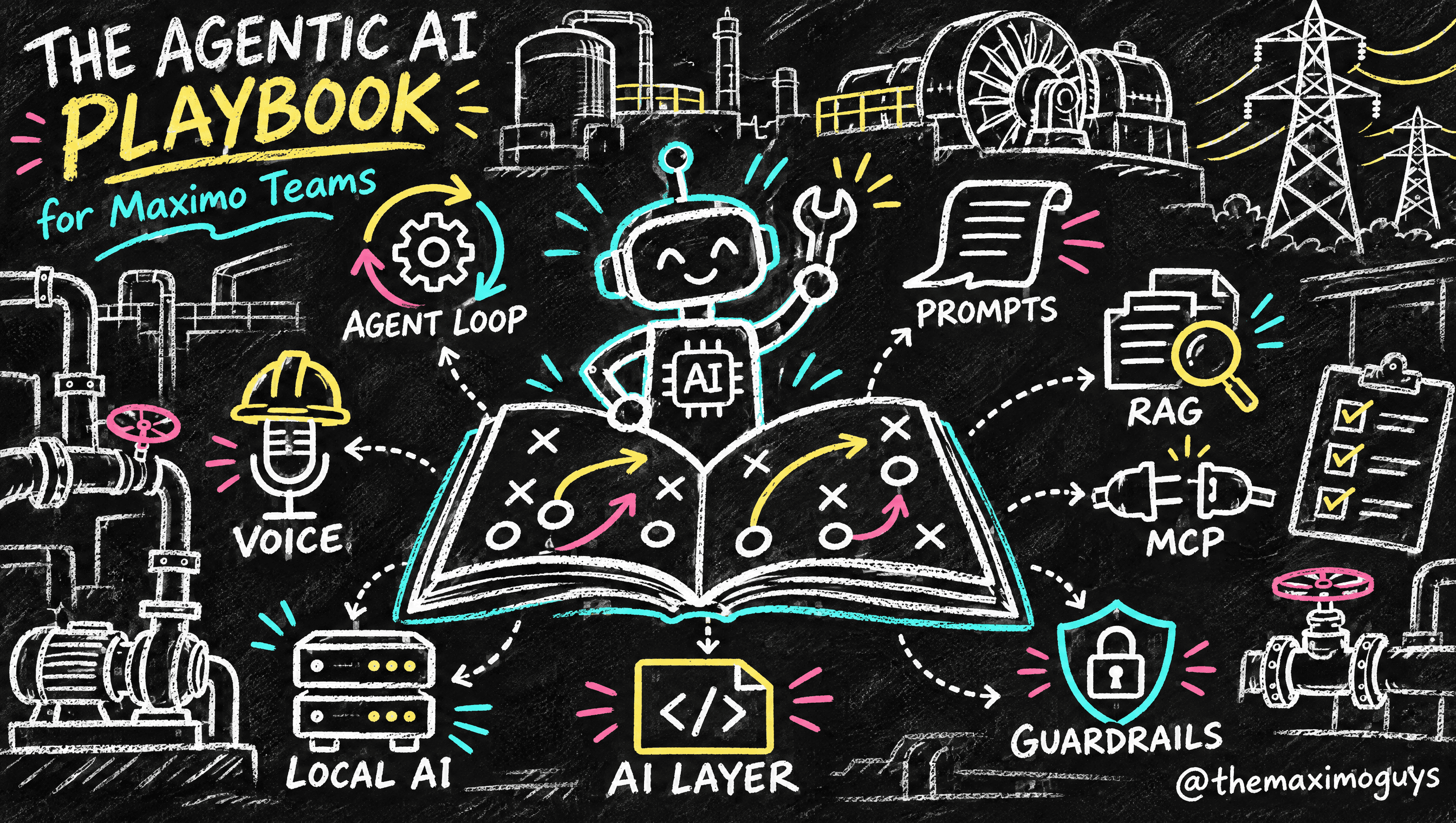
An 8-part playbook that takes Cole Medin's agentic AI teaching and applies it to IBM Maximo teams: what an agent really is, prompts and tools, RAG over Maximo data, MCP tool design, security and guardrails, the AI Layer for agentic coding, local and self-hosted models, and running agents in production, in the field and overnight.
 Krishna NeelaNov 19, 2026Part 0 of 8
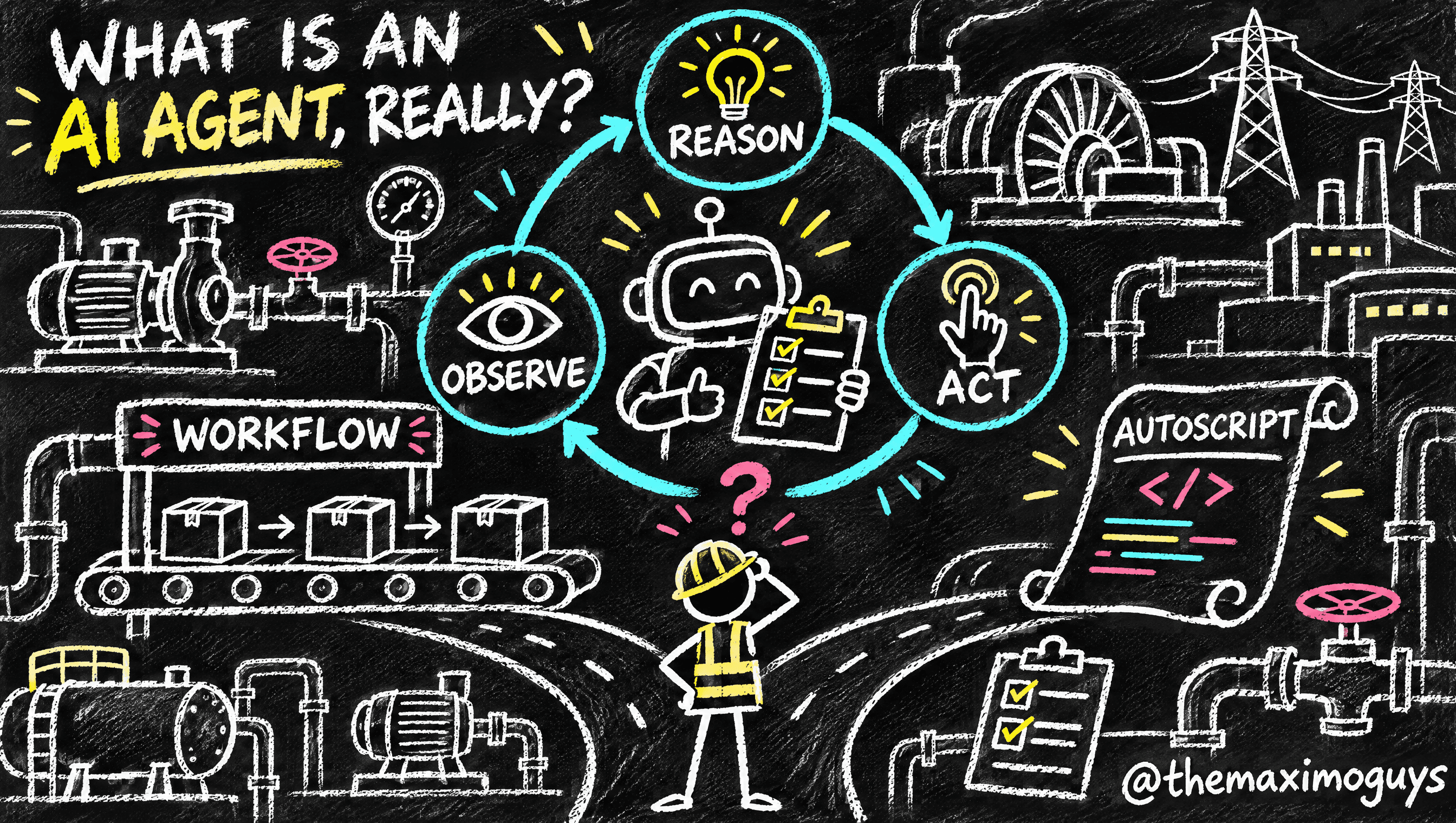
A plain-language definition of an AI agent for IBM Maximo teams: the four core components, the reason-act-observe loop, how an agent differs from a Maximo workflow, an escalation and an automation script, which Maximo jobs are agent-shaped and which must stay deterministic, where the MAS 9.2 Maximo Assistant and MCP server fit, and a decision table for choosing between agent, workflow and autoscript.
Krishna NeelaNov 19, 2026Part 1 of 8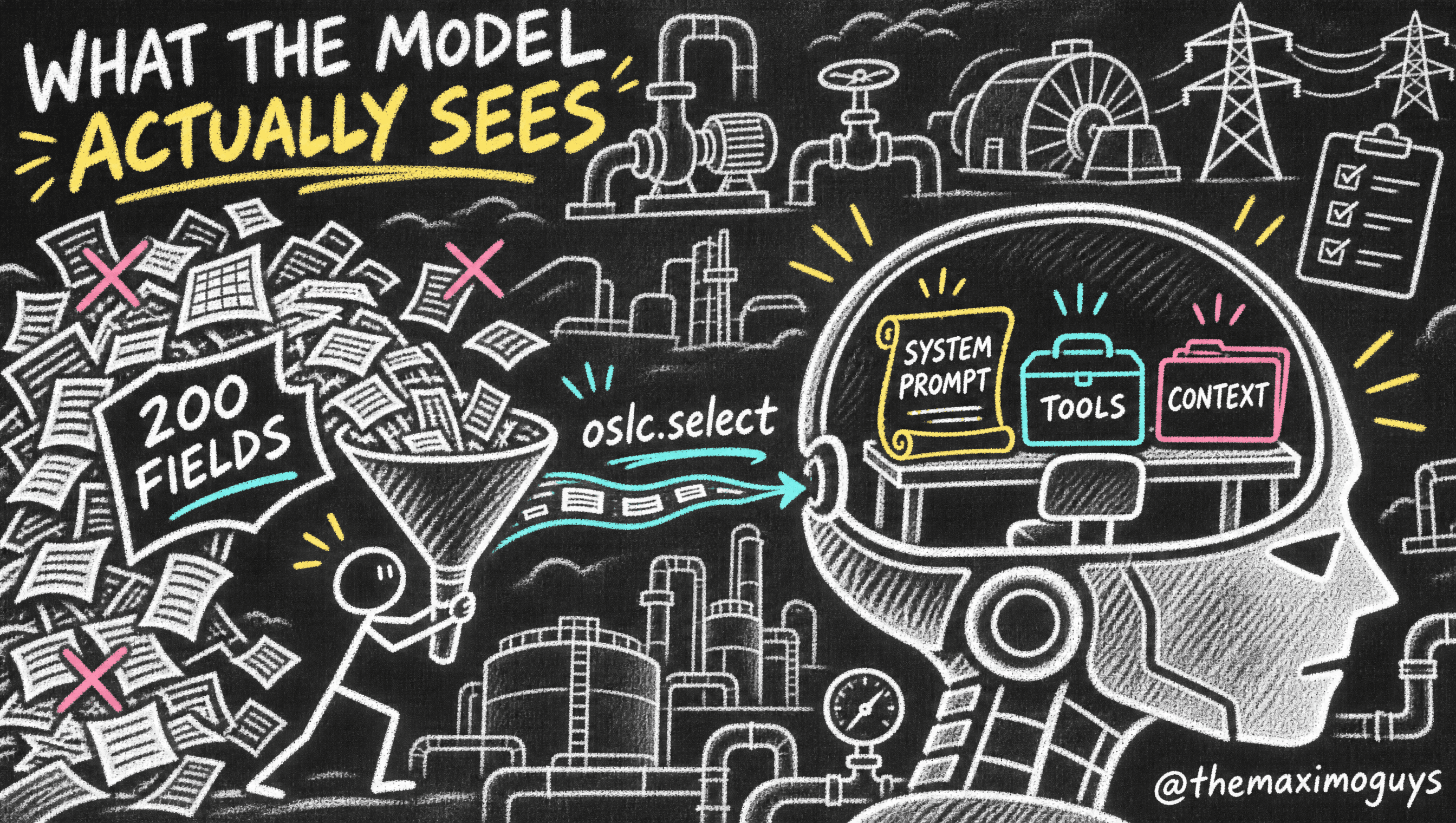
A runtime agent that works against IBM Maximo succeeds or fails on three things it reads on every turn: the system prompt, the tool descriptions, and the data its tools return. This playbook applies Cole Medin's prompting, tool-design and context-management lessons to mxapiwo, mxapiasset and mxapiinventory: positive instructions, dynamic prompts that inject site and security context, oslc.select diets against context rot, structured triage outputs, and prompts versioned in git.
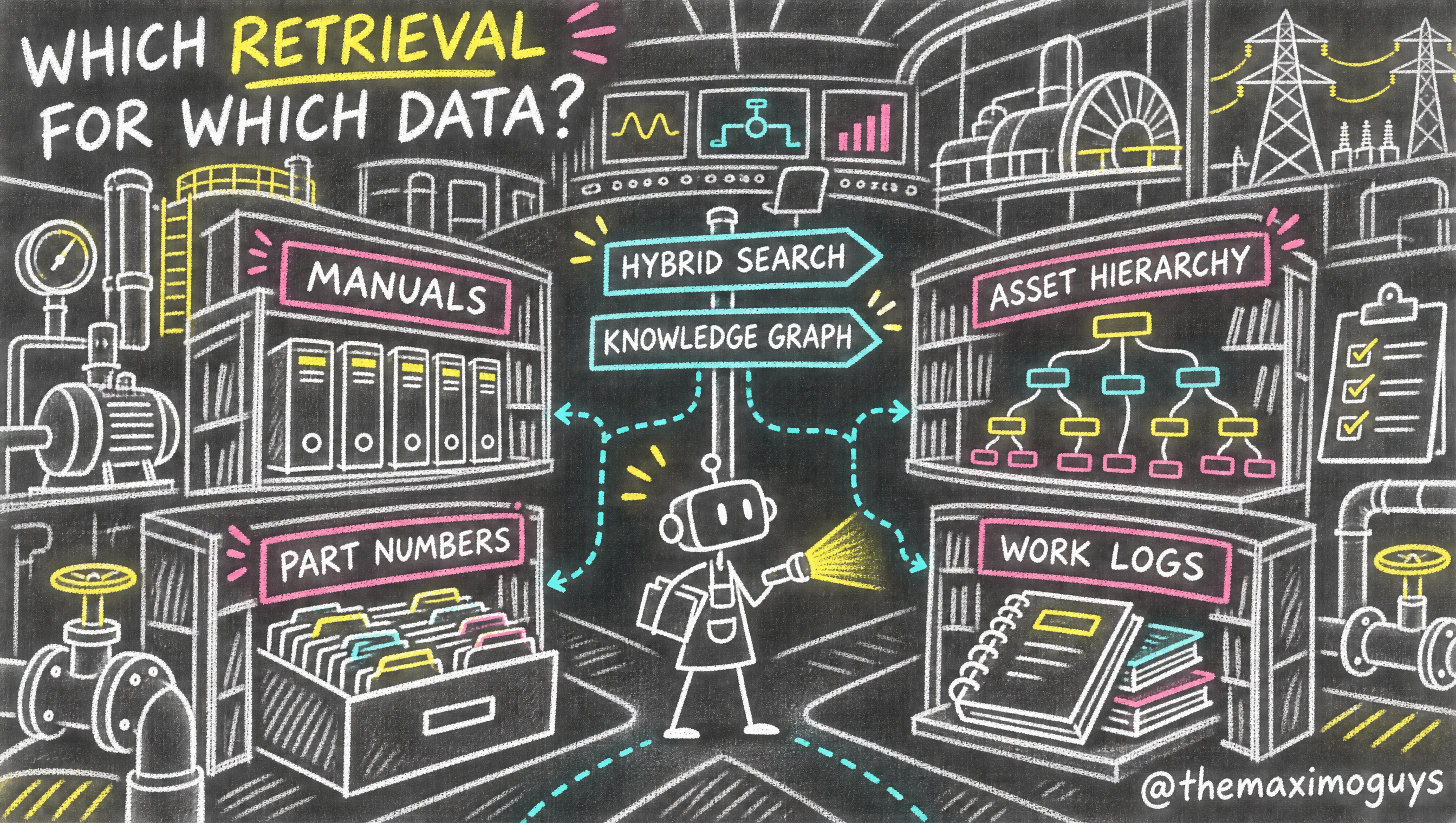
Not every Maximo question is a RAG question. A practitioner's guide to choosing retrieval strategies for Maximo data: query structured records live, embed narrative text, use keyword and hybrid search for part numbers and asset tags, hierarchical RAG for OEM manuals and doclinks, graphs for asset, location and failure hierarchies, metadata filters for site security, and delete-before-insert when a work order changes.
Krishna Neela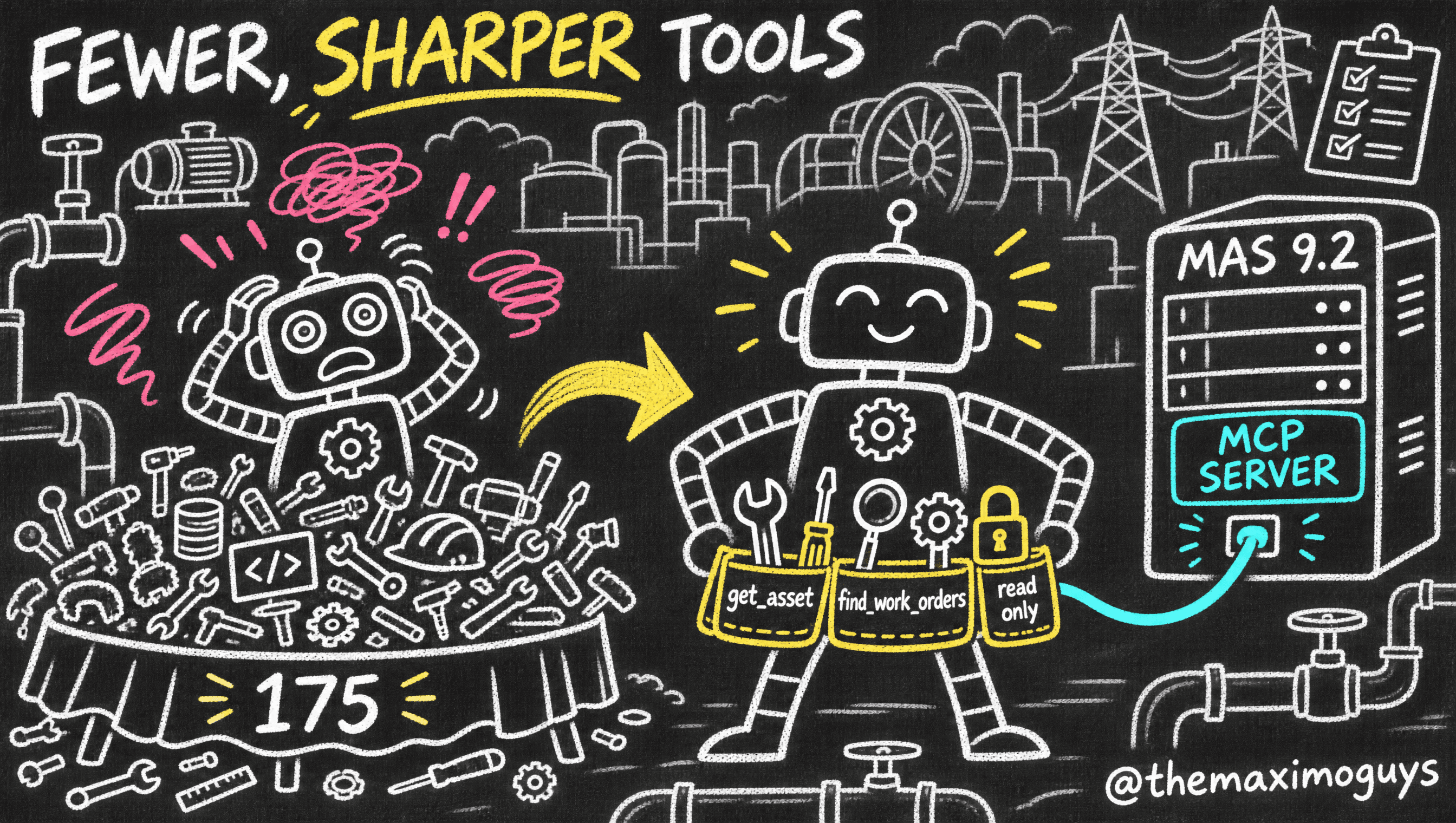
A practitioner's playbook for exposing IBM Maximo to AI agents through the Model Context Protocol: what MCP really is, the too-many-tools problem, the MAS 9.2 native MCP server, TMG's Max_mcp and Max_Interfaces, how to design a Maximo tool (names, descriptions, input schemas, oslc.where safety, pagination, idempotent writes), stdio versus streamable HTTP, API keys versus OAuth, and when skills or code execution beat MCP.
Krishna Neela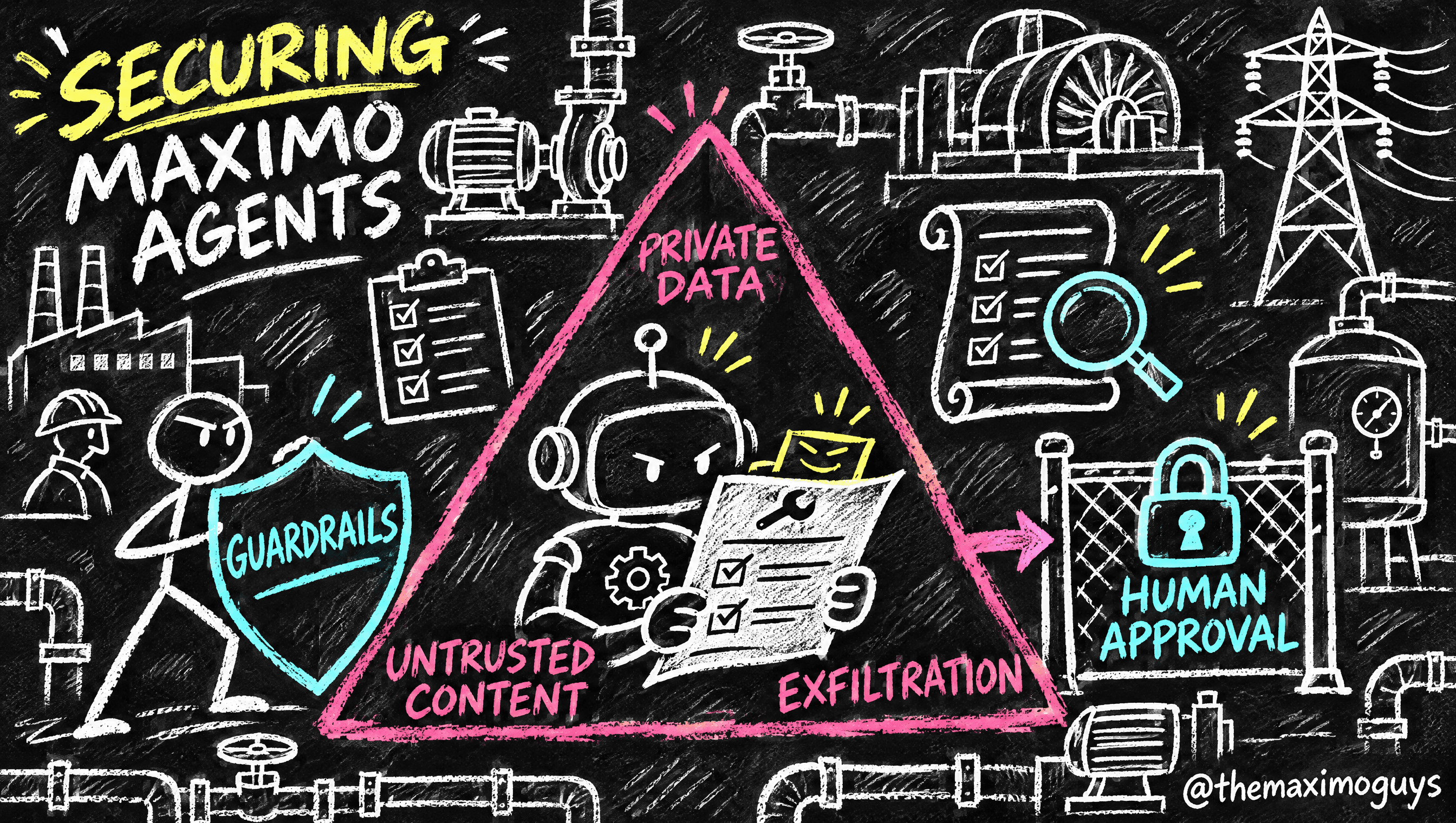
A defensive playbook for AI agents on IBM Maximo: map the lethal trifecta onto work orders, service requests and vendor email, walk through a prompt injection that arrives in a service request, and build layered guardrails with least-privilege security groups, one API key per agent, read-only defaults, human approval for status changes, egress control, eAudit evidence and data residency choices.
Krishna NeelaNov 19, 2026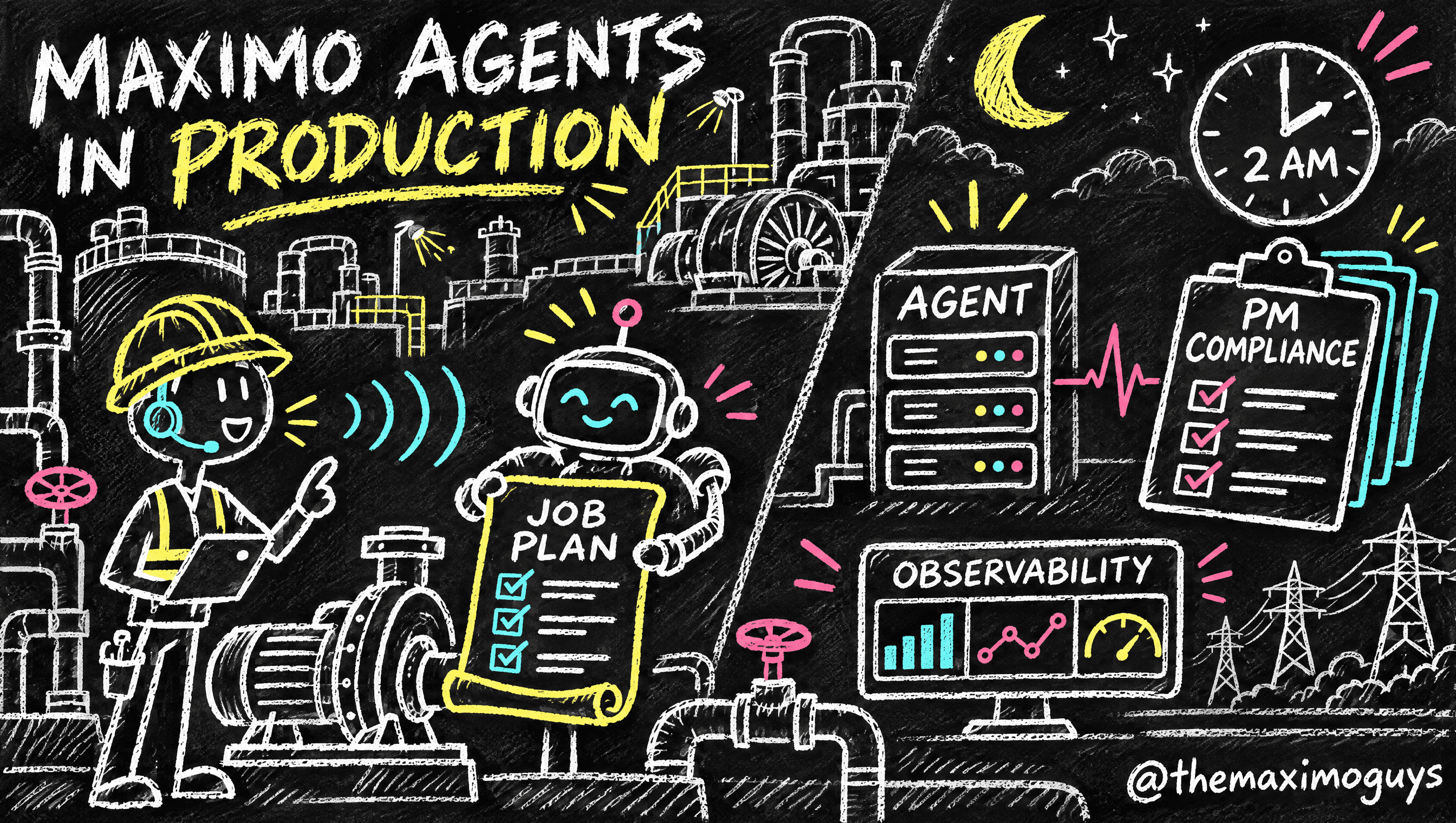
The last mile of the Agentic AI Playbook for Maximo: packaging an agent as a container and API endpoint next to MAS, per-user API keys and multi-tenancy, observability and cost per run, a hands-free voice agent for technicians reading job plans and safety plans, heartbeat and event-driven agents fed by publish channels and Kafka, long-running loops with a human gate, and a production readiness checklist.
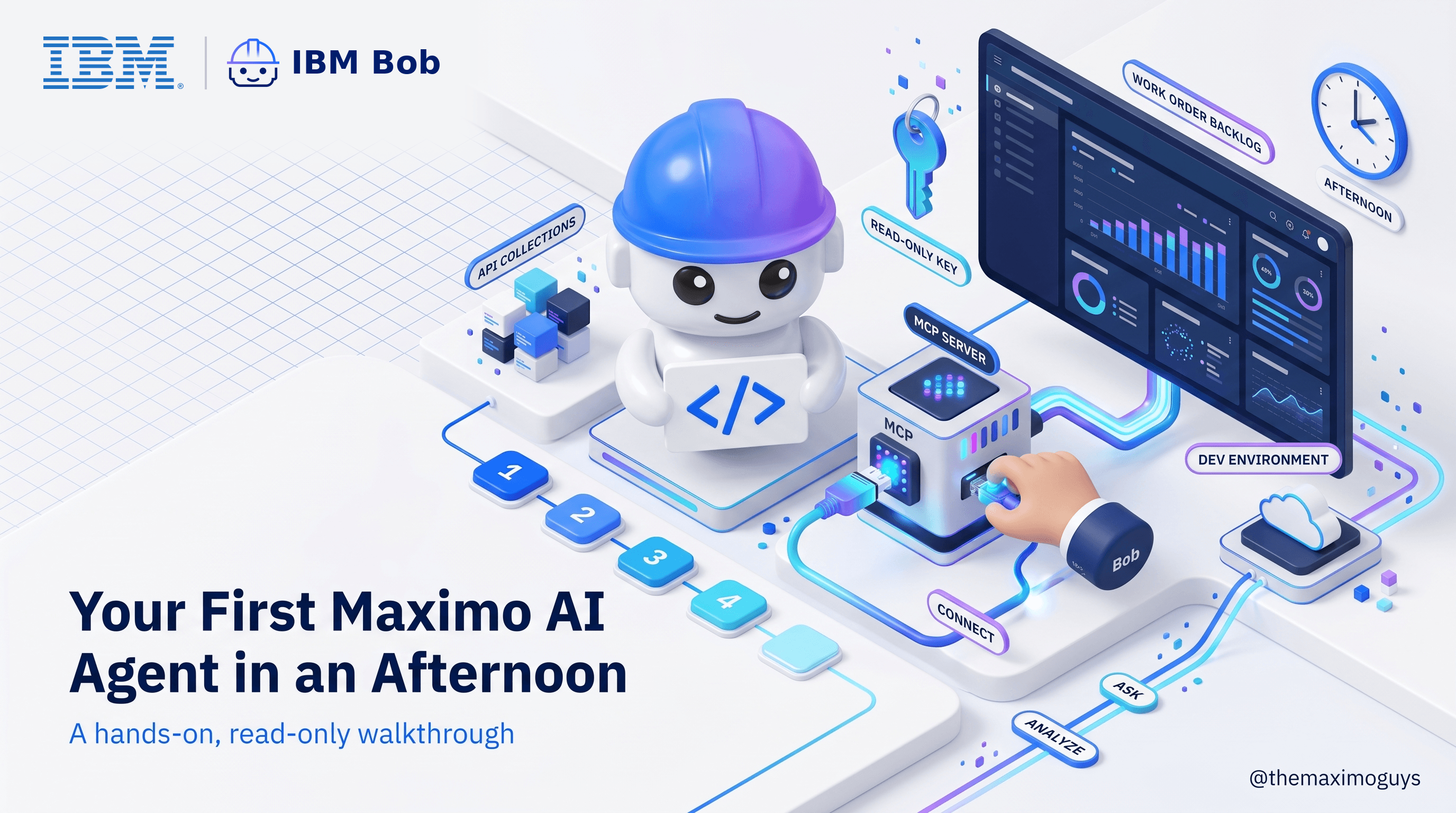
A light, hands-on walkthrough: map the Maximo APIs with Max_Interfaces, run the Max_mcp server with a read-only API key, connect any MCP-capable agent (Claude Code, IBM Bob, Cursor, Copilot) and ask it to analyze your work-order backlog — safely.
 Manasa GangaOct 4, 2026Part 13 of 13
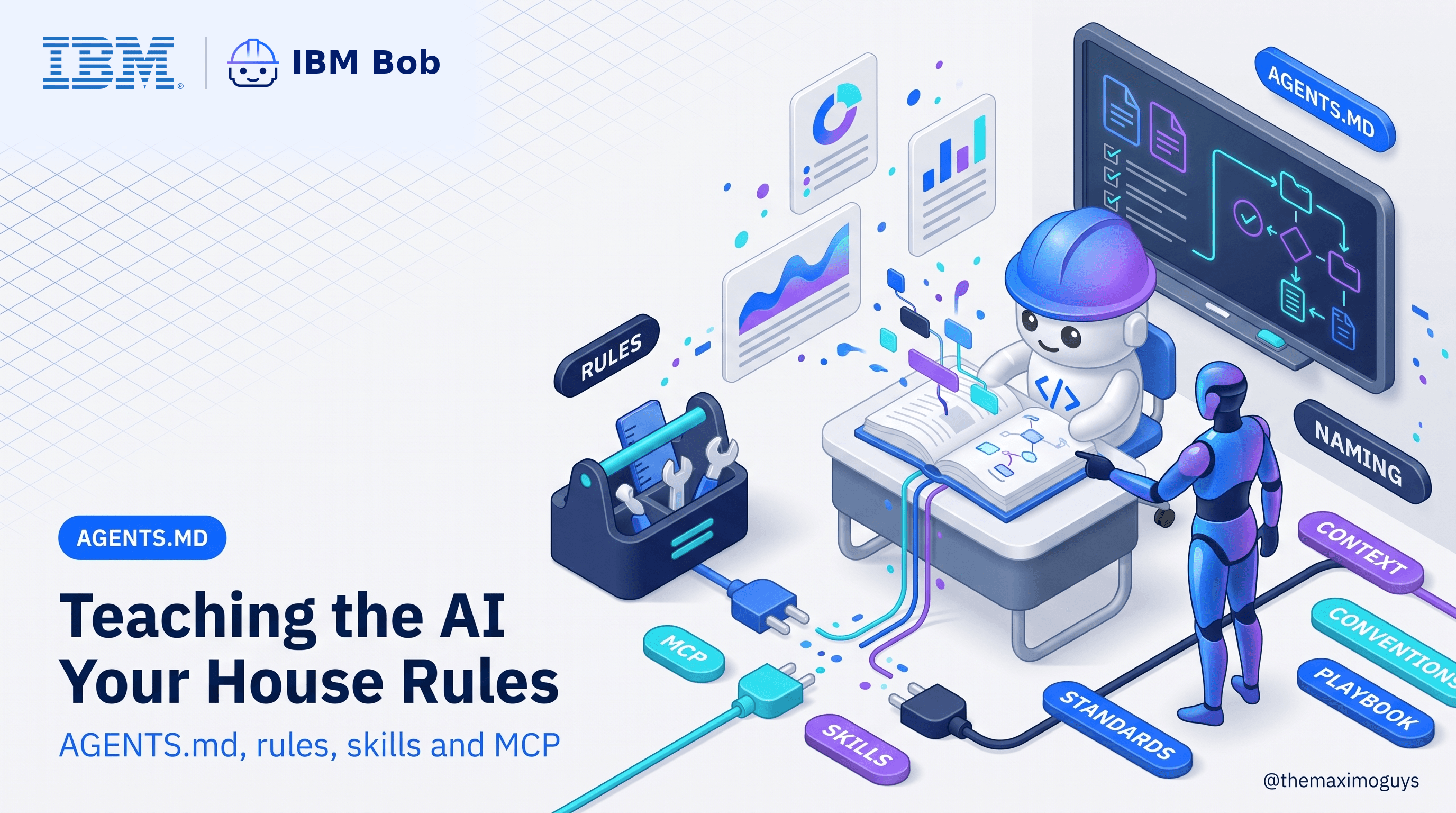
An AI coding agent walks into your codebase knowing nothing about your naming conventions, banned libraries or deployment rules. Here's how AGENTS.md, rule files, skills and MCP turn house rules into something the agent actually follows.
Krishna NeelaSep 24, 2026Part 11 of 13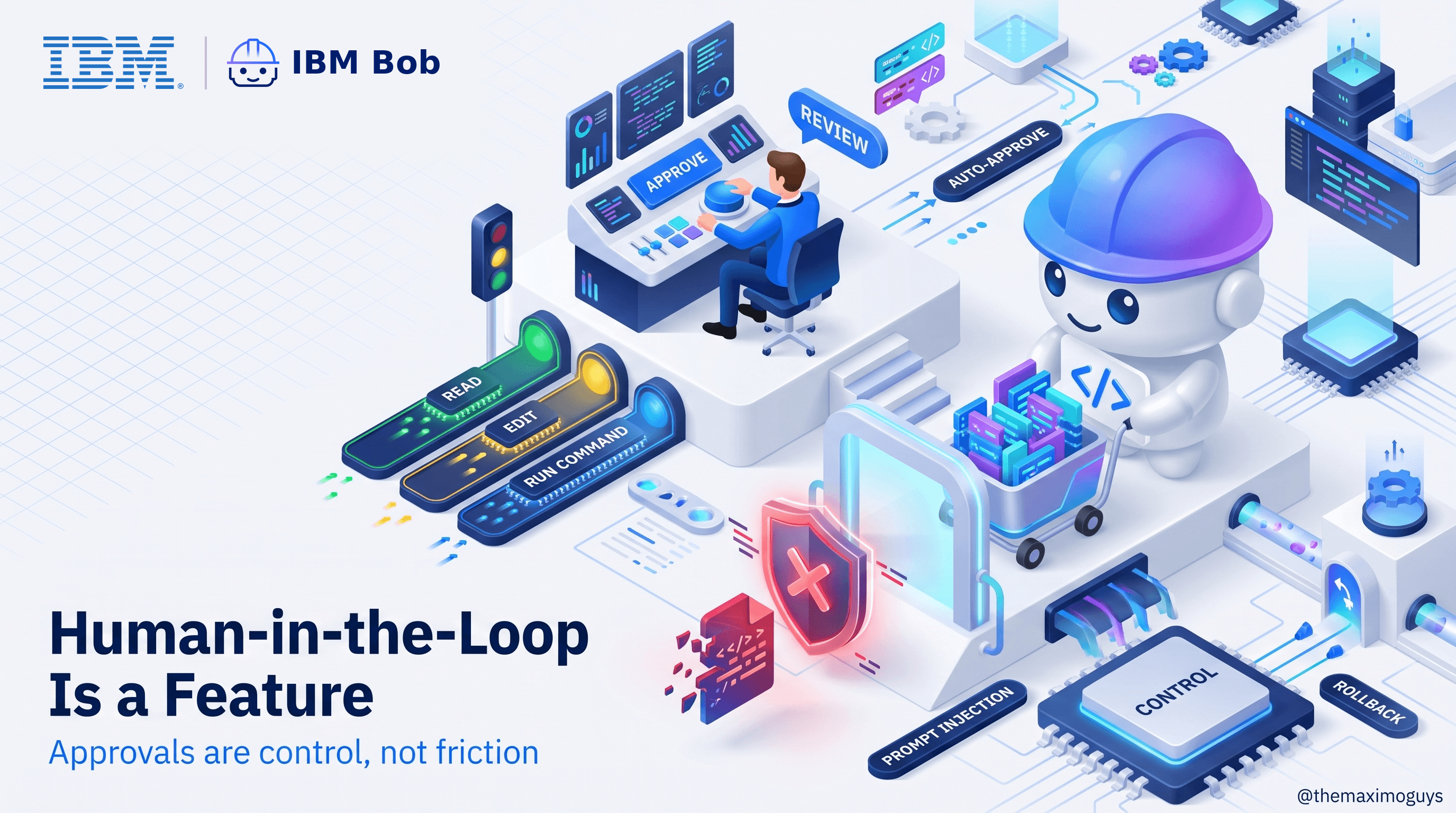
Approval prompts feel like friction — until a README tricks an AI agent into running malware. What the January 2026 IBM Bob beta incident teaches every enterprise about where humans belong in AI coding.
Krishna NeelaAug 26, 2026Part 5 of 13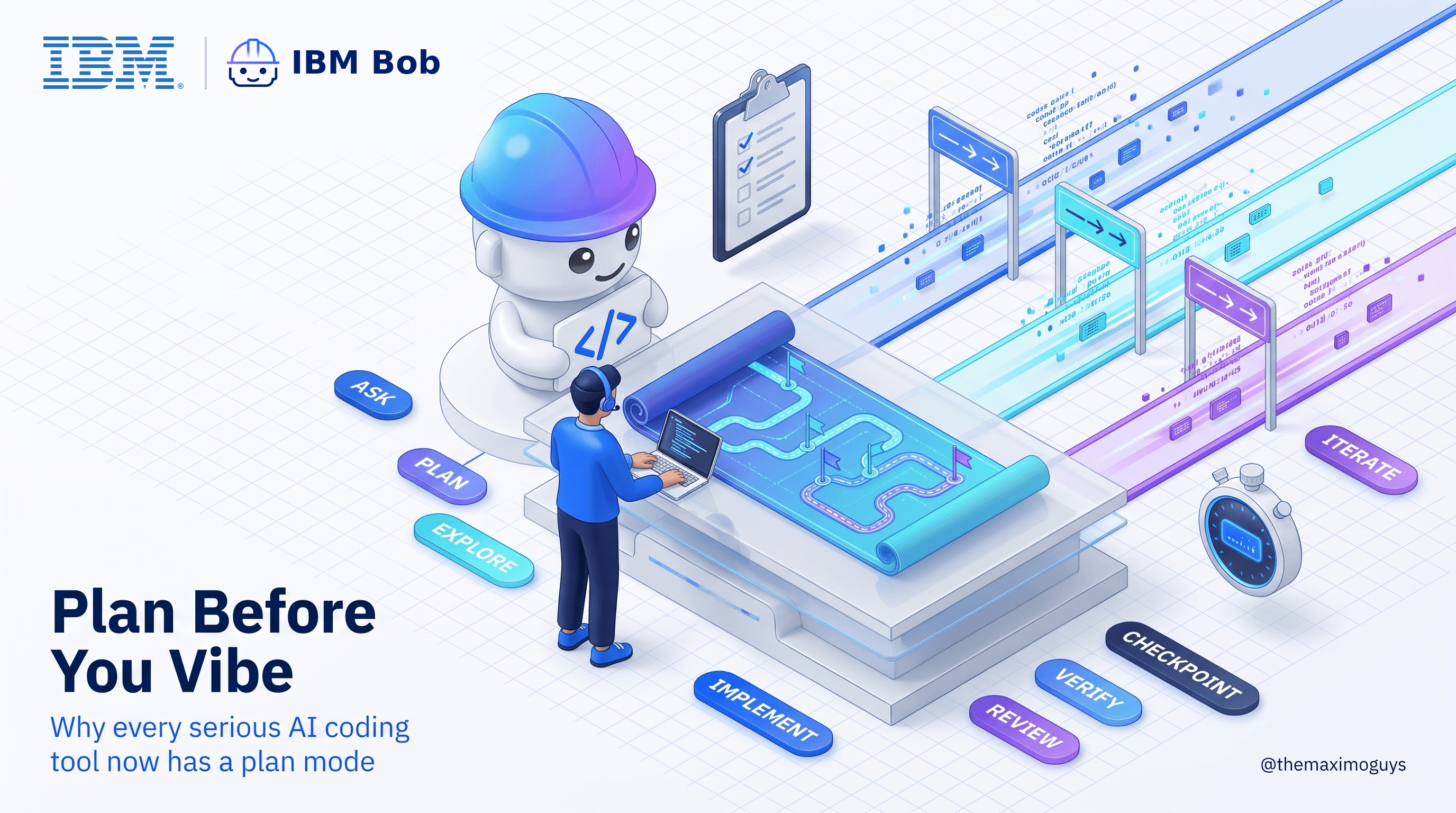
Cursor, Claude Code, Kiro and IBM Bob all ship some version of Ask, Plan and Agent modes. Here's why the 'think first, type second' habit is the single cheapest guardrail in enterprise vibe coding — and when to skip it.
Krishna NeelaAug 21, 2026Part 4 of 13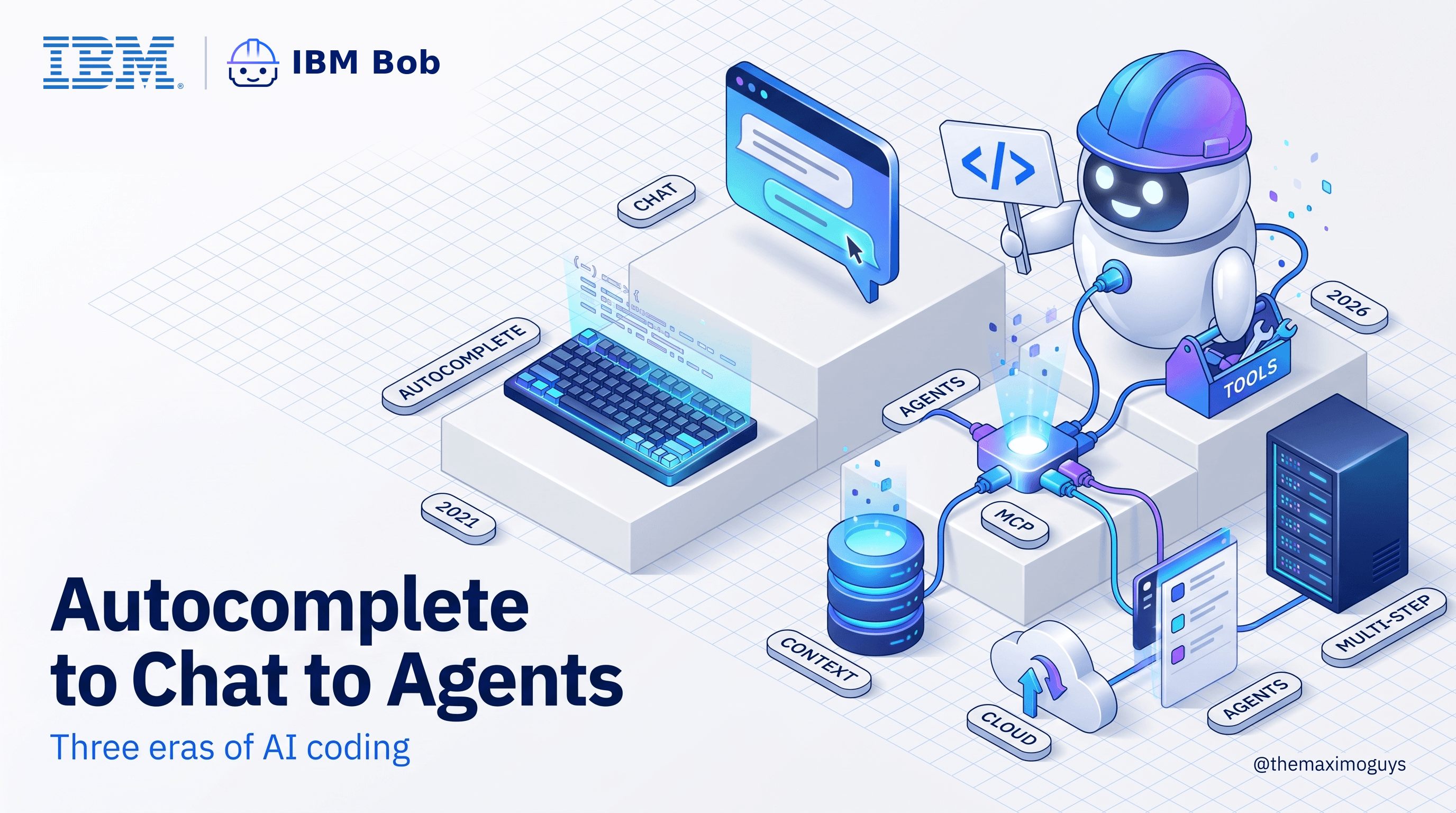
AI coding went from finishing your line, to answering your questions, to doing the work across your whole system. Here is what changed in each era, why agents need a way into enterprise systems, and how the Model Context Protocol became that way in.
Krishna NeelaAug 16, 2026Part 3 of 13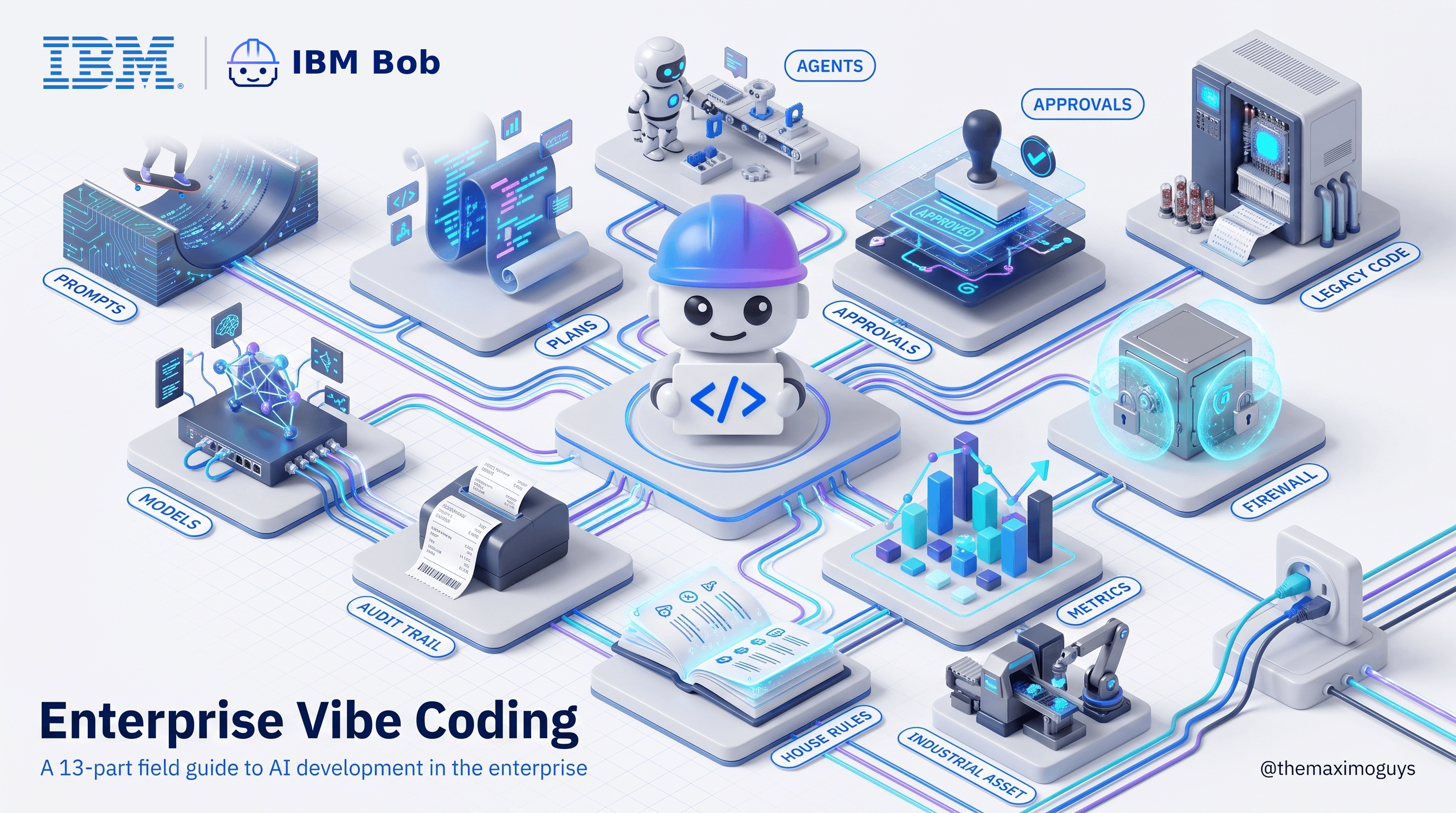
A 13-part, plain-English series on what happens when vibe coding leaves the weekend side project and walks into banks, utilities, insurers, government agencies and manufacturers. Specs, agents, approvals, audit trails, legacy code, firewalls, and how to read the productivity numbers.
Krishna NeelaAug 1, 2026Part 0 of 13