15 posts tagged “MCP”
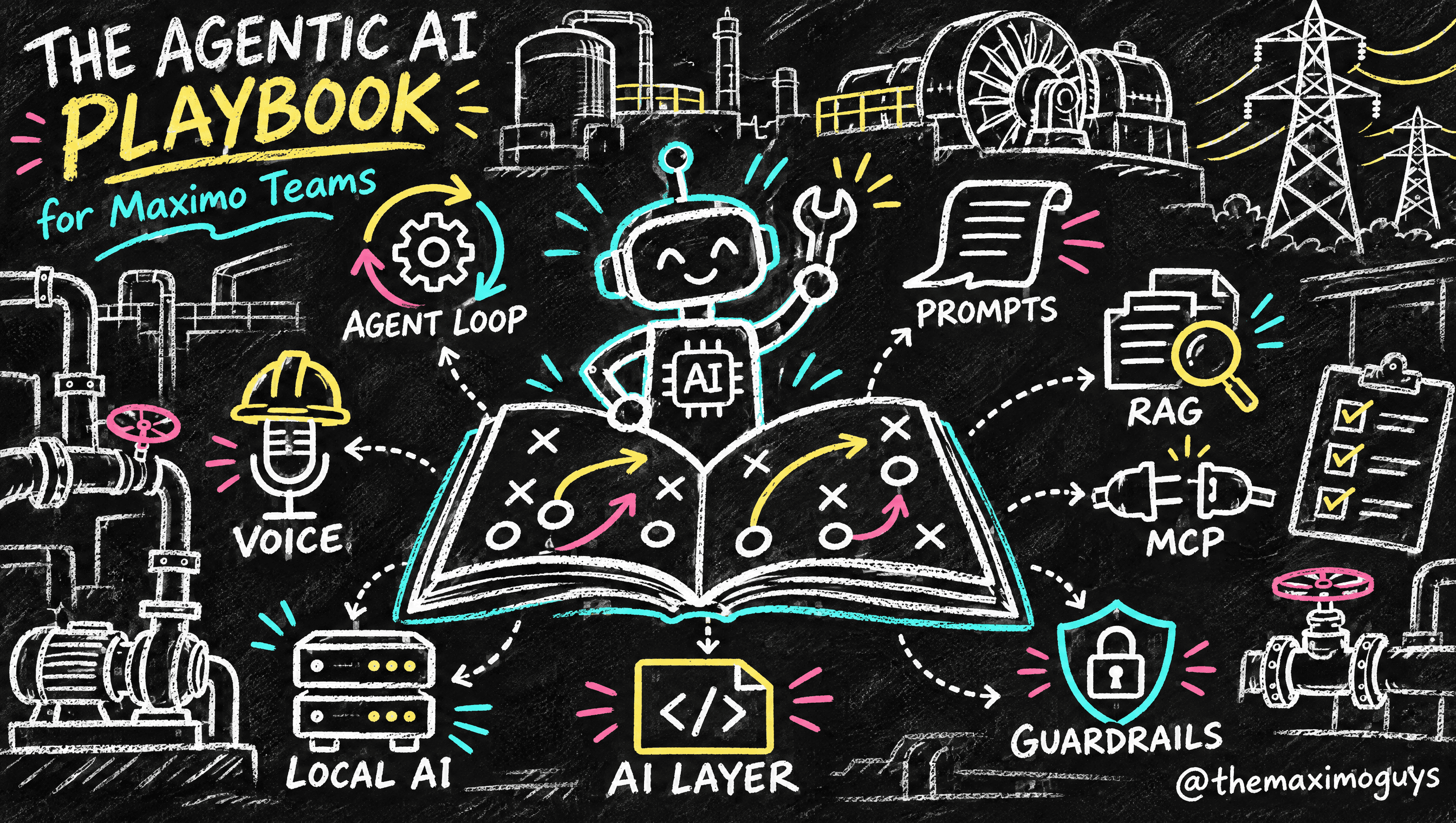
An 8-part playbook that takes Cole Medin's agentic AI teaching and applies it to IBM Maximo teams: what an agent really is, prompts and tools, RAG over Maximo data, MCP tool design, security and guardrails, the AI Layer for agentic coding, local and self-hosted models, and running agents in production, in the field and overnight.
 Krishna NeelaNov 19, 2026Part 0 of 8
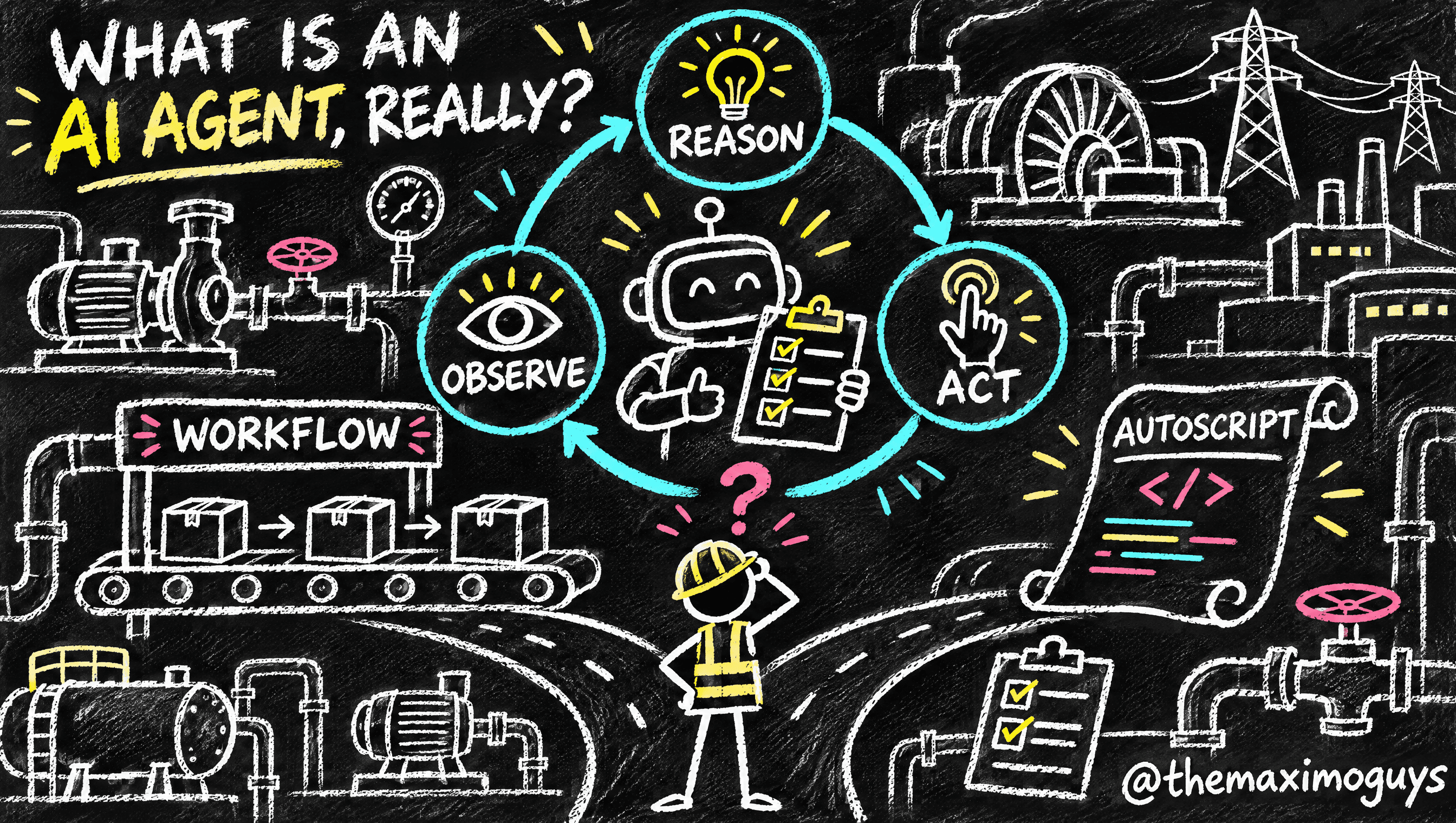
A plain-language definition of an AI agent for IBM Maximo teams: the four core components, the reason-act-observe loop, how an agent differs from a Maximo workflow, an escalation and an automation script, which Maximo jobs are agent-shaped and which must stay deterministic, where the MAS 9.2 Maximo Assistant and MCP server fit, and a decision table for choosing between agent, workflow and autoscript.
Krishna NeelaNov 19, 2026Part 1 of 8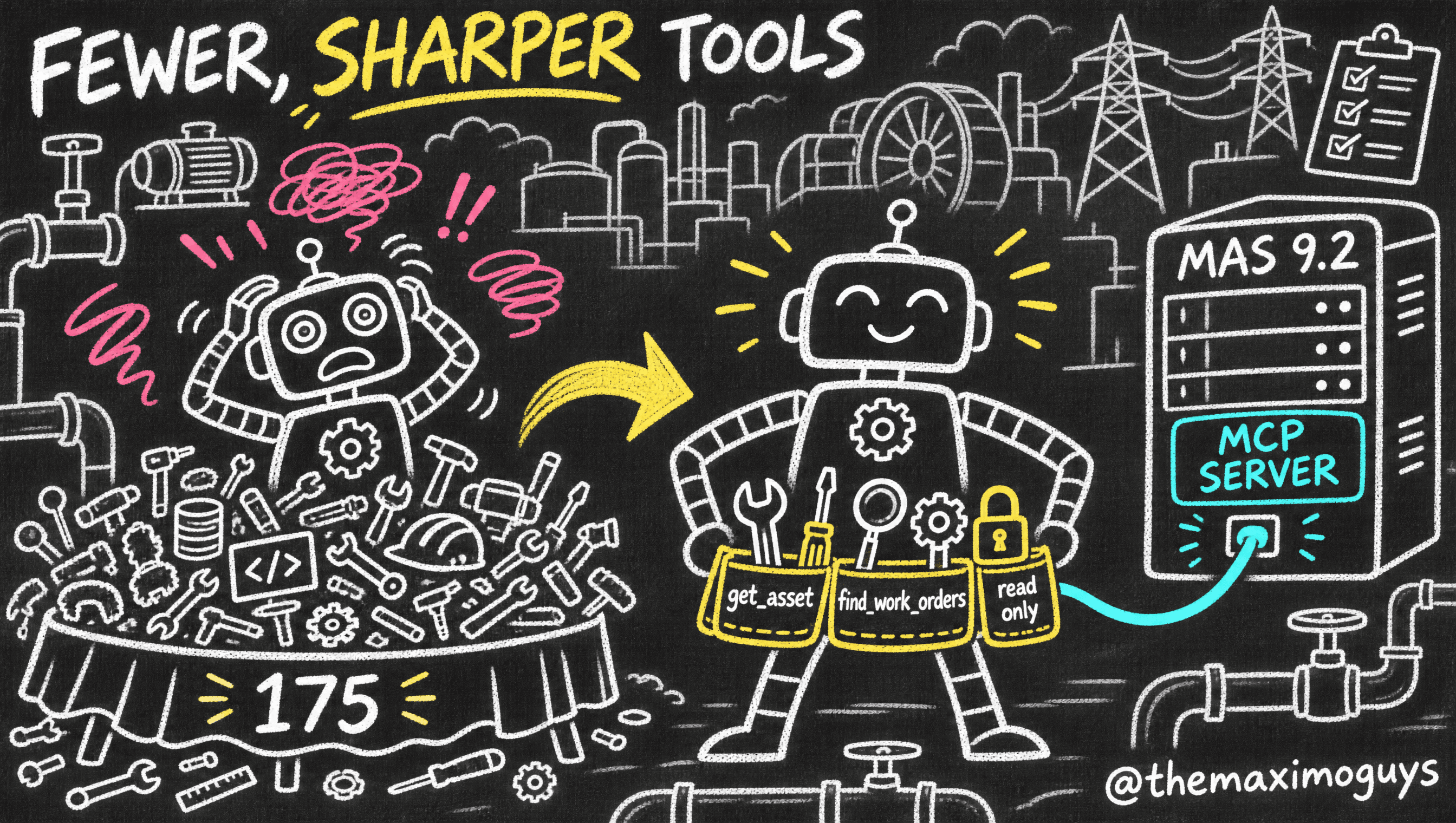
A practitioner's playbook for exposing IBM Maximo to AI agents through the Model Context Protocol: what MCP really is, the too-many-tools problem, the MAS 9.2 native MCP server, TMG's Max_mcp and Max_Interfaces, how to design a Maximo tool (names, descriptions, input schemas, oslc.where safety, pagination, idempotent writes), stdio versus streamable HTTP, API keys versus OAuth, and when skills or code execution beat MCP.
Krishna Neela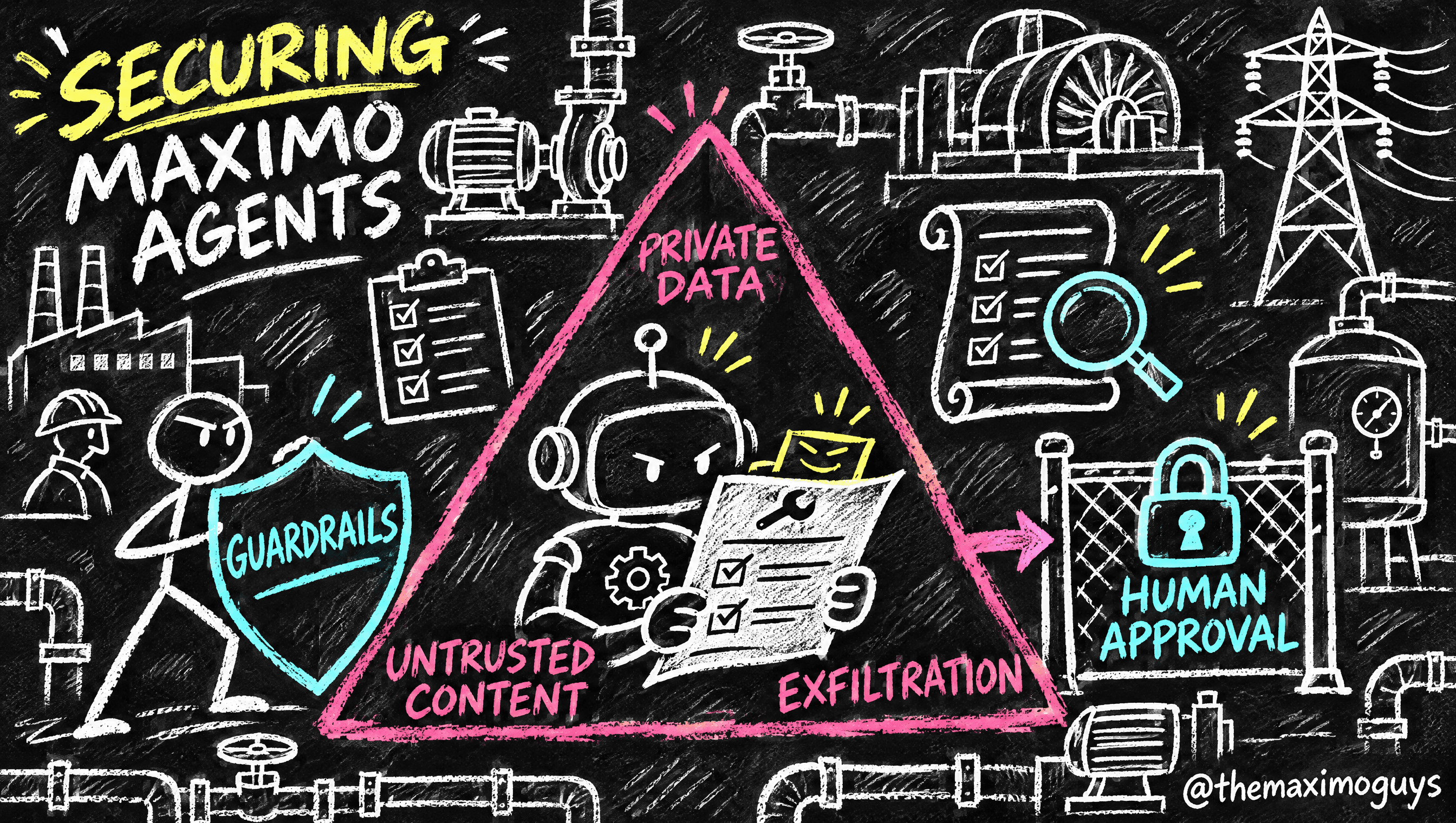
A defensive playbook for AI agents on IBM Maximo: map the lethal trifecta onto work orders, service requests and vendor email, walk through a prompt injection that arrives in a service request, and build layered guardrails with least-privilege security groups, one API key per agent, read-only defaults, human approval for status changes, egress control, eAudit evidence and data residency choices.
Krishna NeelaNov 19, 2026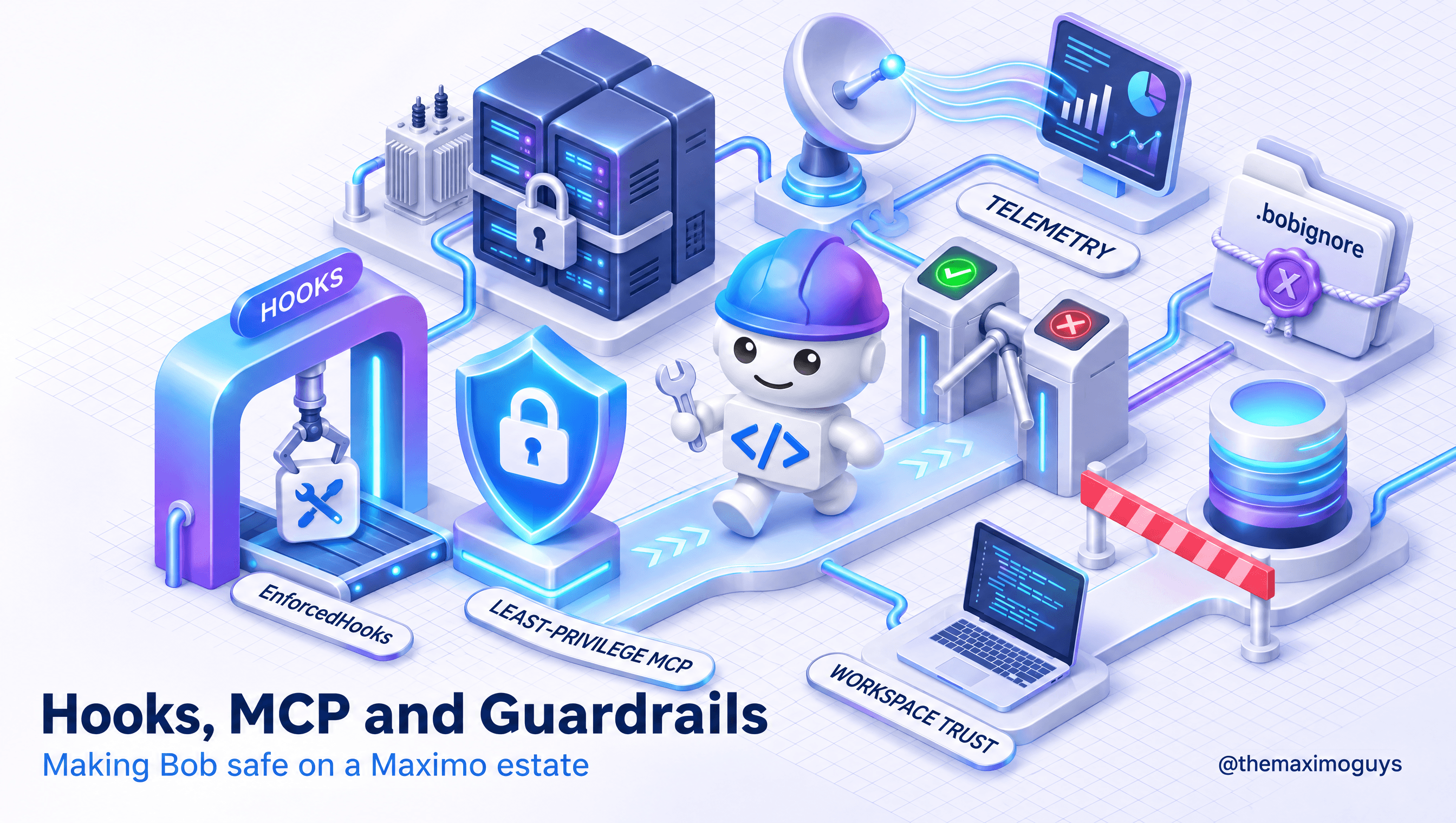
How to put deterministic guardrails around IBM Bob on a Maximo estate: the lifecycle hooks schema and its seven documented events, the new 2.3.0 permission events, four illustrative Maximo guardrail hooks, the EnforcedHooks group policy, OpenTelemetry policies, a least-privilege .bob/mcp.json for the MAS 9.2 Maximo MCP server and agent-neutral servers, workspace trust, .bobignore, and a layered-defense table that says what each layer stops and what it does not.
Krishna Neela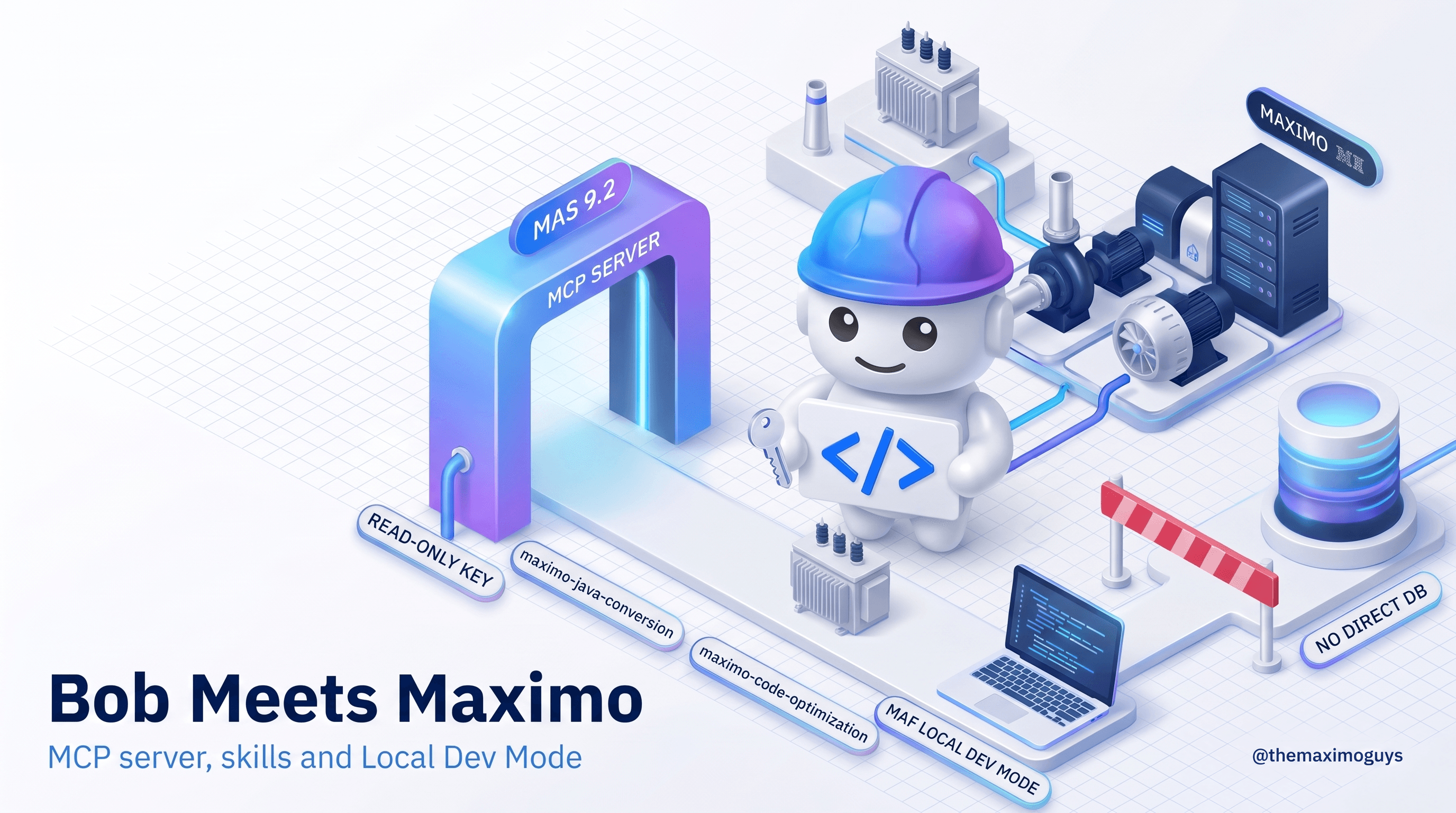
What IBM Bob can actually do against Maximo today: the MAS 9.2 native MCP server, IBM's two Maximo Bob skills, MAF Local Dev Mode, a community evaluation, a task-fit table, and where TMG's Max_Interfaces, Max_mcp, and Max_autoscripts fit.
 Surendra Katta
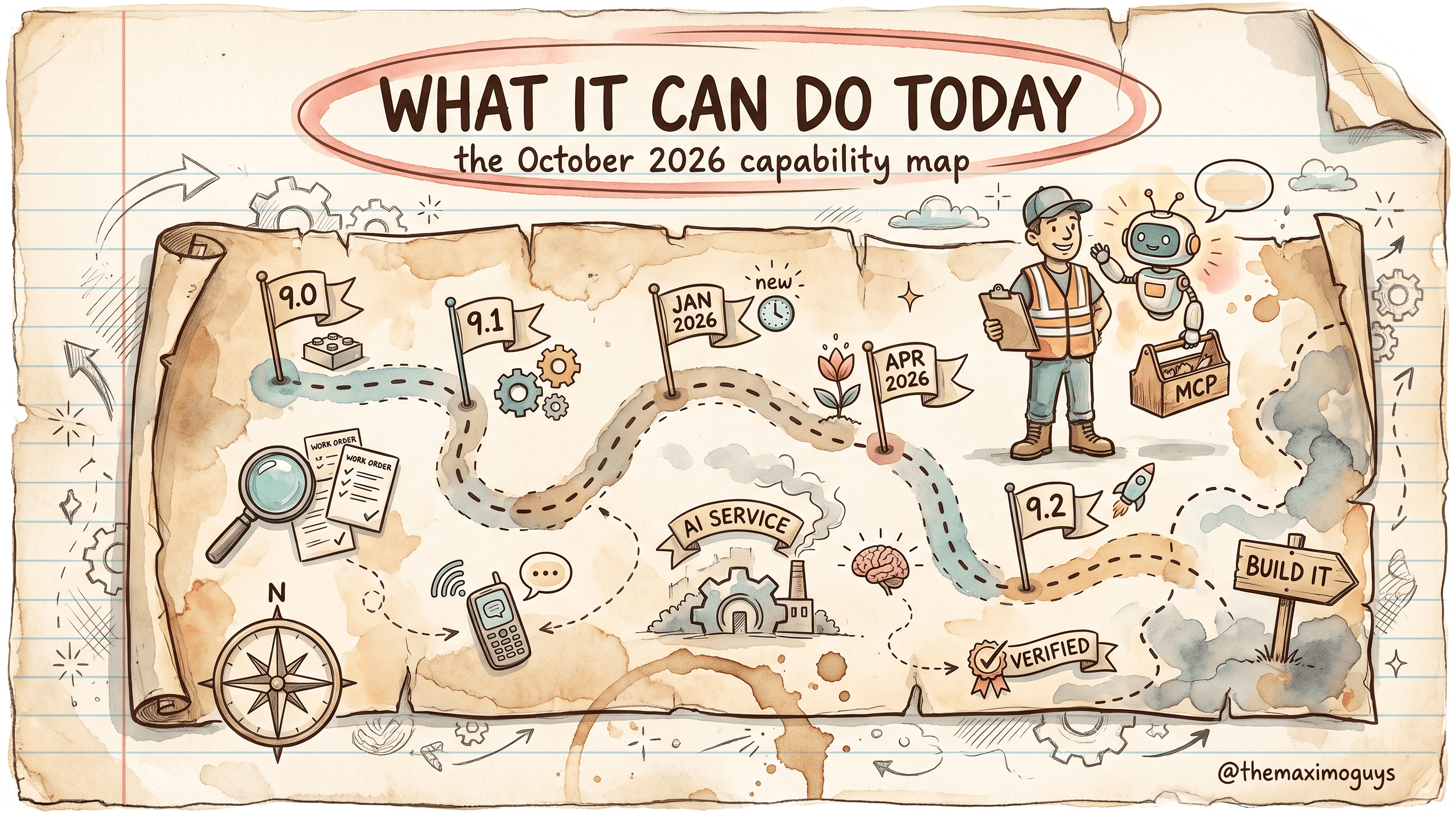
A dated, evidence-tiered reference to the Maximo Assistant and the Maximo AI Service as of October 2026. It traces the path from the 9.0 AI broker through 9.1, the January and April 2026 Feature Channel drops, 9.2 GA's agentic Assistant and MCP server, and the AI Service 9.2.3 patch level. It also covers the security bulletins, a full capability matrix, the model bill of materials, what the Assistant still cannot do, the Assist-versus-Assistant naming correction, and a checklist for verifying each capability in your own instance.
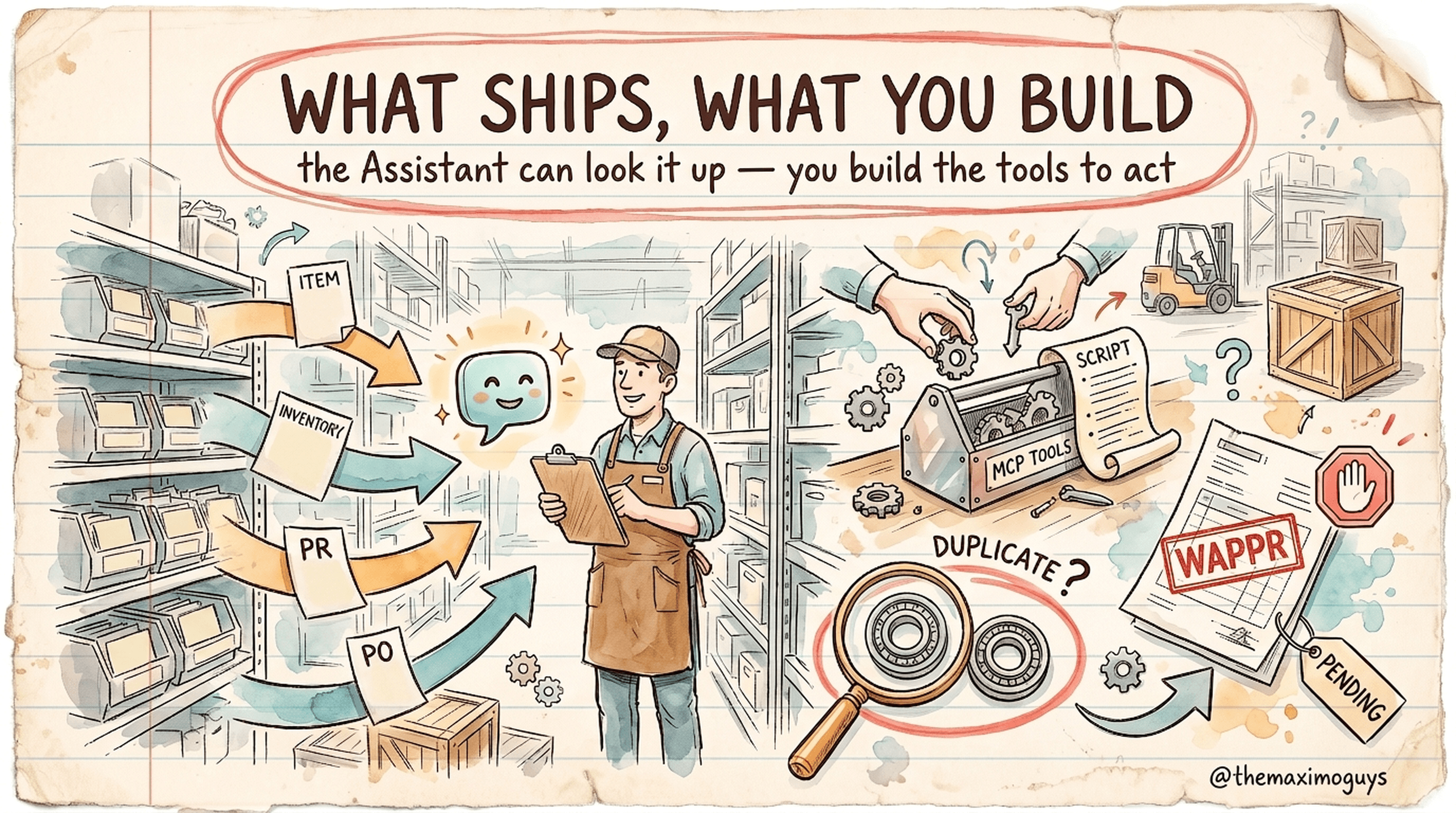
Storekeepers and buyers want to ask the Maximo Assistant to create an item, raise a purchase requisition and check whether a part already exists. This evidence-tiered guide separates what IBM documents today (the Assistant can query supply-chain objects once an admin enables them; similarity is documented for work orders, records and tickets), what IBM has only announced, and what you can build yourself on MAS 9.2 as custom MCP tools — items that land in PENDING, PRs that land in WAPPR and go through your normal approval workflow, and a duplicate-item check — with code, governance and a rollout plan.
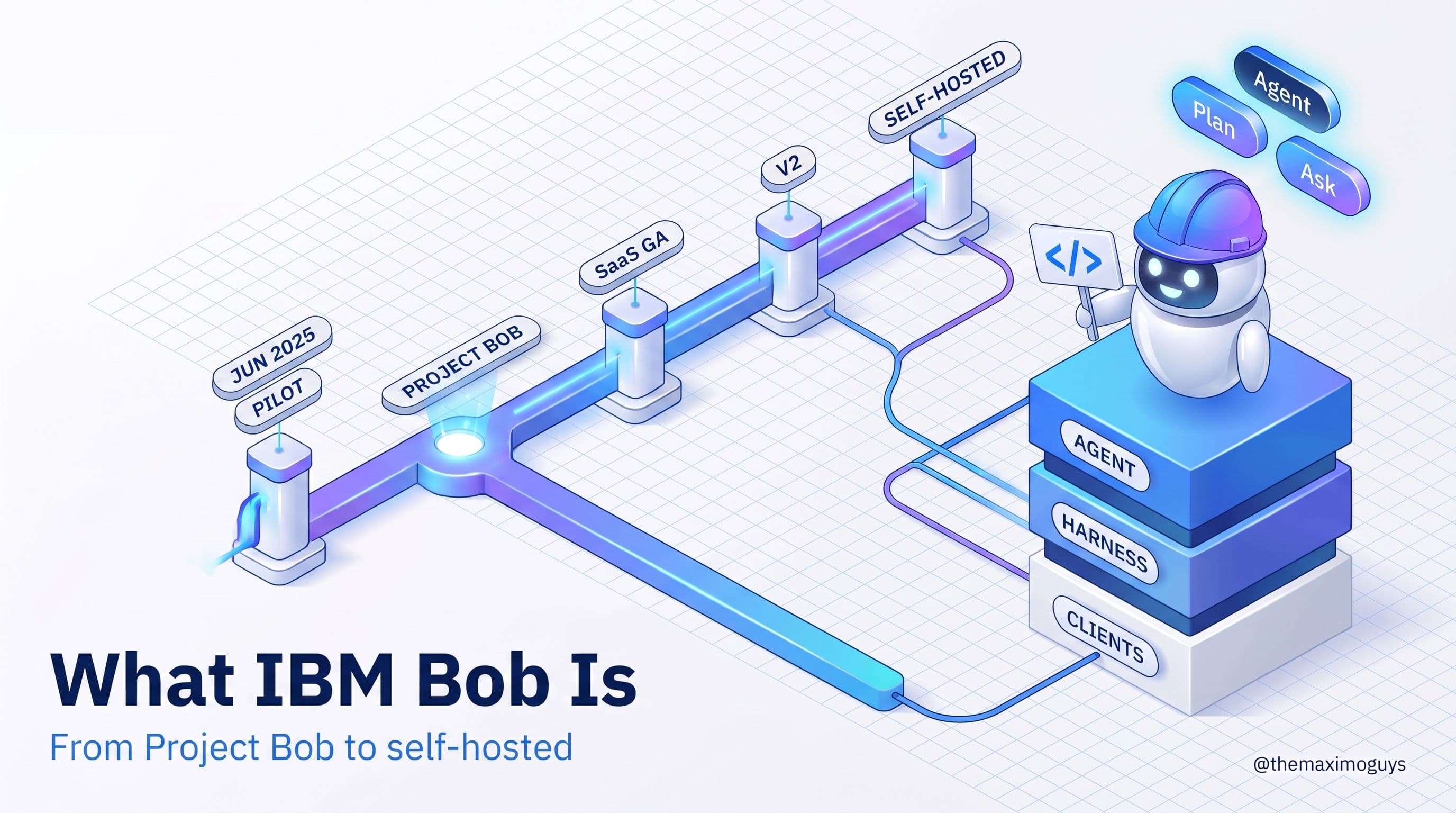
IBM Bob started as an internal pilot and is now a SaaS and self-hosted agentic platform. Here is the dated timeline, the V2 three-tier design, the clients, the Agent/Plan/Ask modes, and the extension points a Maximo team will actually touch.
Krishna Neela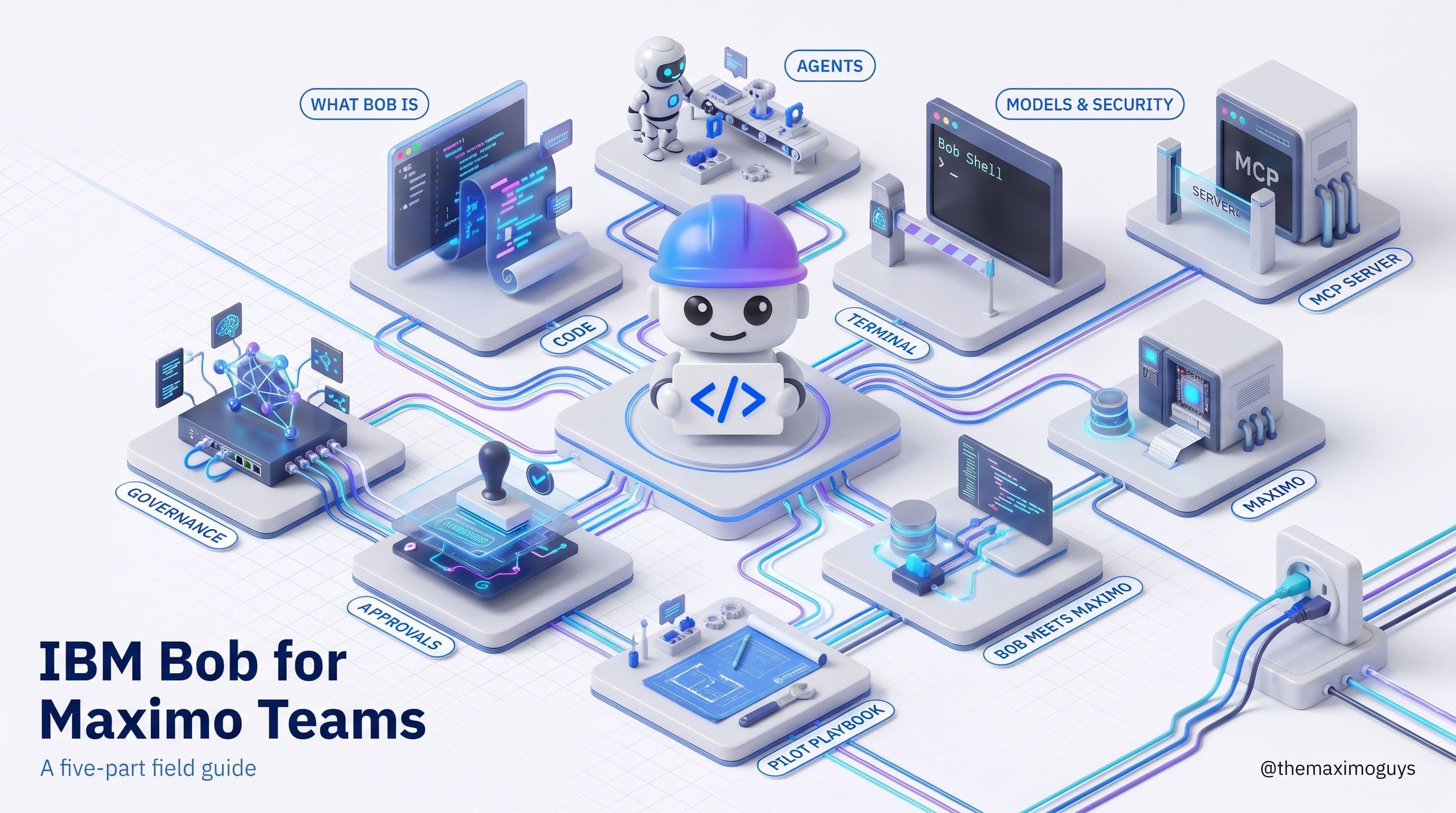
A nine-part, vendor-number-labeled field guide to IBM Bob for Maximo shops: what Bob is, how its models and security work, how to govern and price it, how it meets Maximo through MCP and skills, and how to pilot it without trusting a single marketing figure, plus house rules, guardrails, CI and what IBM shipped through November 2026.
Krishna NeelaOct 6, 2026Part 0 of 9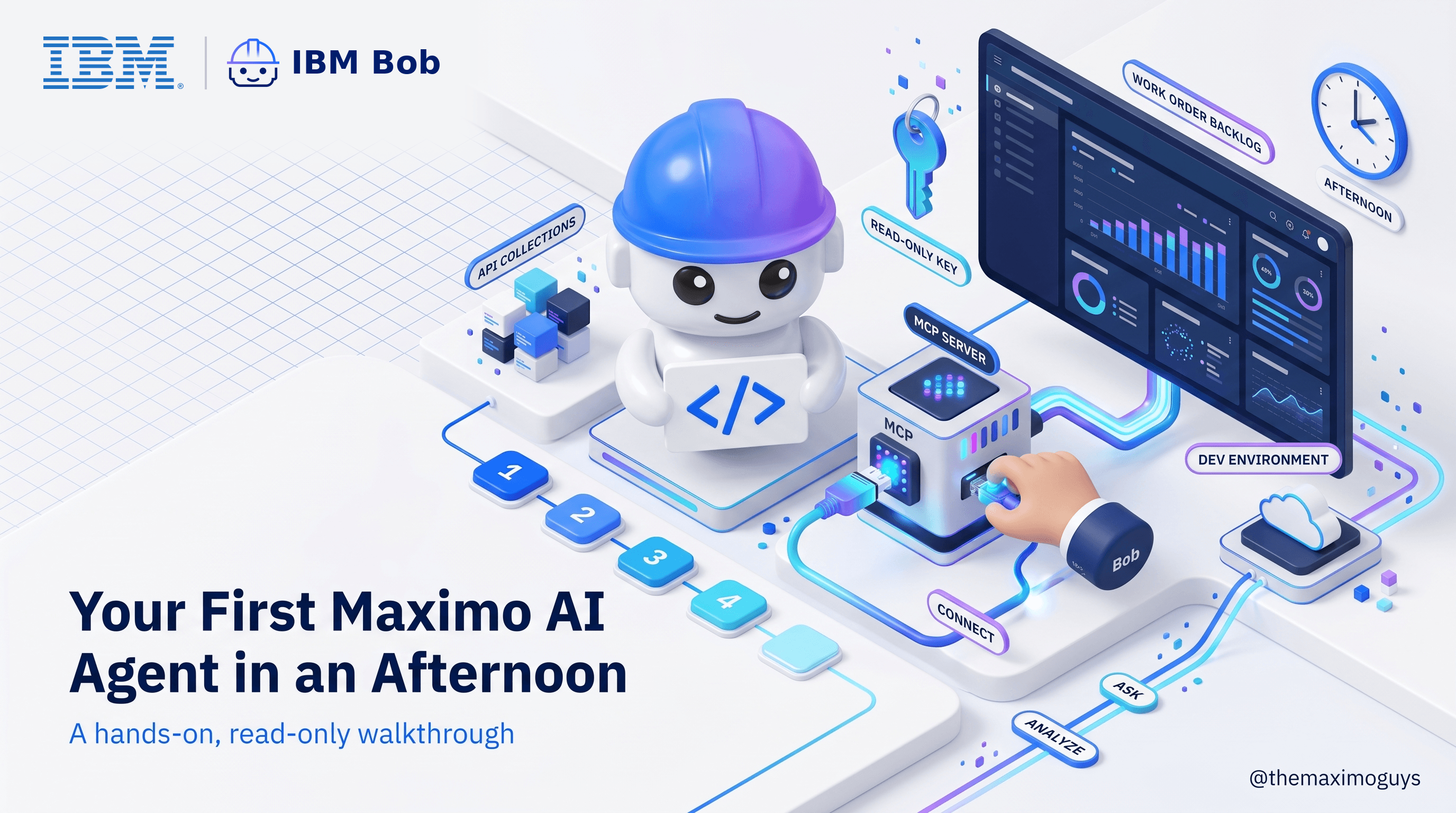
A light, hands-on walkthrough: map the Maximo APIs with Max_Interfaces, run the Max_mcp server with a read-only API key, connect any MCP-capable agent (Claude Code, IBM Bob, Cursor, Copilot) and ask it to analyze your work-order backlog — safely.
 Manasa GangaOct 4, 2026Part 13 of 13
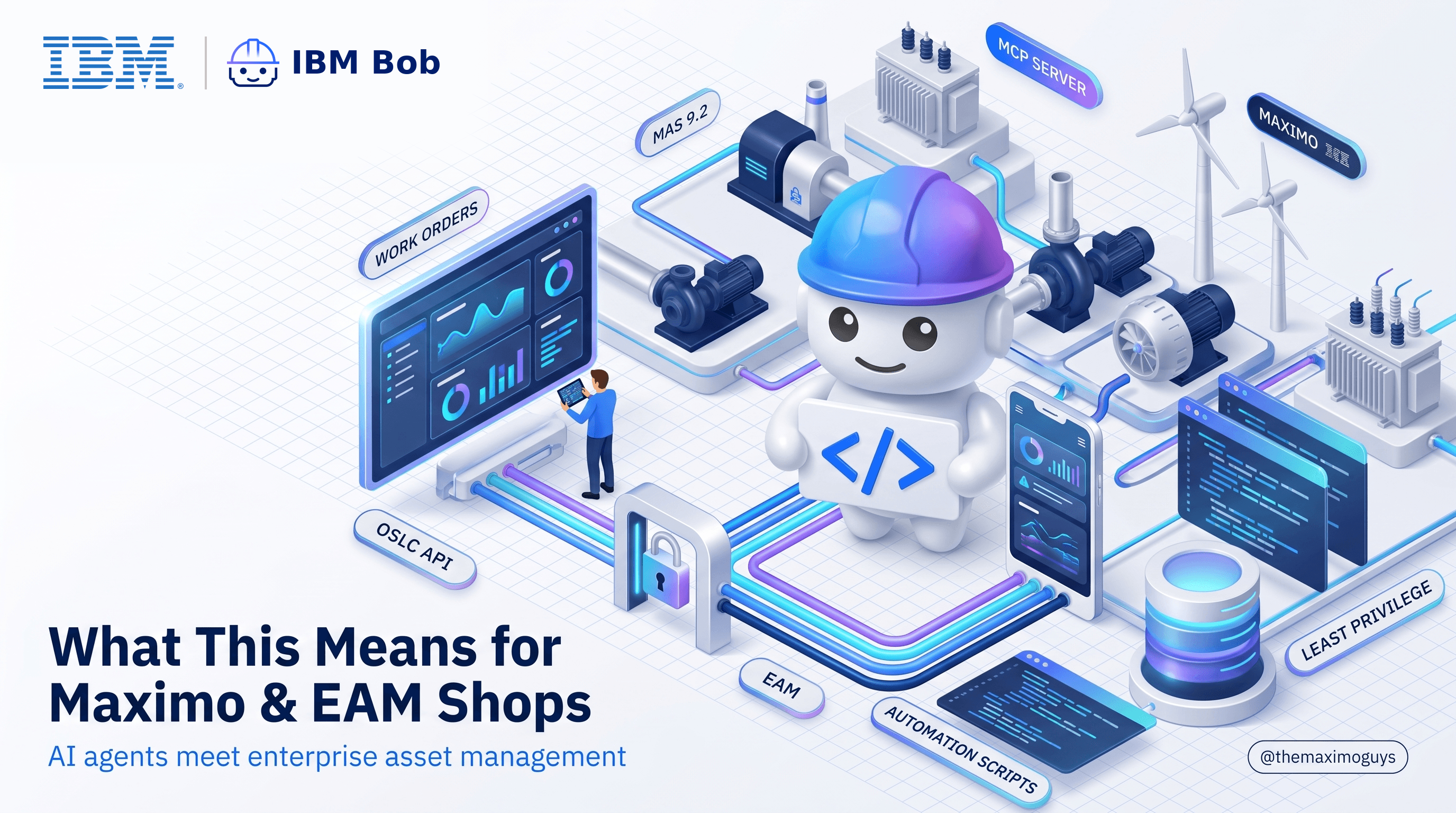
AI coding agents have arrived in IBM Maximo land: a native MCP server in MAS 9.2, Maximo skills for IBM Bob, and open tooling from the community. Here's what changes for Maximo teams, what doesn't, and where the guardrails go.
Manasa GangaSep 29, 2026Part 12 of 13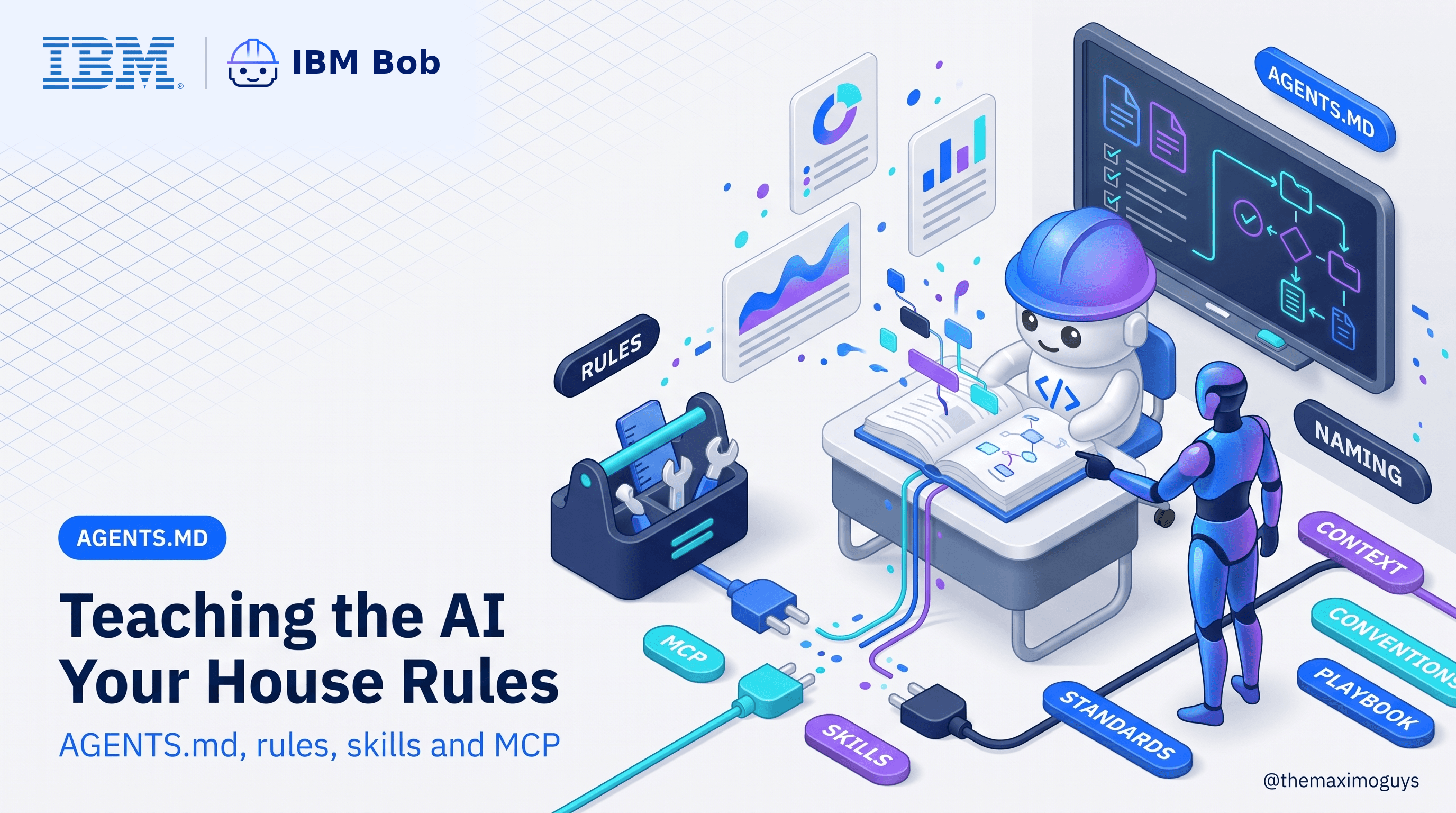
An AI coding agent walks into your codebase knowing nothing about your naming conventions, banned libraries or deployment rules. Here's how AGENTS.md, rule files, skills and MCP turn house rules into something the agent actually follows.
Krishna NeelaSep 24, 2026Part 11 of 13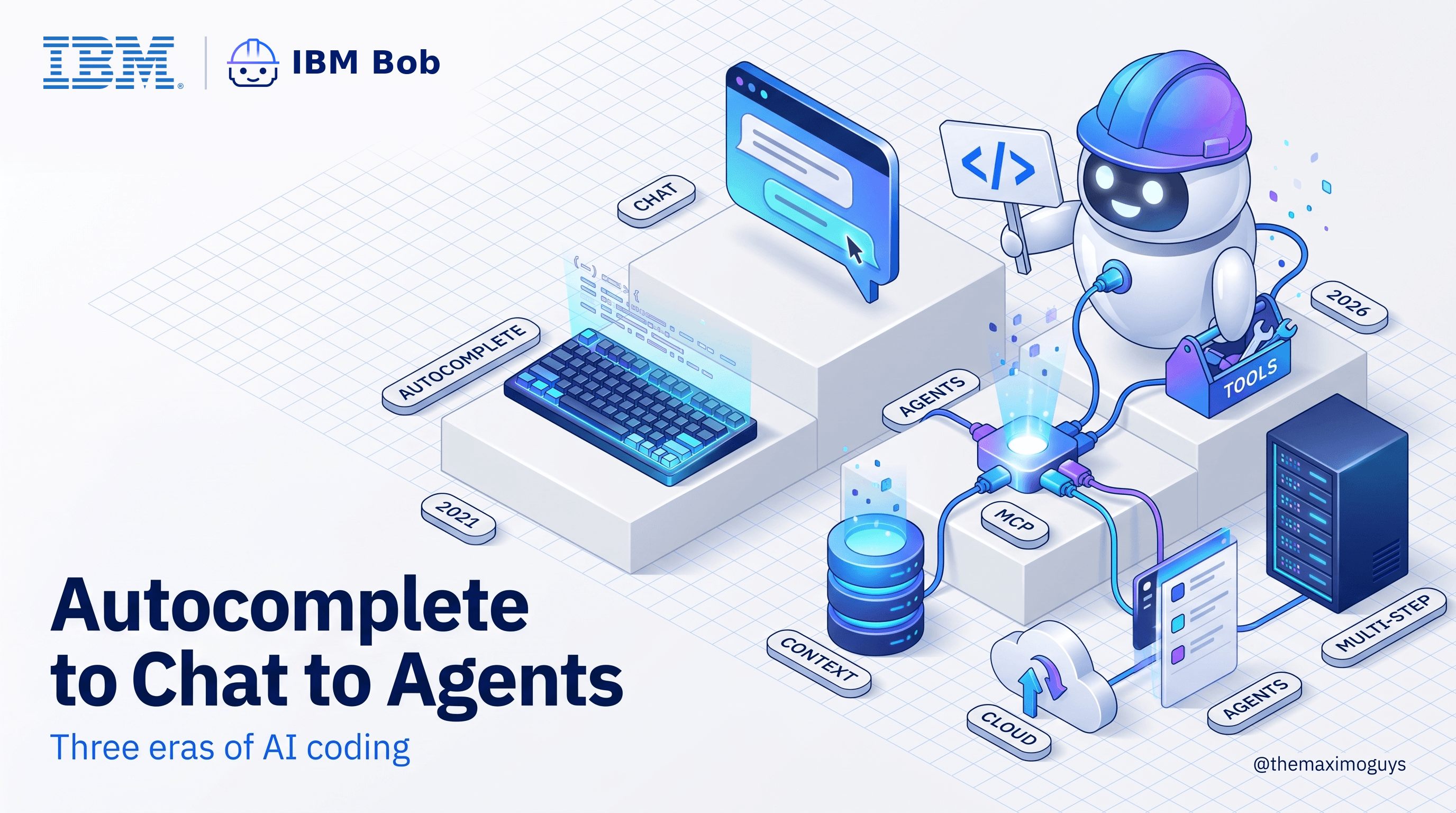
AI coding went from finishing your line, to answering your questions, to doing the work across your whole system. Here is what changed in each era, why agents need a way into enterprise systems, and how the Model Context Protocol became that way in.
Krishna NeelaAug 16, 2026Part 3 of 13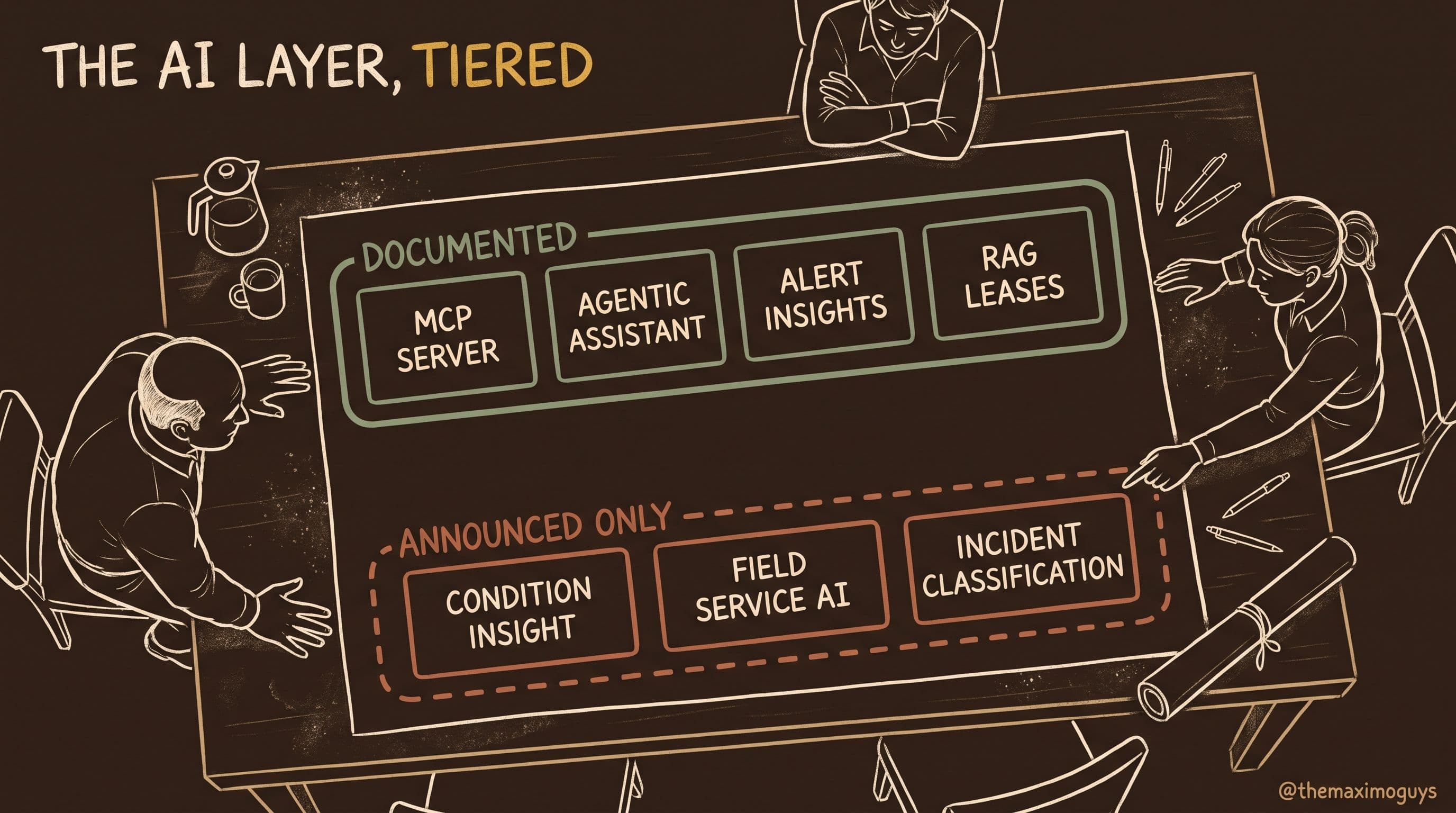
IBM framed MAS 9.2 around asset-first AI and agentic workflows. This is an evidence-tiered assessment of what that actually means — the agentic Maximo Assistant, the Maximo MCP server, AI-generated insights with confidence scores, RAG lease extraction, watsonx Orchestrate in Maximo IT, and AI Service AppPoint tracking — separating what product documentation confirms from what only the announcement claims.
Surendra KattaSurendra KattaOct 20, 2026Part 8 of 8Surendra KattaOct 20, 2026Part 7 of 8