12 posts tagged “Supply Chain”
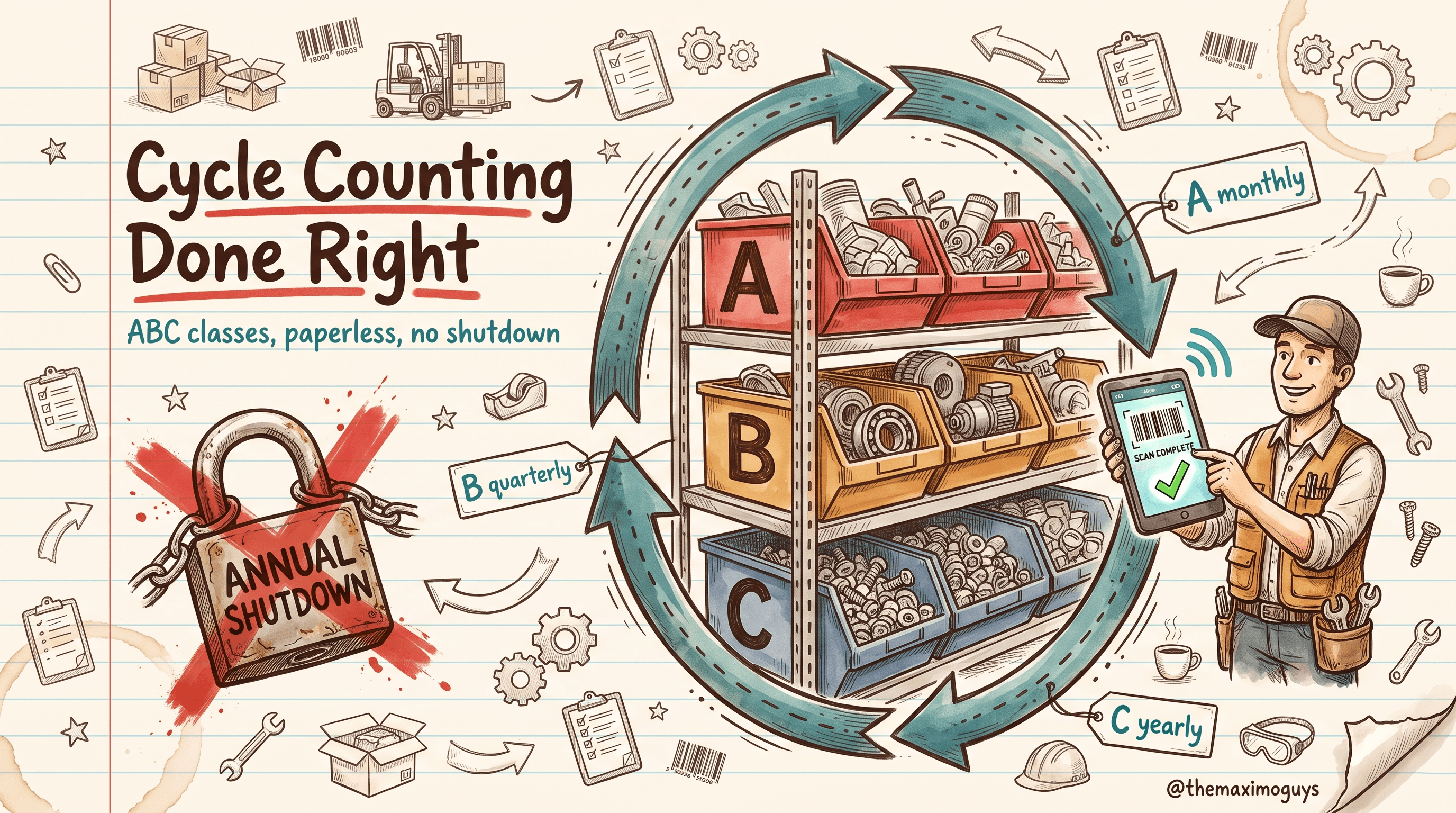
The once-a-year wall-to-wall count that shuts the storeroom for days is the wrong model. In MAS 9 Manage you classify items A/B/C, count A-items monthly and C-items annually, generate count books from the Physical Count application, set variance tolerances that auto-adjust the small stuff, and run the whole thing paperless on Maximo Mobile — so accuracy is found in weeks, not a year.
 Venkat AchantaJul 16, 2026Part 4 of 10
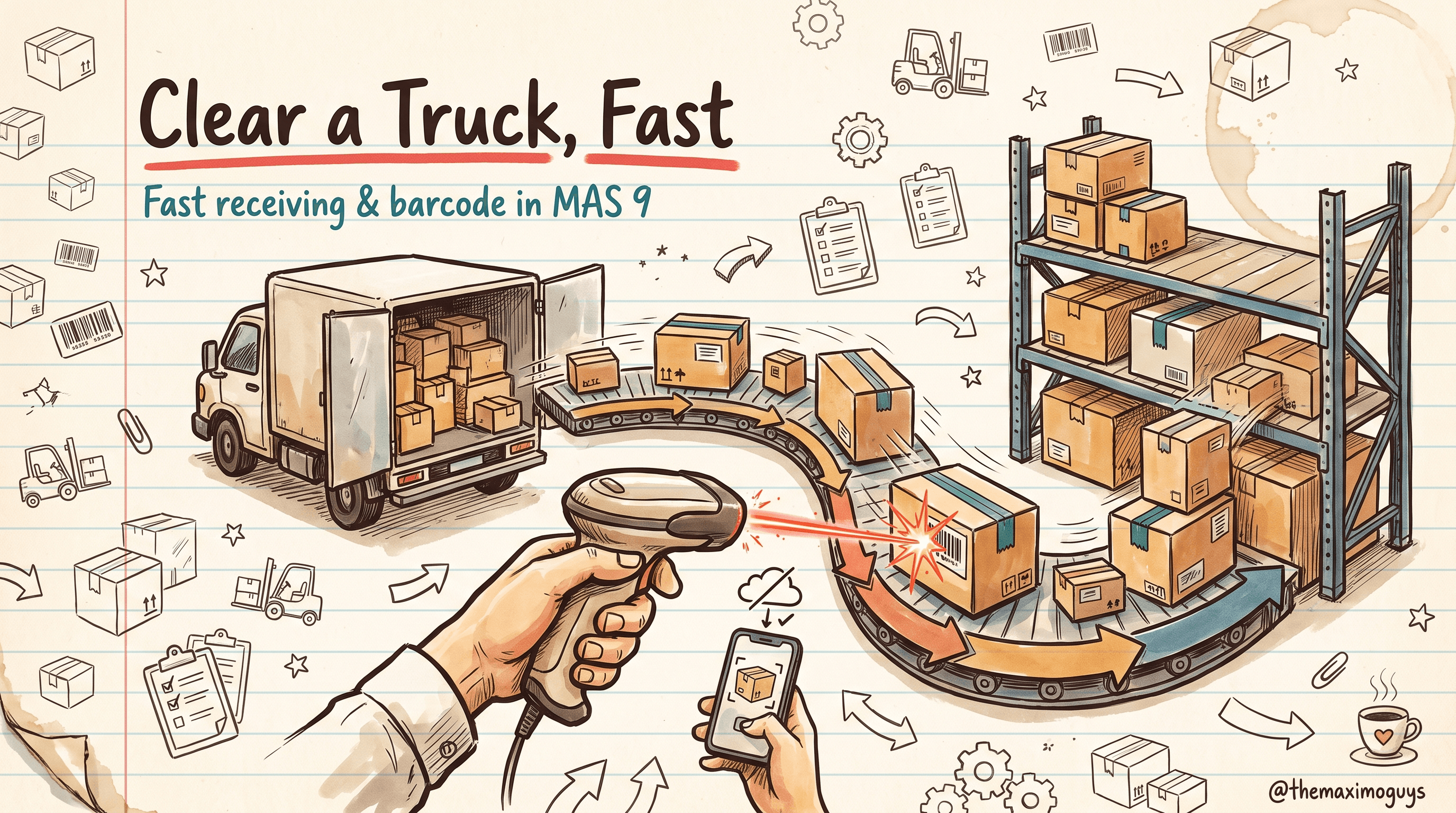
Receiving is where a truck becomes storeroom balance. In MAS 9 Manage you can receive a 30-line PO in one pass, let a 102% tolerance receipt through without an exception, route inspection items to a holding location, and scan barcodes on both the Carbon desktop and Maximo Mobile — including offline. Here is how the receiving desk actually runs.
Venkat AchantaJul 16, 2026Part 3 of 10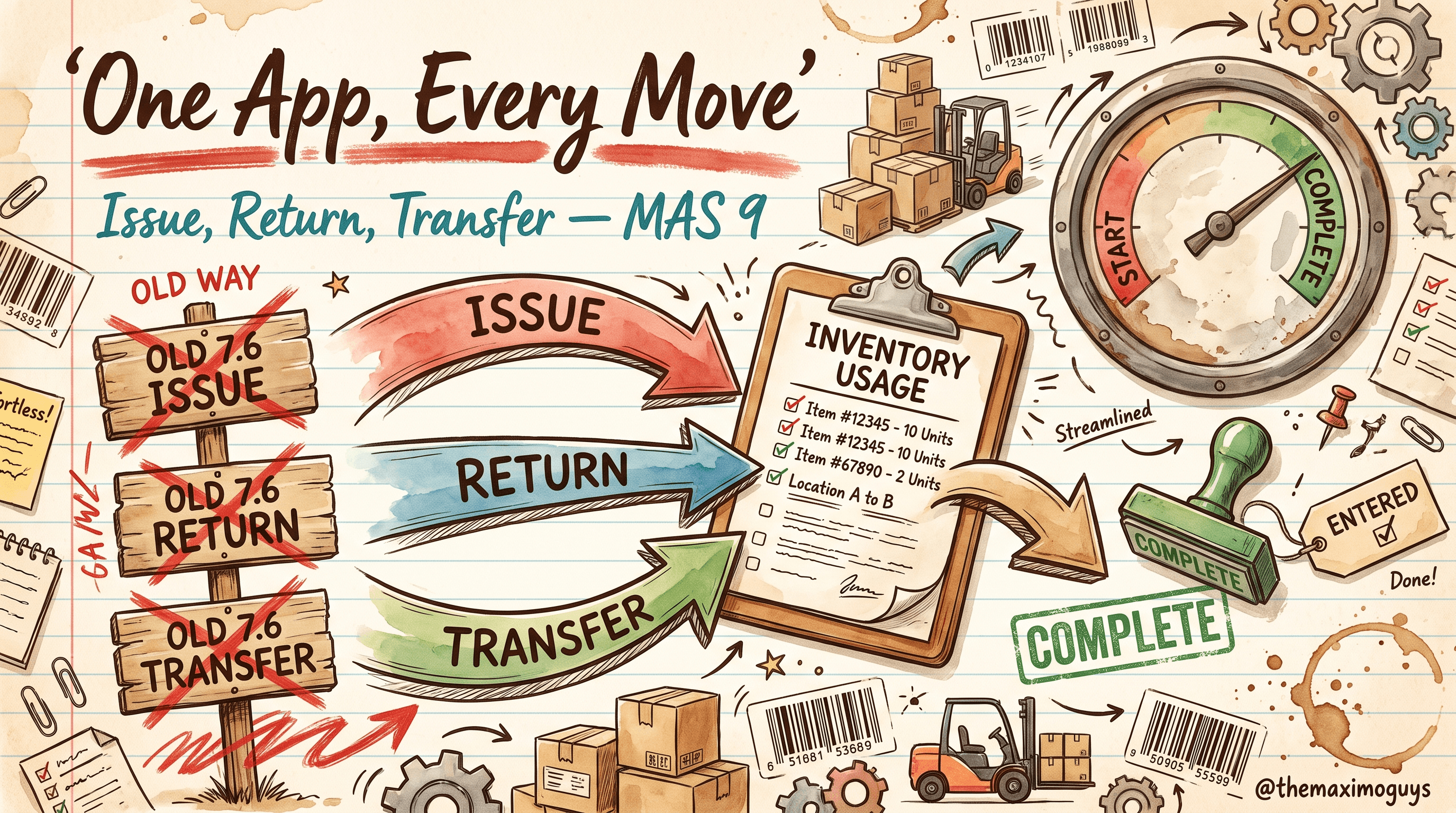
Issue Current Item is gone. In MAS 9 Manage, one application — Inventory Usage (INVUSAGE) — handles every material issue, return, and transfer. Here is how it works, why everything now flows through it before it touches balance, and how to put ten parts on a single document with one action or one string of barcode scans.
Venkat AchantaJul 16, 2026Part 2 of 10
The finale threads both desks together. Walk the seven phases of procure-to-pay in MAS 9 Manage — Plan, Demand, Source, Order, Expedite, Receive, Match & Pay — as one continuous flow, map the status transitions of all four objects on a single page, and follow one bearing from below-reorder-point to paid invoice on both the happy path and the escalation path.
Venkat Achanta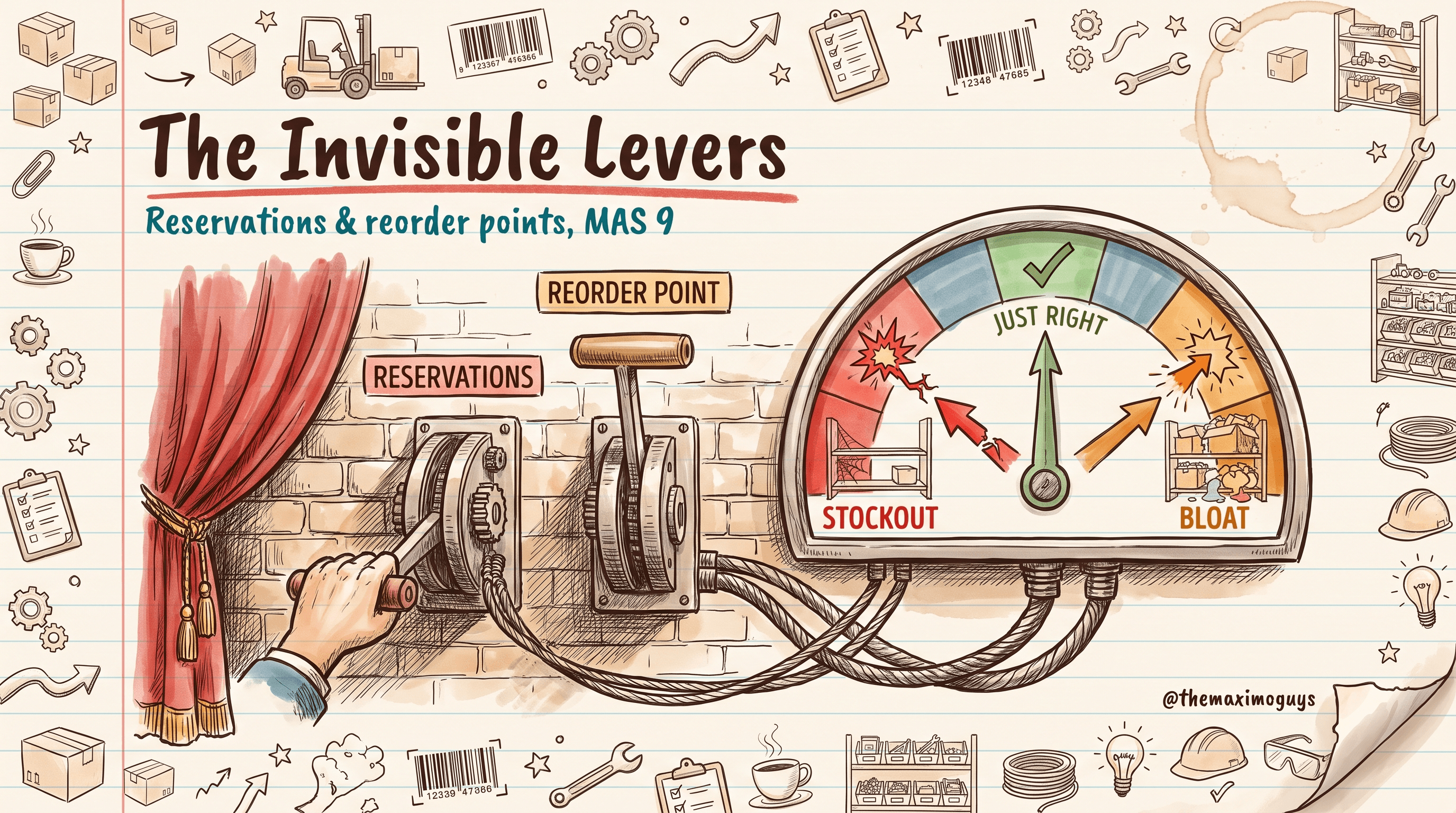
Reservation hygiene is the hidden lever behind accurate availability; reorder points are the hidden lever behind stockouts and bloat. In MAS 9 Manage, learn hard vs soft reservations, how to clear stale ones in ten minutes a week, and how to set min/max/safety-stock/EOQ you can actually trust — including the dynamic lead time MAS 9 maintains for you.
Venkat AchantaJul 16, 2026Part 5 of 10
A ten-part role-and-task playbook for the two people who run supply chain in MAS 9 Manage: the storekeeper and the buyer. Not a feature tour — a Day-1 field guide of Start Center recipes, saved queries, receiving and counting rhythms, reservation hygiene, PR-to-PO conversion, RFQ discipline, vendor escalation, and the full procure-to-pay lifecycle, grounded in how MAS 9.0 and 9.1 actually behave.
Venkat AchantaJul 16, 2026Part 0 of 10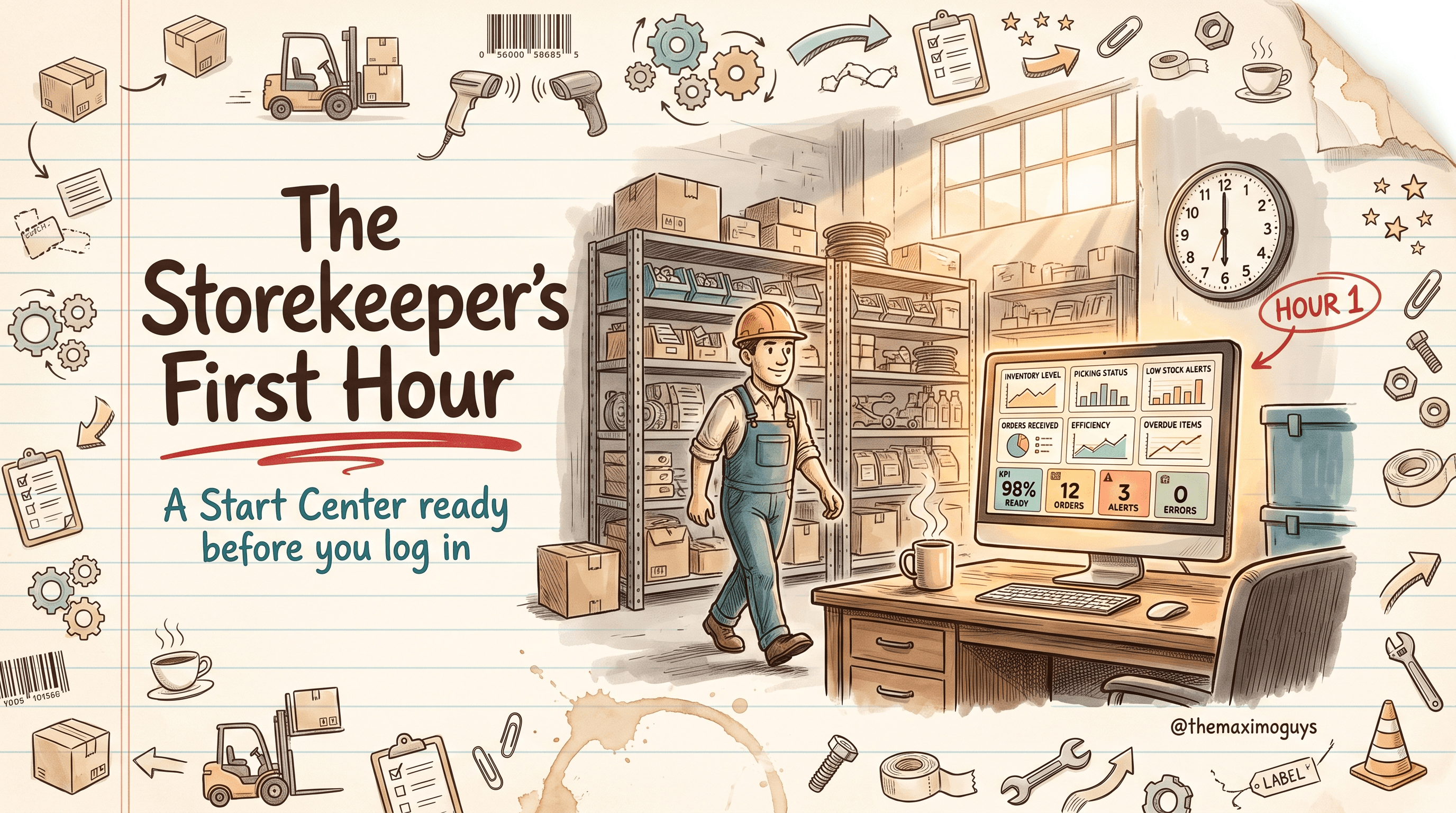
Go-live morning is won or lost in the first hour. Here is the Tier 0 starter pack for MAS 9 Manage: a Start Center template with six result-set portlets and four KPI tiles, fifteen copy/paste saved queries scoped by home storeroom, a 60-minute admin deployment plan, and an hour-1 checklist every storekeeper uses to confirm they got it — all out-of-the-box, no code.
Venkat AchantaJul 16, 2026Part 1 of 10
A practitioner's deep dive into inventory and procurement in Maximo Manage 9 — the ITEM and INVENTORY objects, storerooms, costing, reorder processing, the PR-to-PO-to-receipt-to-invoice flow, contracts and vendors, and the role-based Issues and Transfers app that carries forward key Inventory Work Center workflows.
 Surendra Katta

A complete technical breakdown of every MAS 9 suite add-on that impacts supply chain operations — AI Assist (intelligent search, WO material recommendations, failure-to-parts mapping, document summarization), Parts Identifier (photo-based identification, catalog cross-reference, stock level checks), Health (scores driving demand predictability, replacement procurement, criticality stocking), Predict (failure timing to pre-position parts, RUL-based reservations), Monitor (condition-based orders, IoT consumption tracking, usage pattern analytics), and Optimizer (material-aware scheduling, multi-constraint coordination). The complete AI-to-parts pipeline.
 Posam LakshminarayanaMar 17, 2026

A complete deep dive into every MAS 9 Maximo Mobile supply chain application — Issues & Transfers (staging, barcode, storeroom transfers), Inventory Count (cycle counts, blind mode, photo attachment), Receiving (PO-based, rotating assets, MAS 9.1 enhancements), Technician App material features, full offline capabilities, and the migration path from Maximo Anywhere.
Posam LakshminarayanaMar 17, 2026Part 23 of 25
The final installment of the MAS FEATURES series. A numbers-first deep dive into IBM MRO Inventory Optimization — 23 AI-powered capabilities, Essentials vs Standard comparison, 7 competitor profiles (Syncron, Baxter, Servigistics, IFS, Infor, Verusen, Kinaxis), a feature comparison matrix, decision framework, and the complete 12-month, 5-phase implementation roadmap with 425 hours of team exploration across 14 topic areas.
Posam LakshminarayanaMar 17, 2026Part 25 of 25Complete coverage of MAS 9 supply chain architecture -- the three-tier licensing model, 7.6 vs MAS 9 comparison, inventory module with eight transaction types, six item master types, storeroom hierarchies, reservation system, count books with six selection methods, ABC analysis, and the full issues and transfers lifecycle. Every detail your supply team needs.
Posam LakshminarayanaMar 17, 2026Part 21 of 25