5 posts tagged “OSLC”
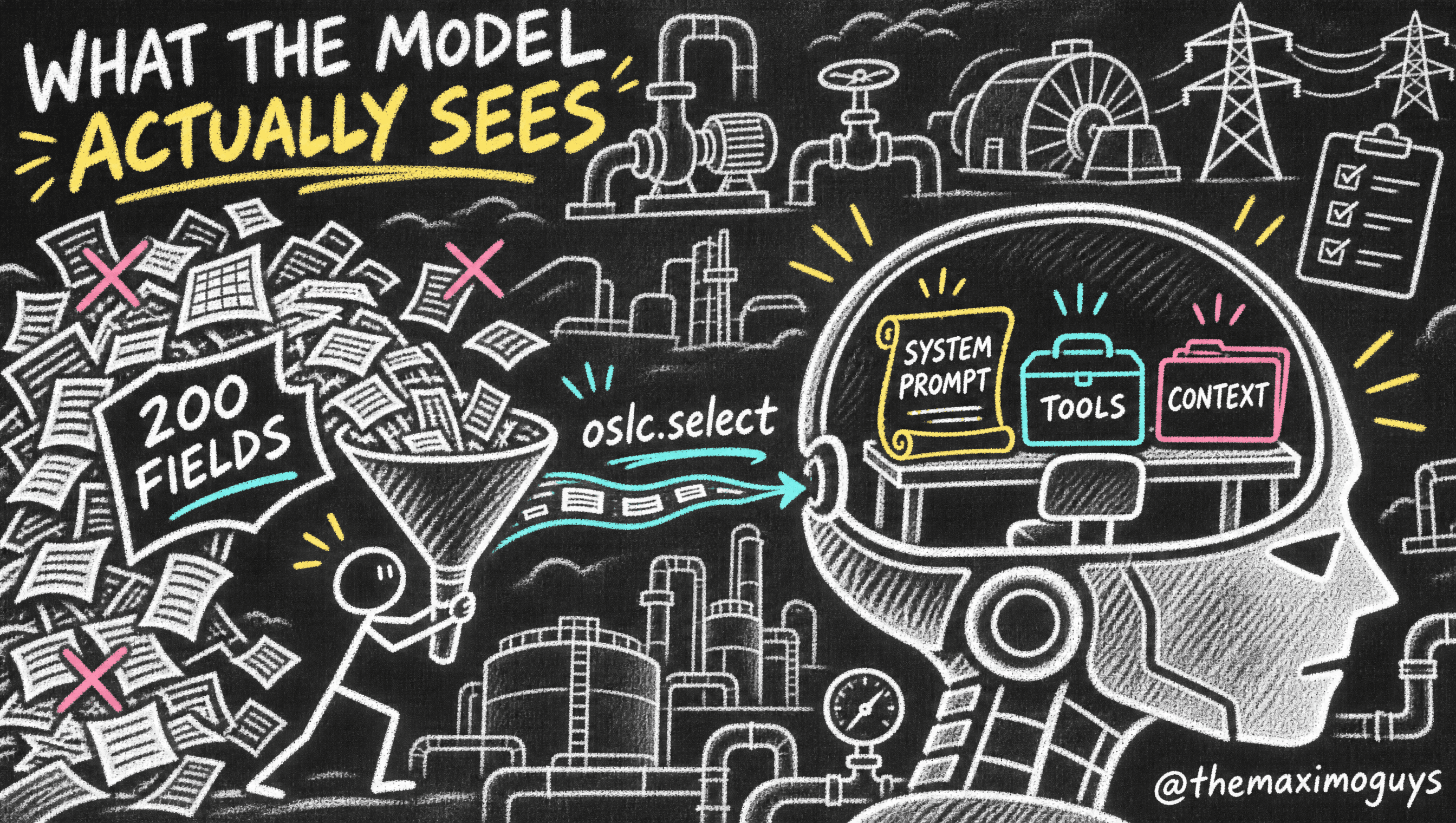
A runtime agent that works against IBM Maximo succeeds or fails on three things it reads on every turn: the system prompt, the tool descriptions, and the data its tools return. This playbook applies Cole Medin's prompting, tool-design and context-management lessons to mxapiwo, mxapiasset and mxapiinventory: positive instructions, dynamic prompts that inject site and security context, oslc.select diets against context rot, structured triage outputs, and prompts versioned in git.
 Krishna NeelaNov 19, 2026Part 2 of 8
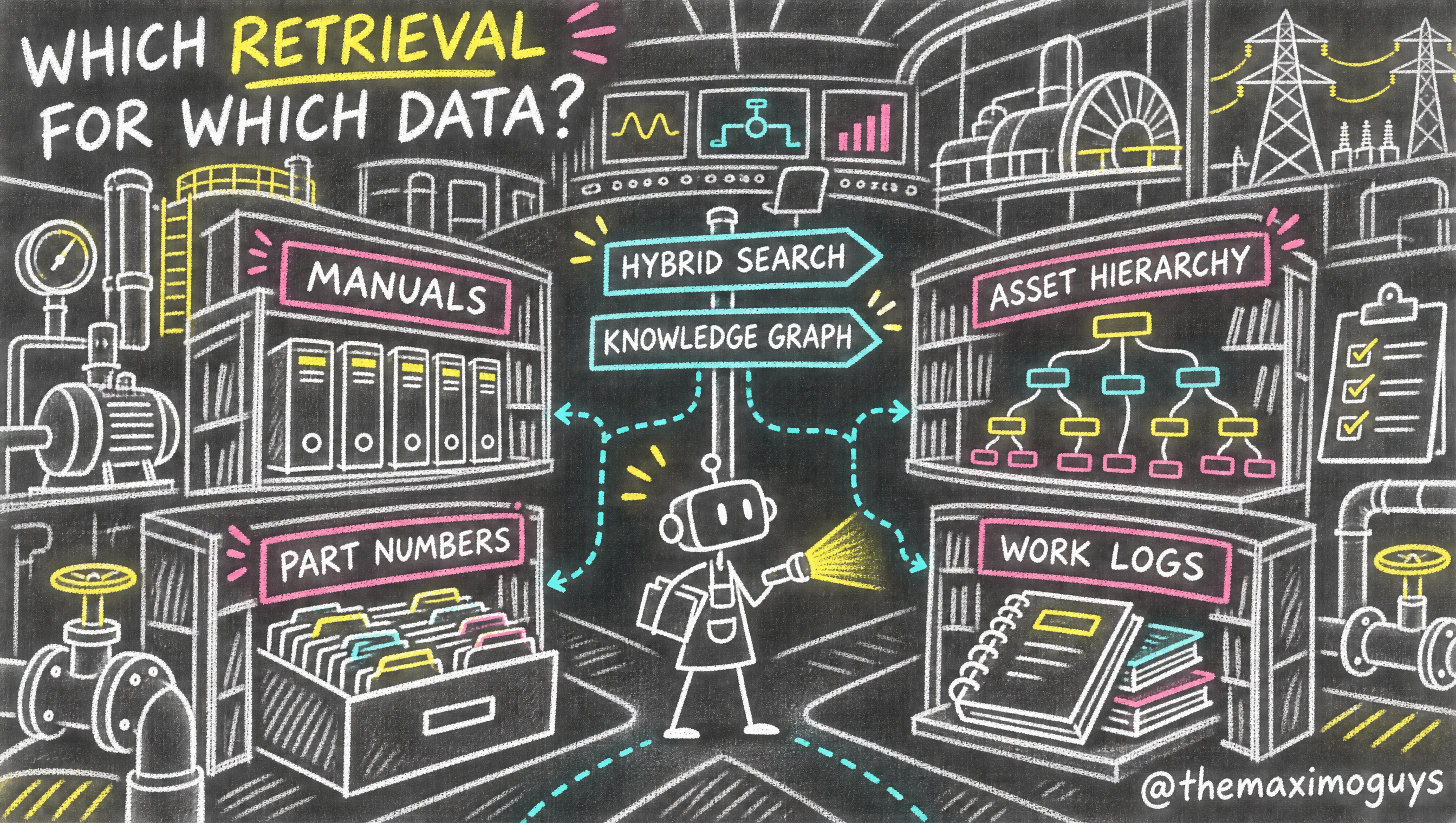
Not every Maximo question is a RAG question. A practitioner's guide to choosing retrieval strategies for Maximo data: query structured records live, embed narrative text, use keyword and hybrid search for part numbers and asset tags, hierarchical RAG for OEM manuals and doclinks, graphs for asset, location and failure hierarchies, metadata filters for site security, and delete-before-insert when a work order changes.
Krishna Neela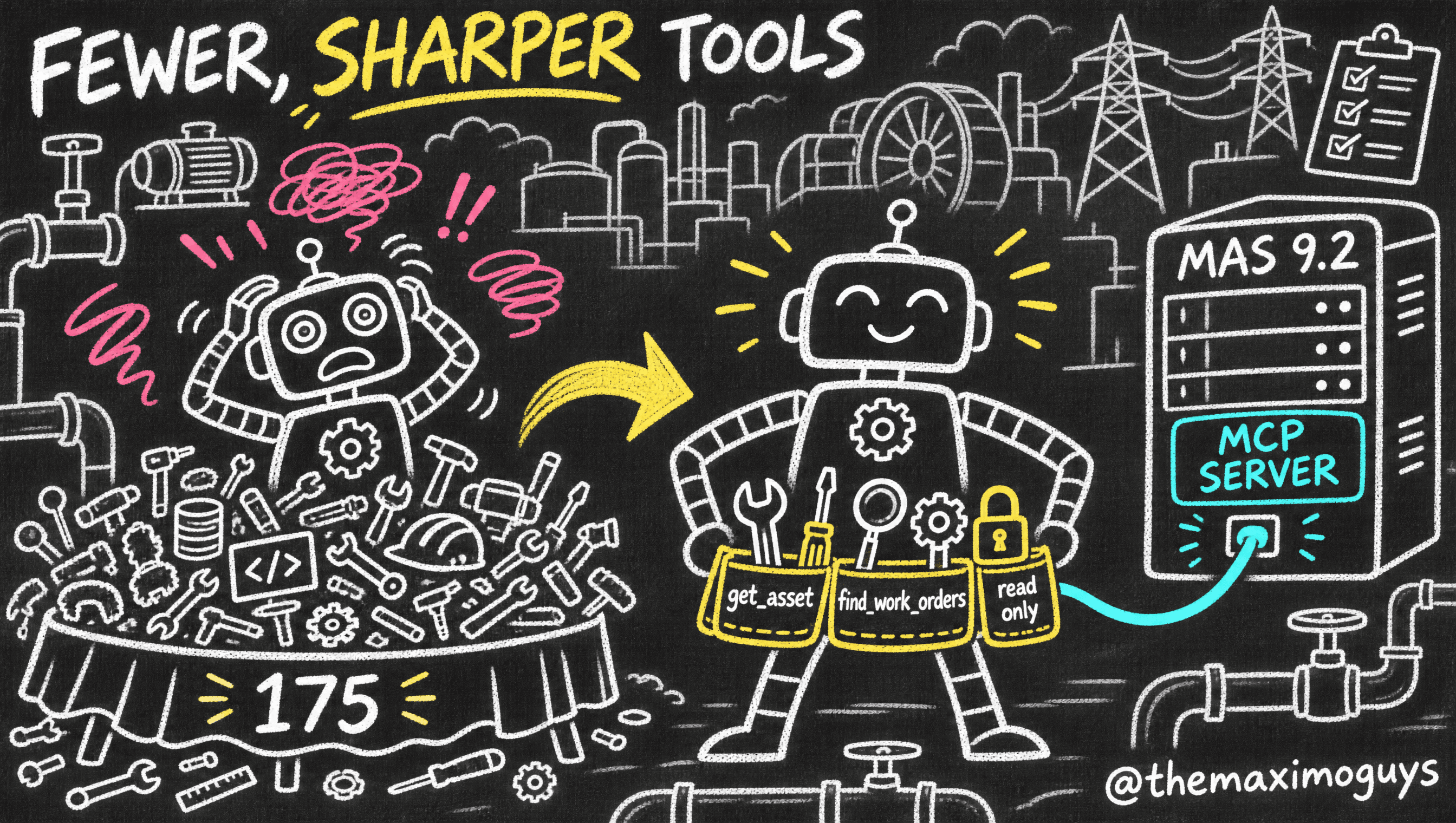
A practitioner's playbook for exposing IBM Maximo to AI agents through the Model Context Protocol: what MCP really is, the too-many-tools problem, the MAS 9.2 native MCP server, TMG's Max_mcp and Max_Interfaces, how to design a Maximo tool (names, descriptions, input schemas, oslc.where safety, pagination, idempotent writes), stdio versus streamable HTTP, API keys versus OAuth, and when skills or code execution beat MCP.
Krishna Neela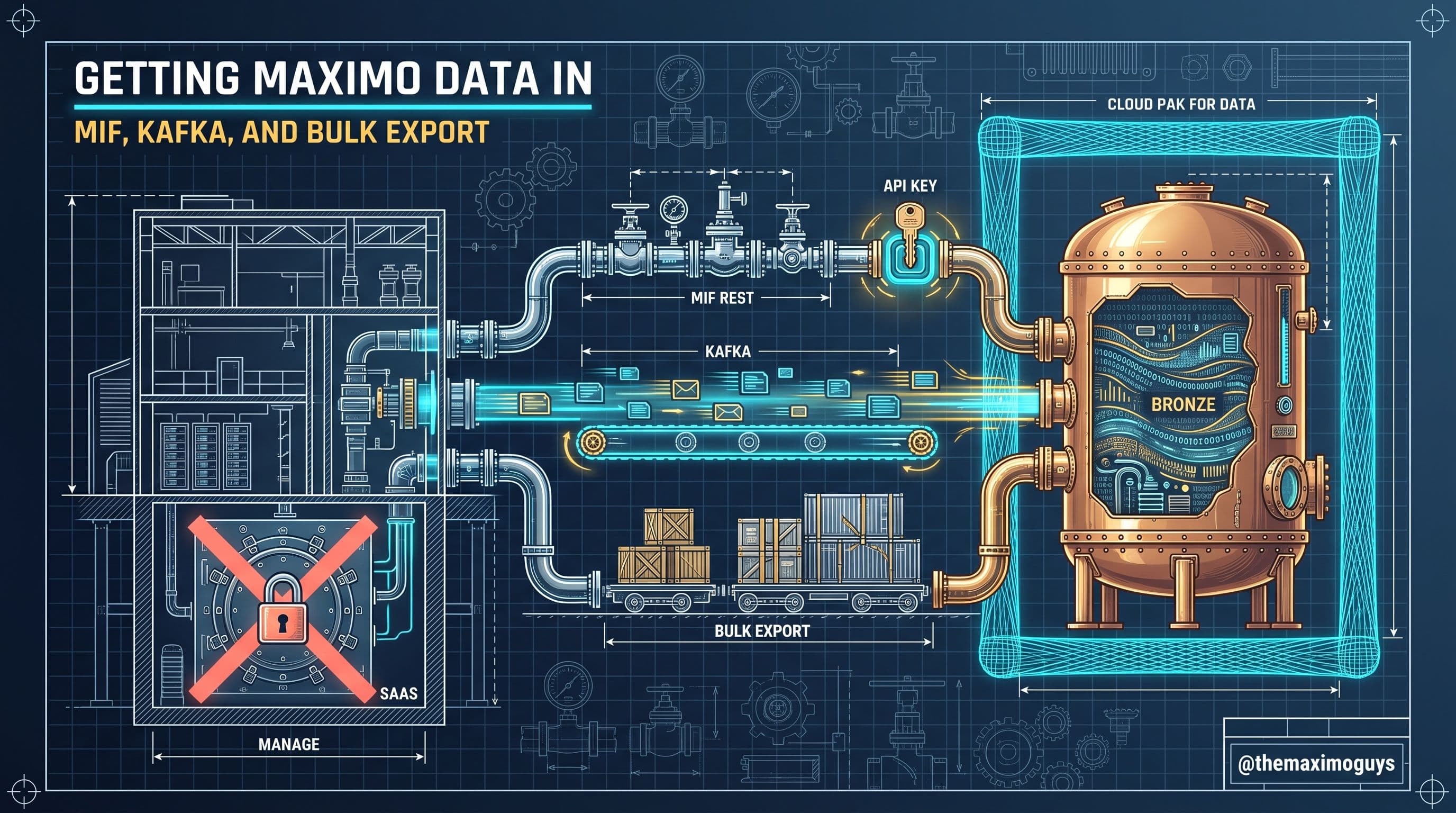
The three IBM-sanctioned ways to move Maximo data into watsonx.data — MIF REST/JSON over OSLC, the Kafka source connector, and MAS 9.1's asynchronous bulk export — plus the Cloud Pak for Data fabric and the SaaS constraint that decides which ones you can actually use.
 Surendra Katta

How MAS transforms Maximo integration from MIF-centric XML processing to an API-first architecture built on REST, OSLC, and cloud-native microservices. The architectural foundation for every modern Maximo integration.
 Manasa GangaFeb 6, 2026Part 2 of 8
