6 posts tagged “Field Service”
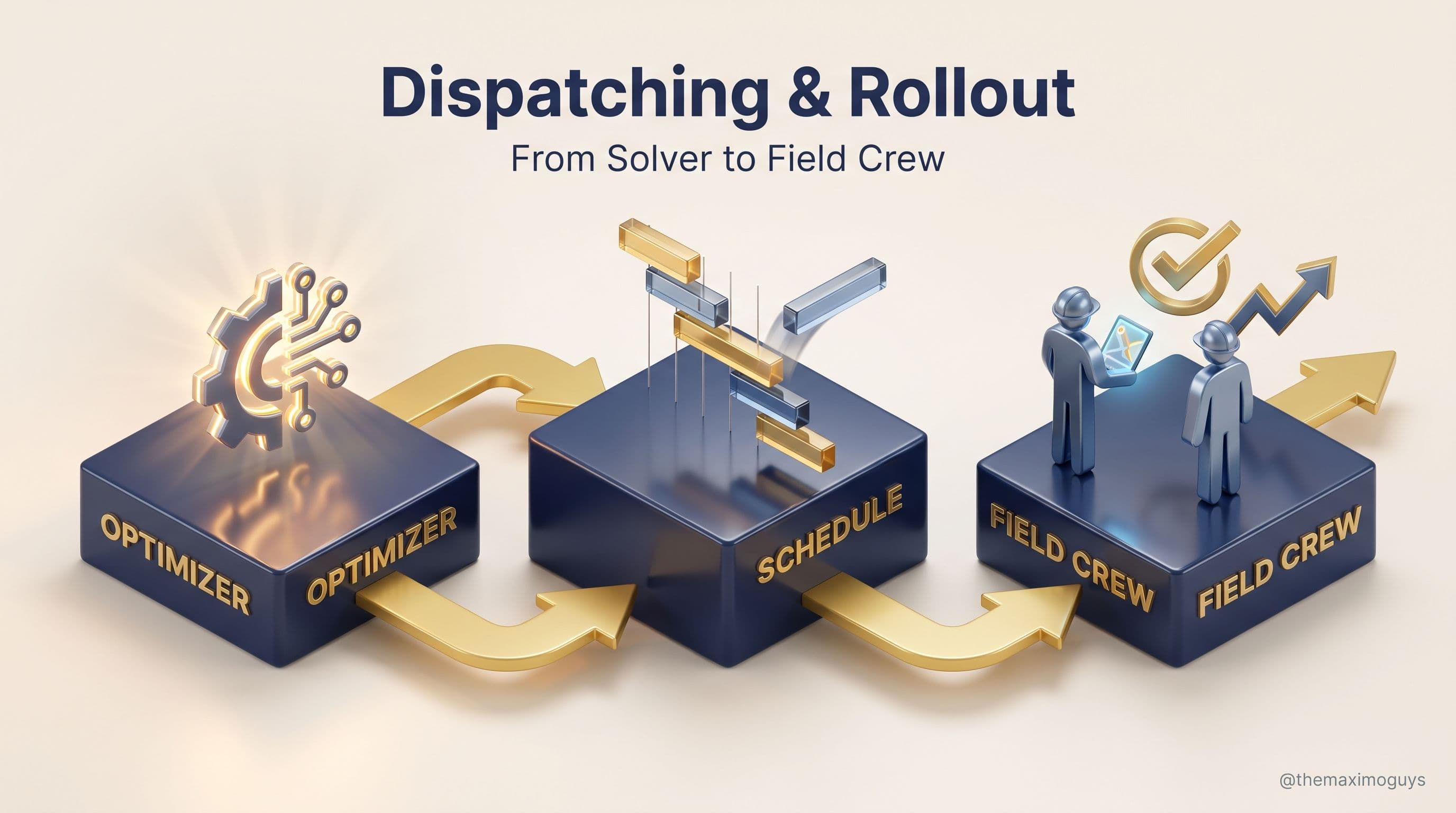
The series finale. How an optimized schedule surfaces in Graphical Assignment and the Dispatching Dashboard, the review-adjust-re-optimize rhythm dispatchers actually run, AppPoints licensing math, the Phase 4 rollout timeline, and the three documented use cases — field service, maintenance-window planning, emergency response — with the payoffs that prove Optimizer worked.
 Venkat AchantaJul 16, 2026Part 5 of 5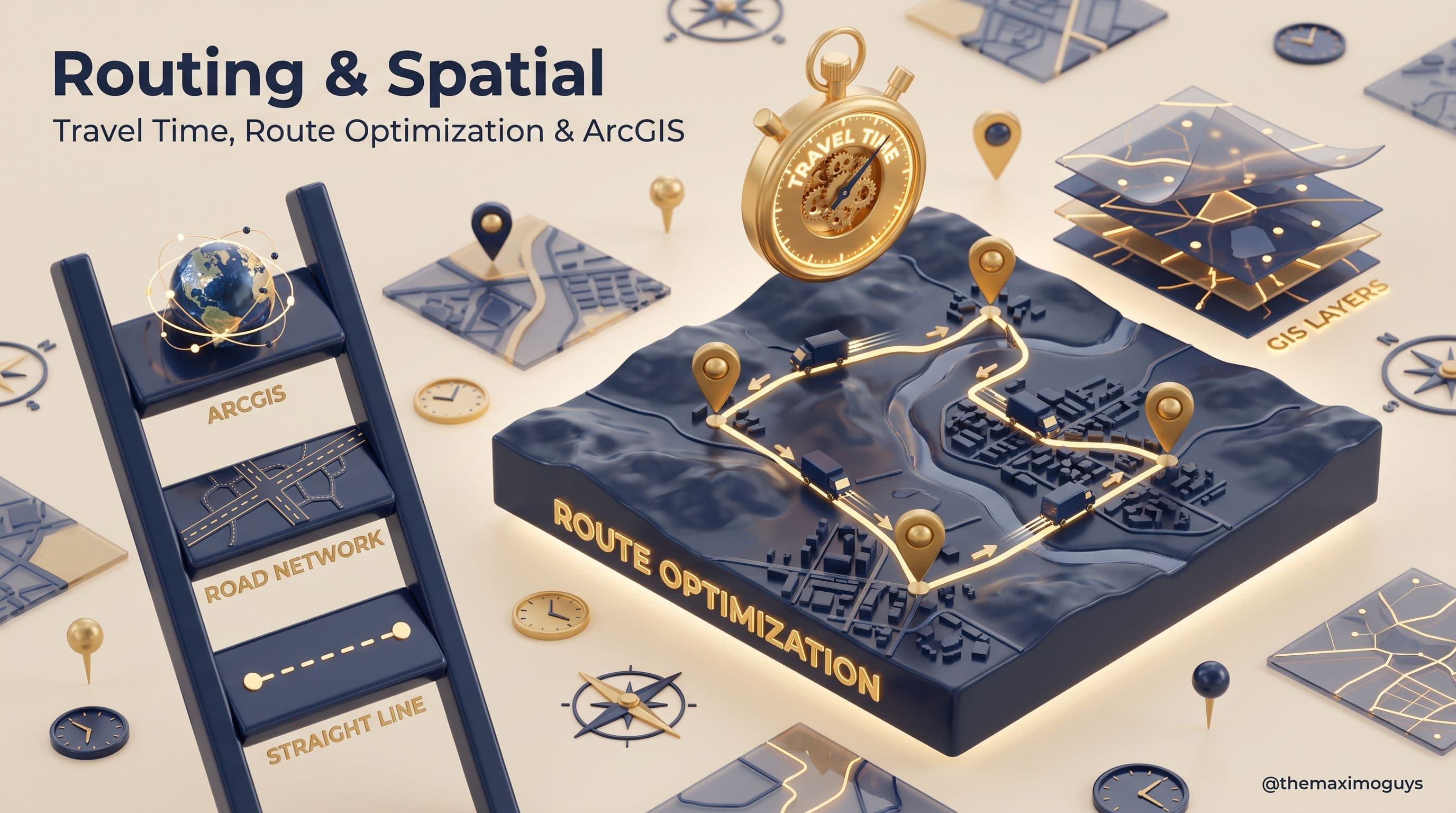
Travel is where field service wins or loses. This part covers how Optimizer estimates travel — from straight-line distance to real road networks — how route optimization groups and sequences work, and when the optional Esri ArcGIS integration is worth the effort versus straight-line estimation.
Venkat AchantaJul 16, 2026Part 4 of 5
A five-part program for standing up true scheduling optimization in IBM Maximo Application Suite 9 — from why the 7.6 Scheduler was never an optimizer, through the constraint-and-objective model, the labor and location data it lives or dies on, routing and ArcGIS spatial integration, to the Dispatching Dashboard and a phased, Phase-4 rollout.
Venkat AchantaJul 16, 2026Part 0 of 5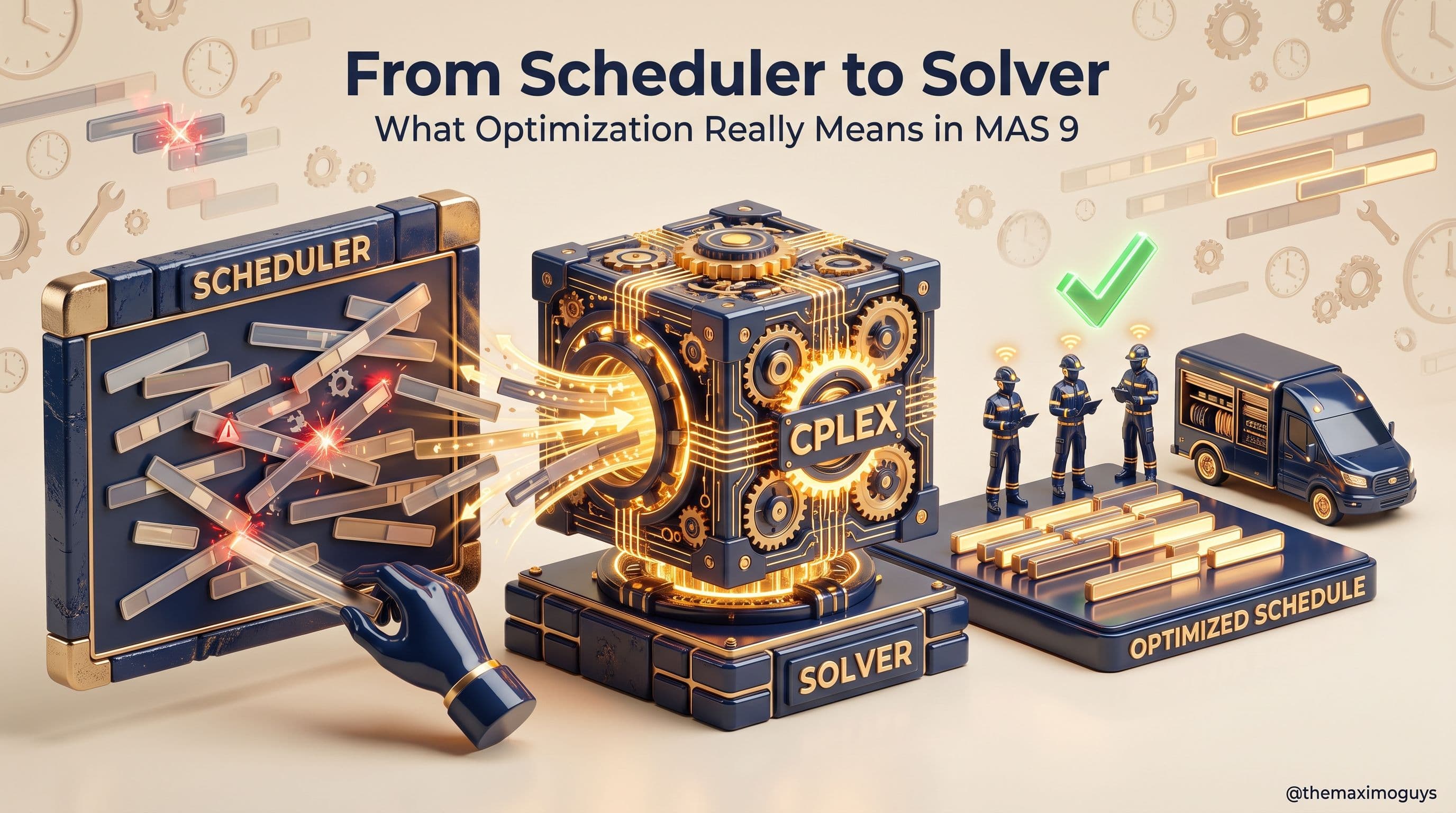
The 7.6 Scheduler drew what a human decided; Maximo Optimizer decides. This part draws the hard line between graphical scheduling and mathematical optimization — constraint programming and mixed-integer programming — and positions Optimizer honestly as a Phase 4 amplifier that only works on clean data underneath it.
Venkat AchantaJul 16, 2026Part 1 of 5
A practitioner's deep dive into Maximo Mobile for Manage 9 — why it replaced Maximo Anywhere, how its offline-first REST and sync architecture works, the Technician, Inspections, and Inventory apps, low-code app definitions in Mobile Studio, RBAC and offline security, and how to migrate off MobileFirst.
 Surendra Katta
Maximo Anywhere is gone — replaced by Maximo Mobile built on React.js with PWA deployment, server-side updates, and full offline sync. Complete coverage of all 7 mobile apps, Technician features, GPS sharing, barcode enforcement, and the Anywhere-to-Mobile migration path.
 The Maximo GuysMar 17, 2026Part 5 of 25