6 part series
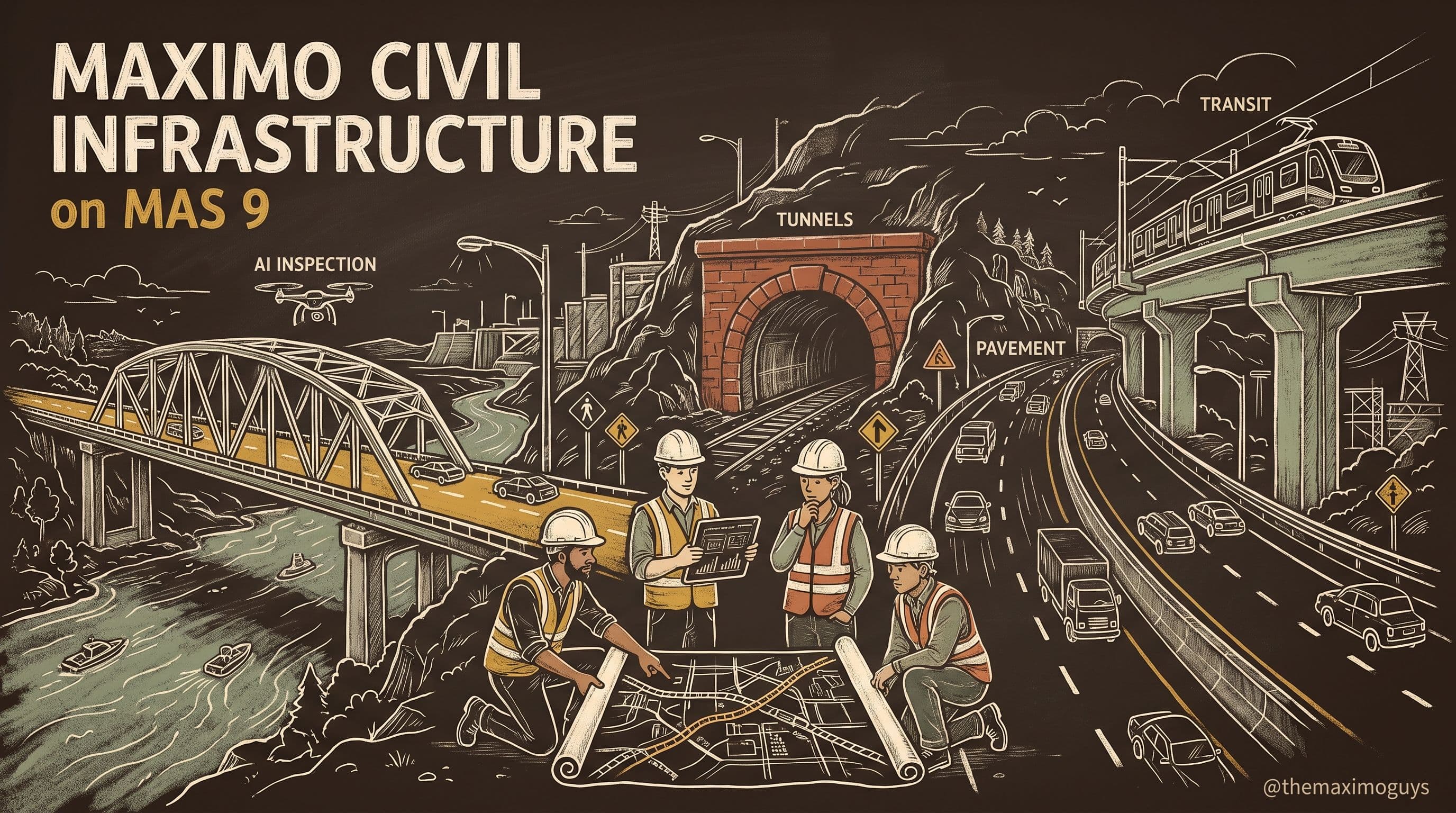
A five-part, infrastructure-specific guide to Maximo Civil Infrastructure as it ships inside MAS Manage: the linear and element-based asset model for bridges, roads, and tunnels; FHWA NBI bridge inspection and AASHTO element condition assessment; pavement (PCI/IRI) and tunnel (NTIS) condition; AI-augmented inspection with Visual Inspection and Large Vision Models; and the full regulatory crosswalk (23 CFR 650, MAP-21/FAST Act, GASB 34, FTA State of Good Repair) with a government-deployment reality check.
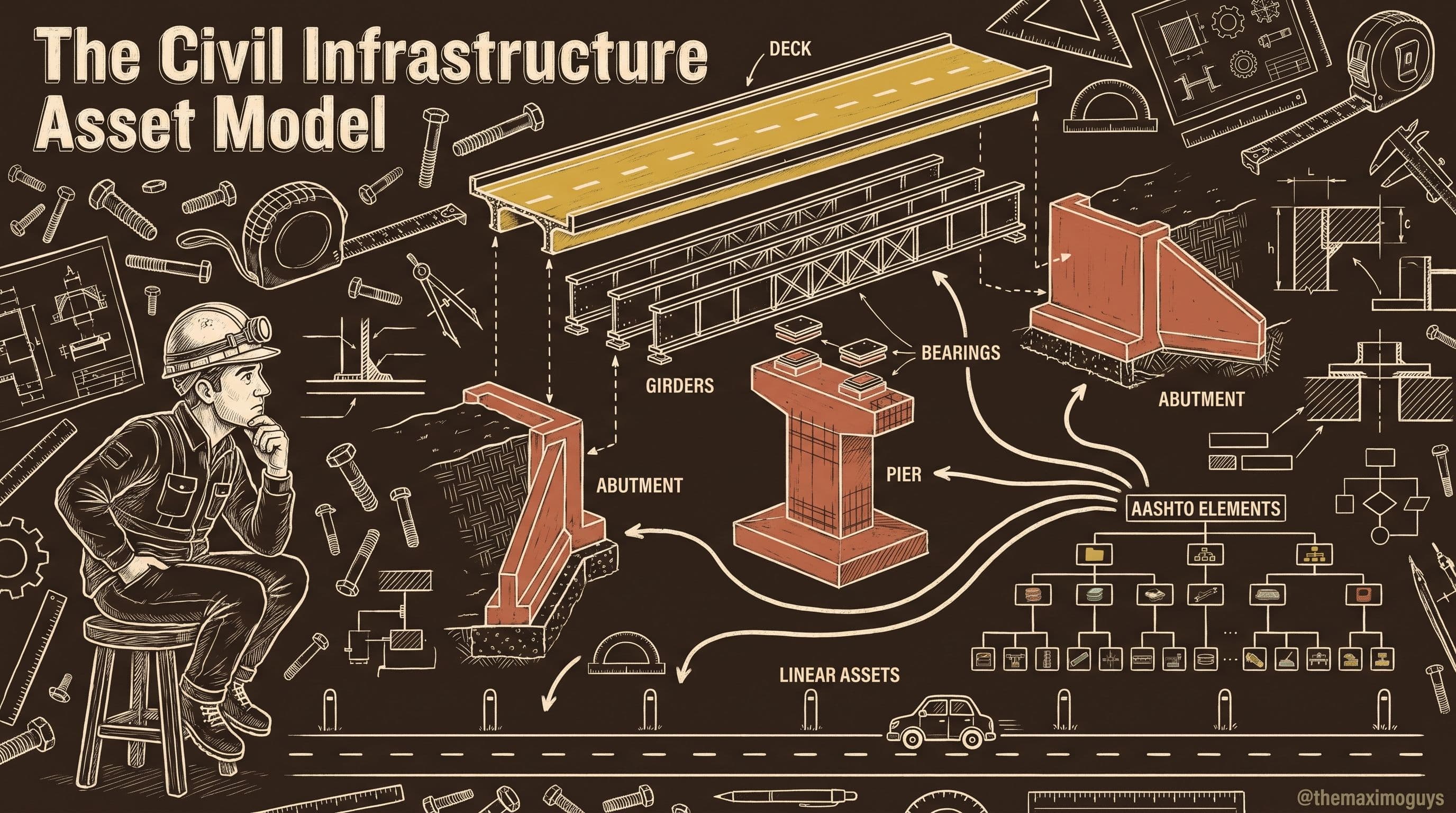
What Maximo Civil Infrastructure is, who it is for, and how it models bridges, roads, and tunnels as element-based and linear assets that the standard Manage data model was never built to hold. Covers the AASHTO element taxonomy mapped onto a Maximo asset hierarchy, where the application sits relative to Manage, Health, and Visual Inspection, the honest licensing and deployment posture, and a fully worked bridge-modeling example.
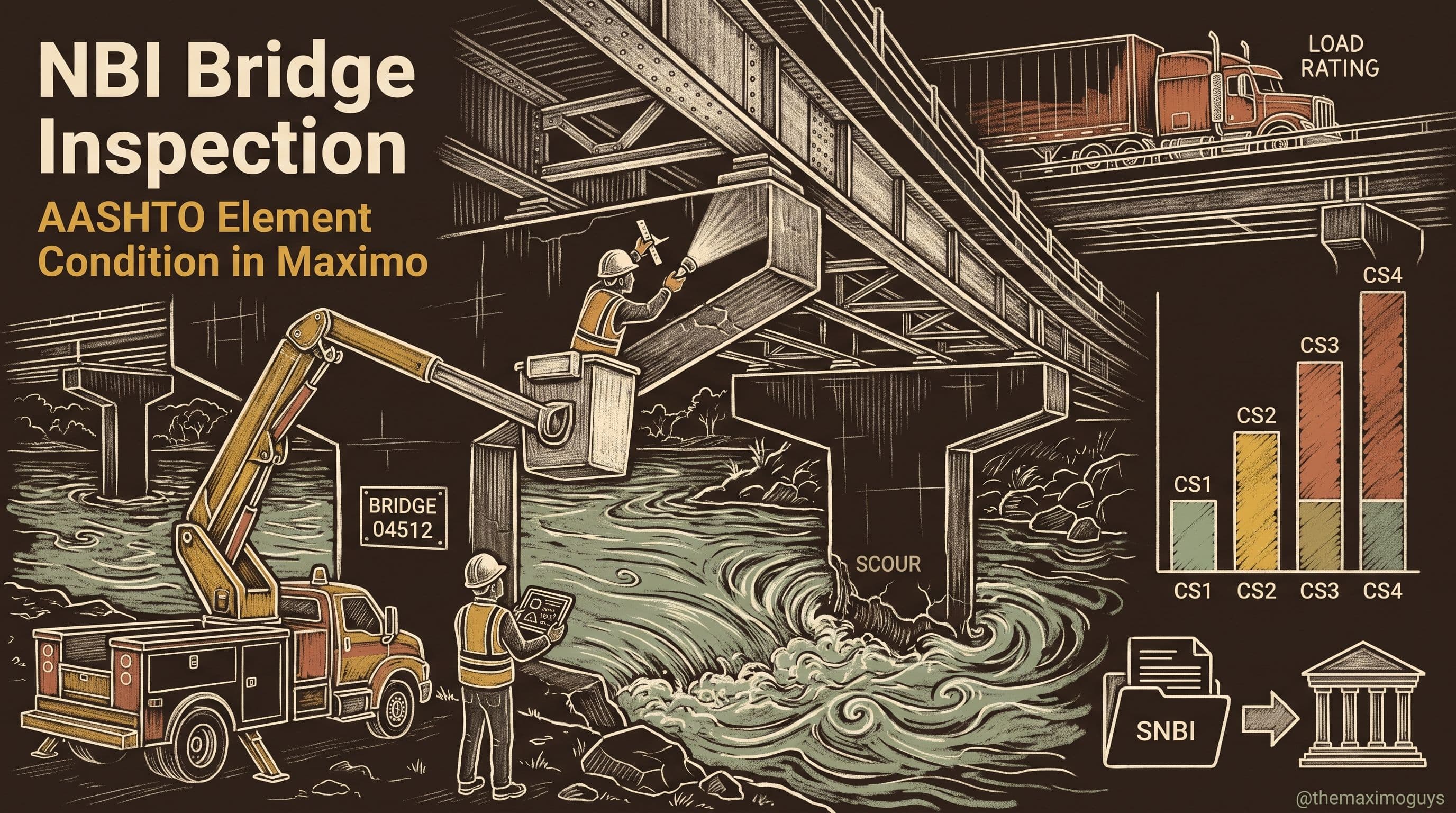
The heart of Maximo Civil Infrastructure: FHWA-compliant bridge inspection. How the 0-9 NBI component ratings for deck, superstructure, and substructure coexist with AASHTO element condition states; how condition-state quantity tracking works; how the two-year inspection cycle and special cycles (fracture-critical, underwater) are scheduled; how load rating and scour-critical status are tracked; and how NBI-format export supports the federal submission — walked through a full bridge inspection with sample values.
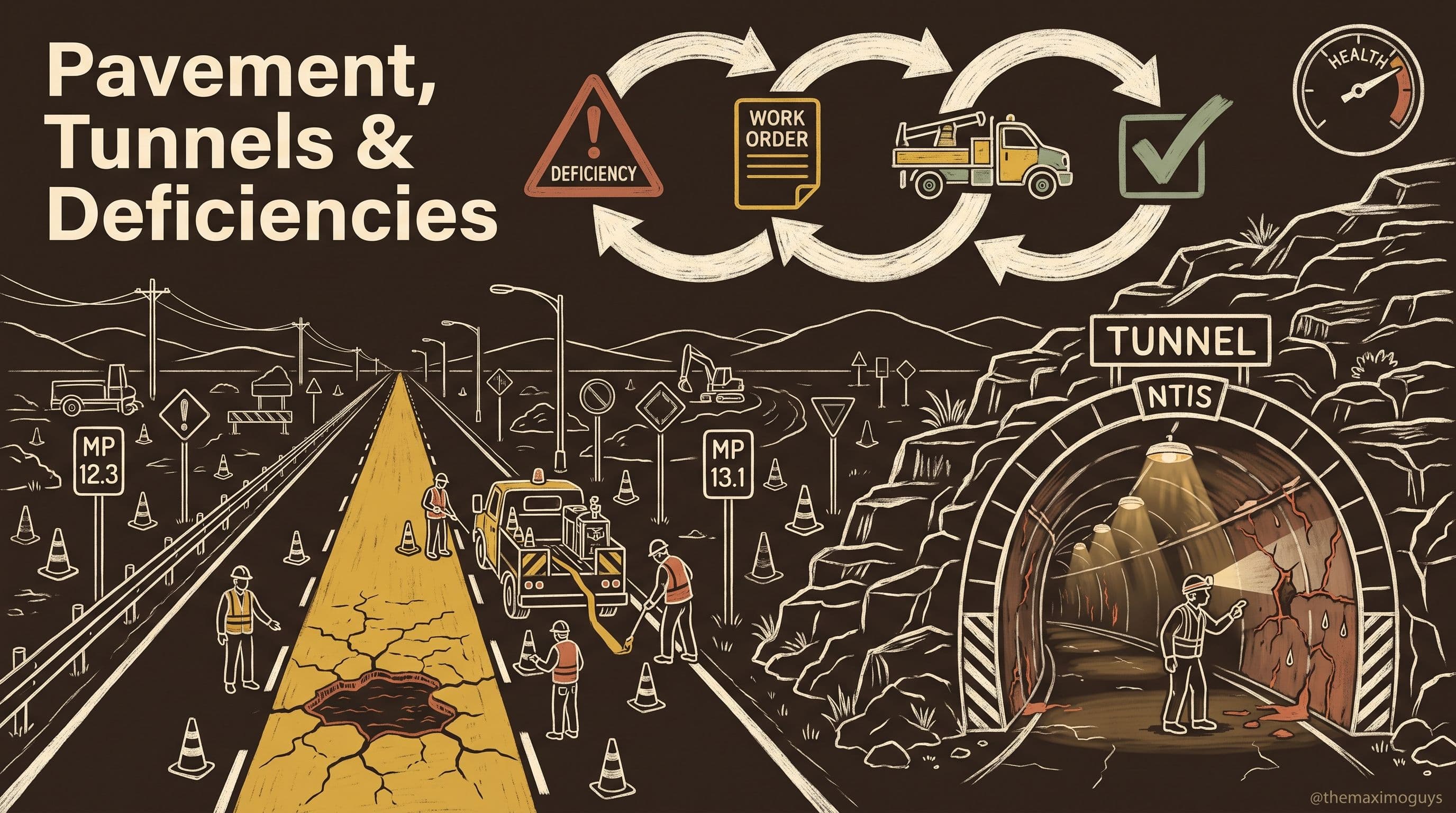
Beyond bridges: how Maximo Civil Infrastructure handles road condition (PCI scoring, distress identification, IRI ride quality, treatment recommendation), tunnel inspection under NTIS with fire/life-safety element tracking, deficiency tracking that prioritizes by severity and safety impact and links to work orders, and condition-based maintenance that triggers work when a rating drops below threshold with Maximo Health supplying the condition score — walked through a full pavement-section example.
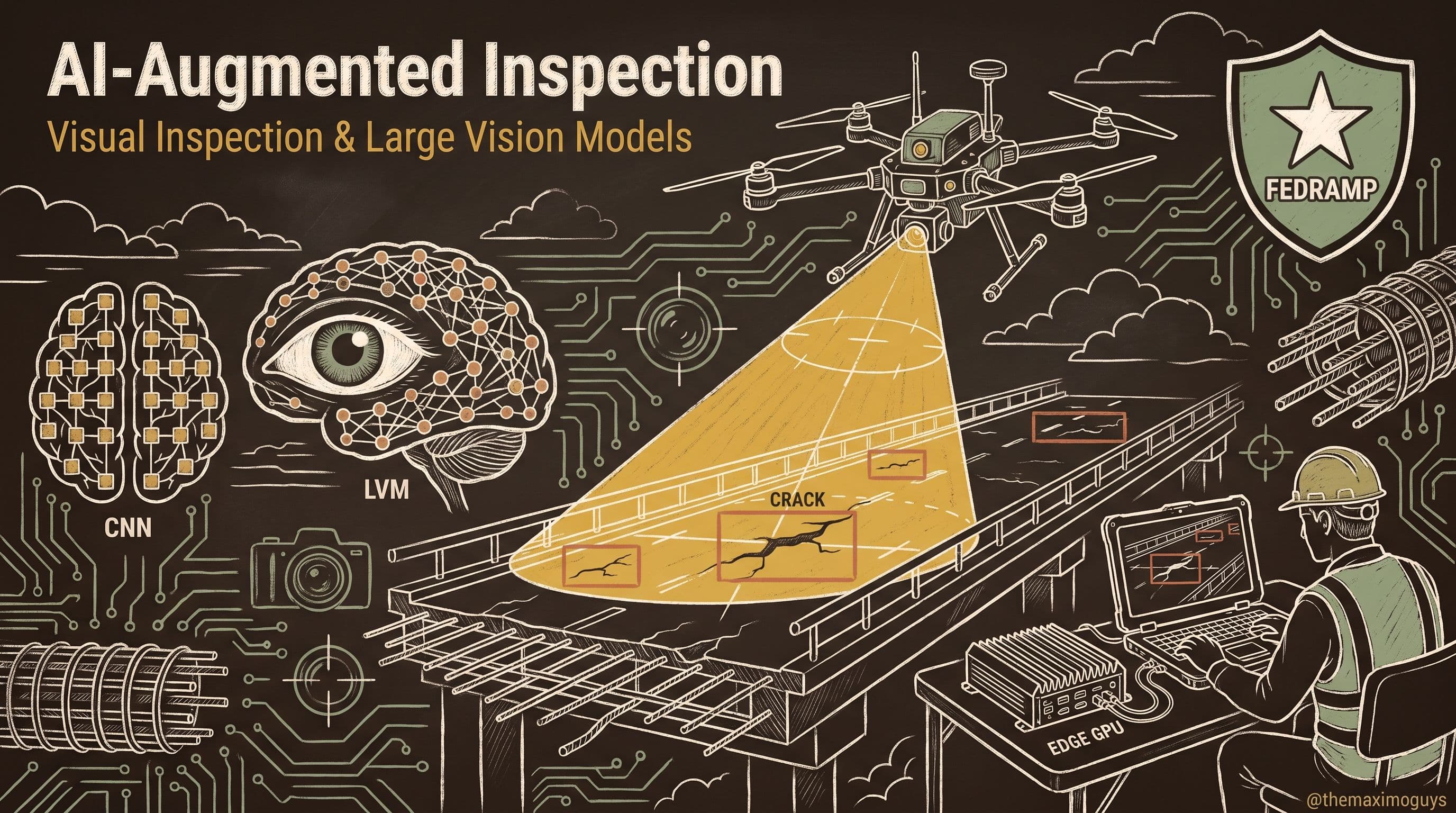
How Maximo Civil Infrastructure uses Visual Inspection to analyze drone and camera imagery for automated defect detection on bridge decks, piers, and beams; the difference between classic CNN models and the Large Vision Models introduced in MAS 9.1 that are trained for civil infrastructure and need minimal training data; the GPU, camera, and training-data requirements; how visual evidence links to element-level inspection records; and the honest watsonx.ai/FedRAMP reality that determines whether the LVM capability is even available to a government agency.
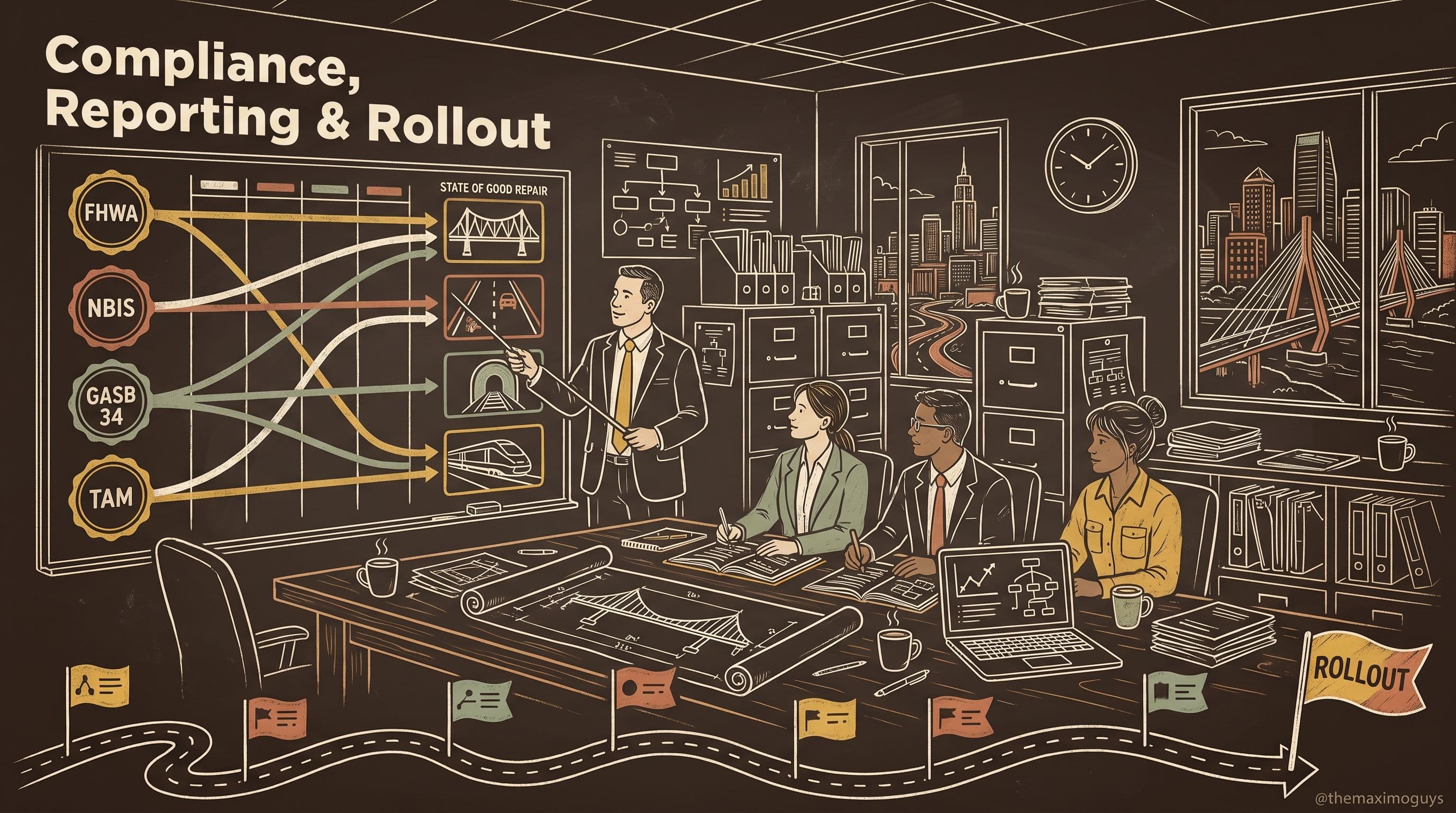
The finale: the full capability-to-regulation crosswalk for Maximo Civil Infrastructure across FHWA NBIS, AASHTO, 23 CFR 650, NTIS, MAP-21/FAST Act, and GASB 34; how transit's FTA State of Good Repair and Transit Asset Management (TAM) plan data are supported; the reporting the application produces for federal submission and management; the deployment prerequisites and AppPoints posture in one place; and a rollout checklist that mirrors a real pilot from portfolio assessment to first federal-format report.
